


All sections on this page
Which is the best CFD broker in Australia?
The best CFD broker in Australia, based on our live-account testing, is Capital.com. It scored 96 out of 100 on our CFD Fit assessment across ten ASIC-regulated platforms.
What are the 10 best CFD brokers in Australia?
Each broker below is scored out of 100 on the five weighted inputs. I’ve listed them in ranked order; each card links to the full review.
1. Capital.com: best overall for AU CFD traders on platform and pricing

Average spread
EUR/USD = 0.7GBP/USD = 1.0 AUD/USD = 0.8
Trading platforms
Capital.com WebTrader, MT4, MT5, native TradingView
Minimum deposit
A$20
Regulation
ASIC AFSL 513393
◎ Standout: 4,500+ instruments across forex, indices, commodities, shares and crypto, with spread-only no-commission pricing
Why higher here? CFD Fit weights product range and platform quality above forex spread costs, where Capital.com trails the raw-spread brokers. See the ranking method ↓
Why we recommend Capital.com
What I keep coming back to with Capital.com is the enormous product range it packs into a mid-market broker, and the platform integration is something I genuinely rate. You get more than 4,500 instruments spanning 130+ forex pairs, 25+ indices, 3,000+ share CFDs, 30+ commodities, 100+ crypto CFDs and 250+ ETF CFDs, all tradeable on the firm's own WebTrader, on MT4 and MT5, or natively inside TradingView. Retail pricing is spread only with no separate commission, the minimum deposit is A$20 and there is no inactivity fee. Capital Com Australia has held AFSL 513393 since 2021, within a group also regulated by the FCA and CySEC.
Pros & cons
- ASIC AFSL 513393 plus FCA (UK) and CySEC (Cyprus), Tier-1 regulatory stack
- 4,500+ instruments across forex, indices, commodities, shares and crypto, with spread-only no-commission pricing
- Capital.com WebTrader plus native TradingView execution, one of the better proprietary stacks in the AU market
- No cTrader (WebTrader, MT4, MT5 and TradingView make up the platform stack)
- AU operating history shorter than CMC, IG, Pepperstone or IC Markets
- Standard markup account is not the absolute lowest total cost for high-frequency scalpers
Broker's Detail
With a London launch in 2016 and ASIC regulation under AFSL 513393 since 2021, Capital.com has grown into one of the fastest-moving mid-market CFD brokers we track in Australia. The parent group also holds FCA (UK), CySEC (Cyprus) and SCB (Bahamas) licences and reports more than 600,000 active accounts globally.
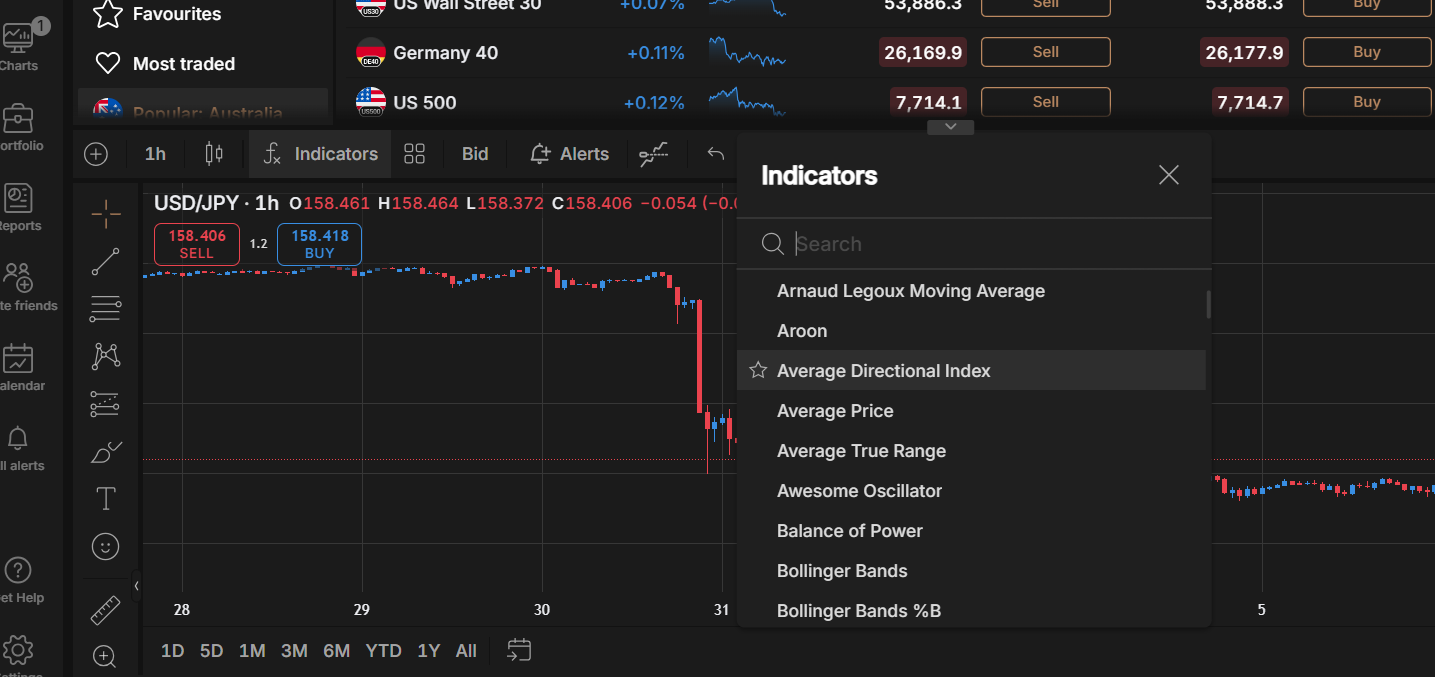
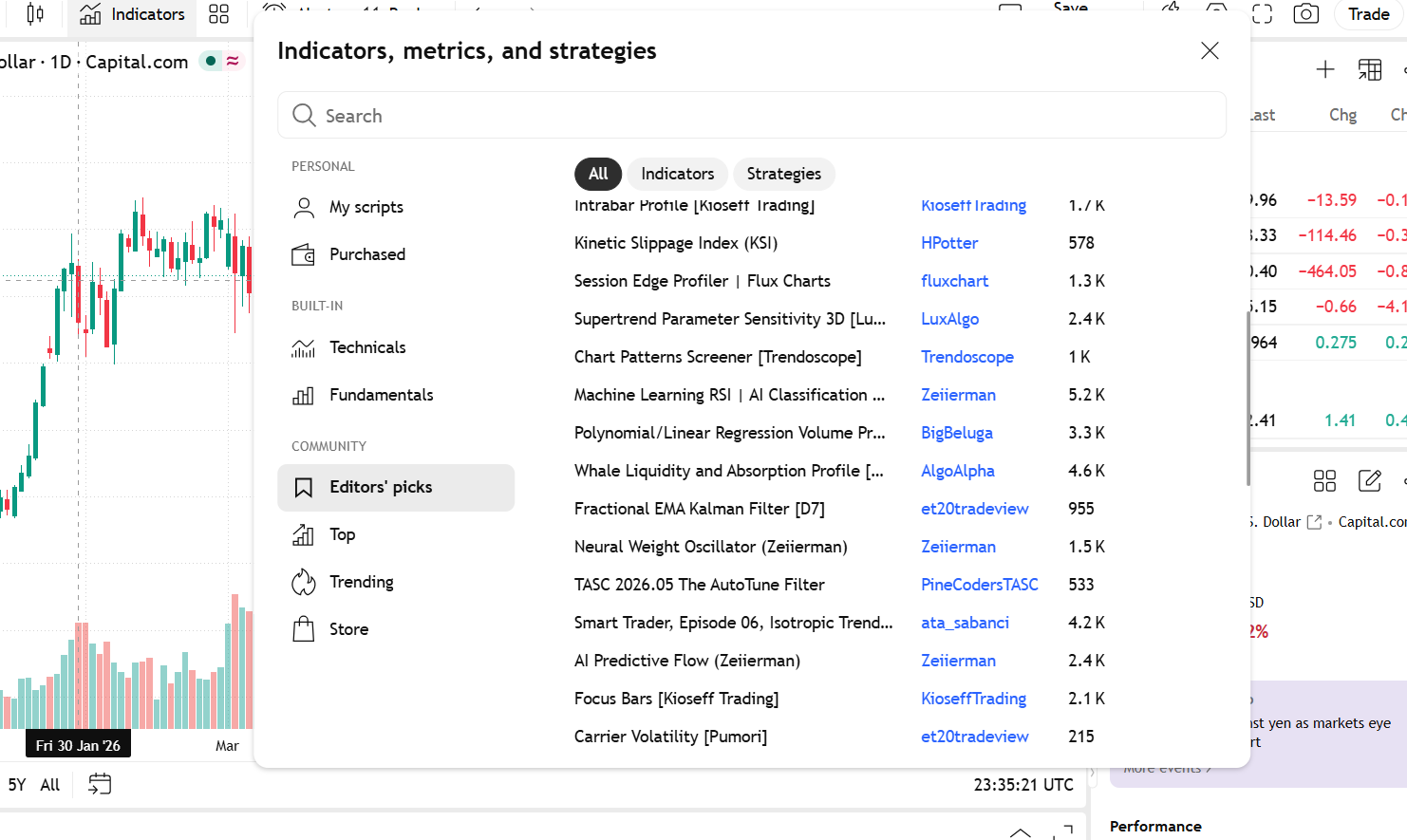
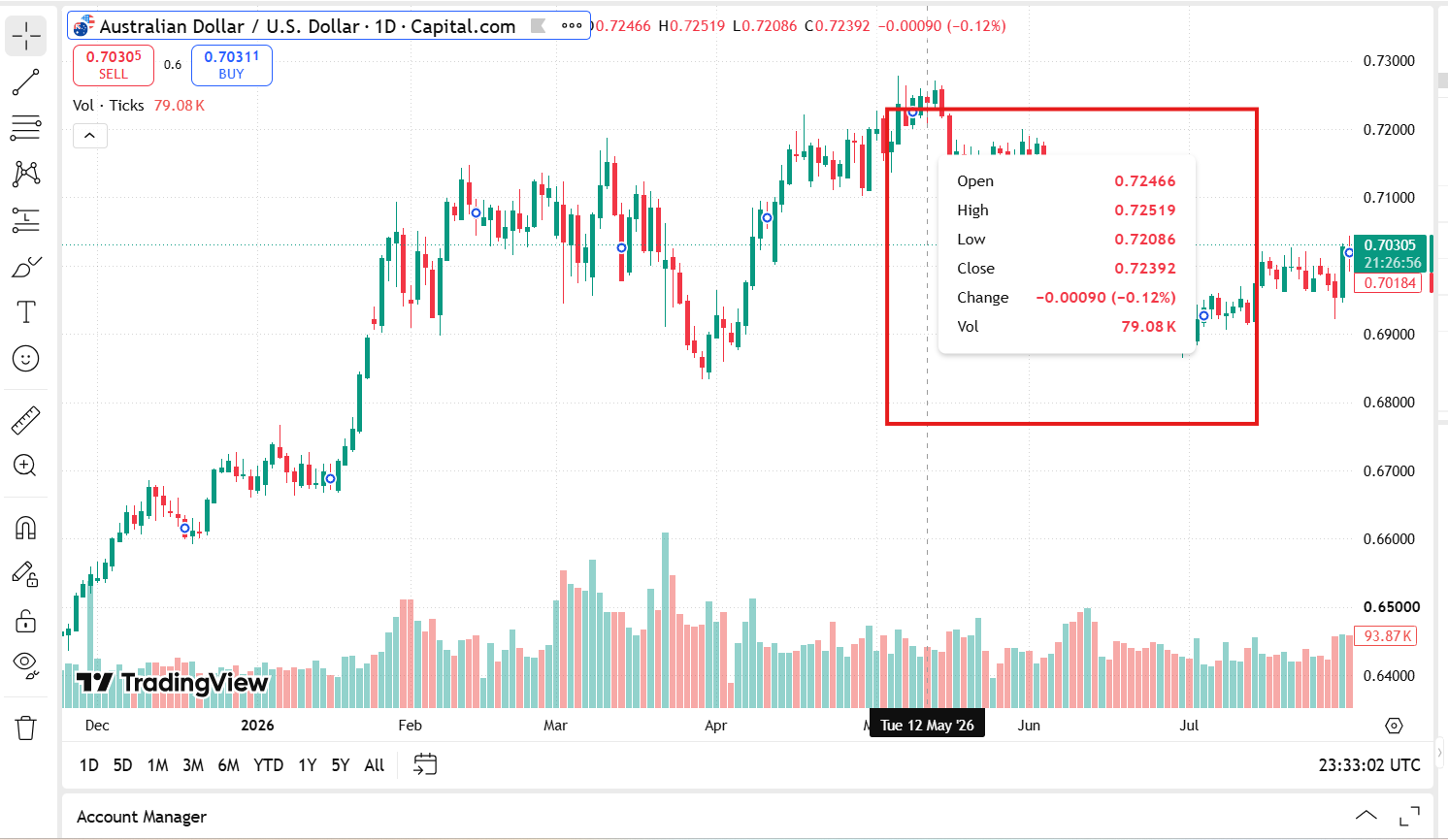
The Standard account uses dynamic pricing rather than a published fixed rate; our September 2026 capture recorded EUR/USD at 0.74 pips with no commission. You can trade through the Capital.com WebTrader, MT4, MT5 and what I see as the real draw, native TradingView execution. Over 4,500 tradeable instruments span forex, indices, commodities, shares and crypto CFDs, so most traders will find the markets they want on a single login.
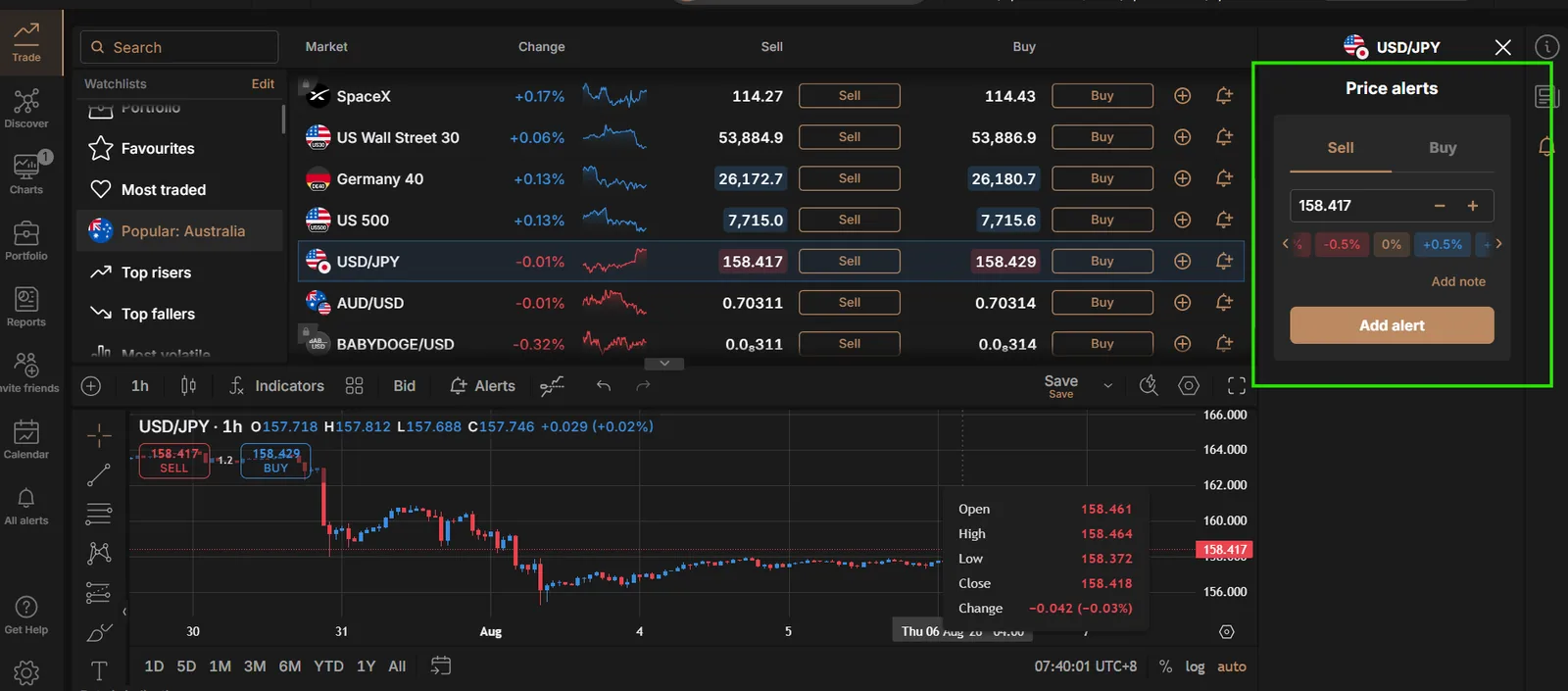
You can open an account with a A$20 minimum deposit and fund it fee-free in Australia via PayID, card, PayPal and Apple Pay. Retail leverage follows the ASIC retail caps, and negative balance protection plus AFCA dispute coverage come as standard. Customer support runs 24/5 by live chat, though there is no phone support for retail clients.
Broker Screenshots
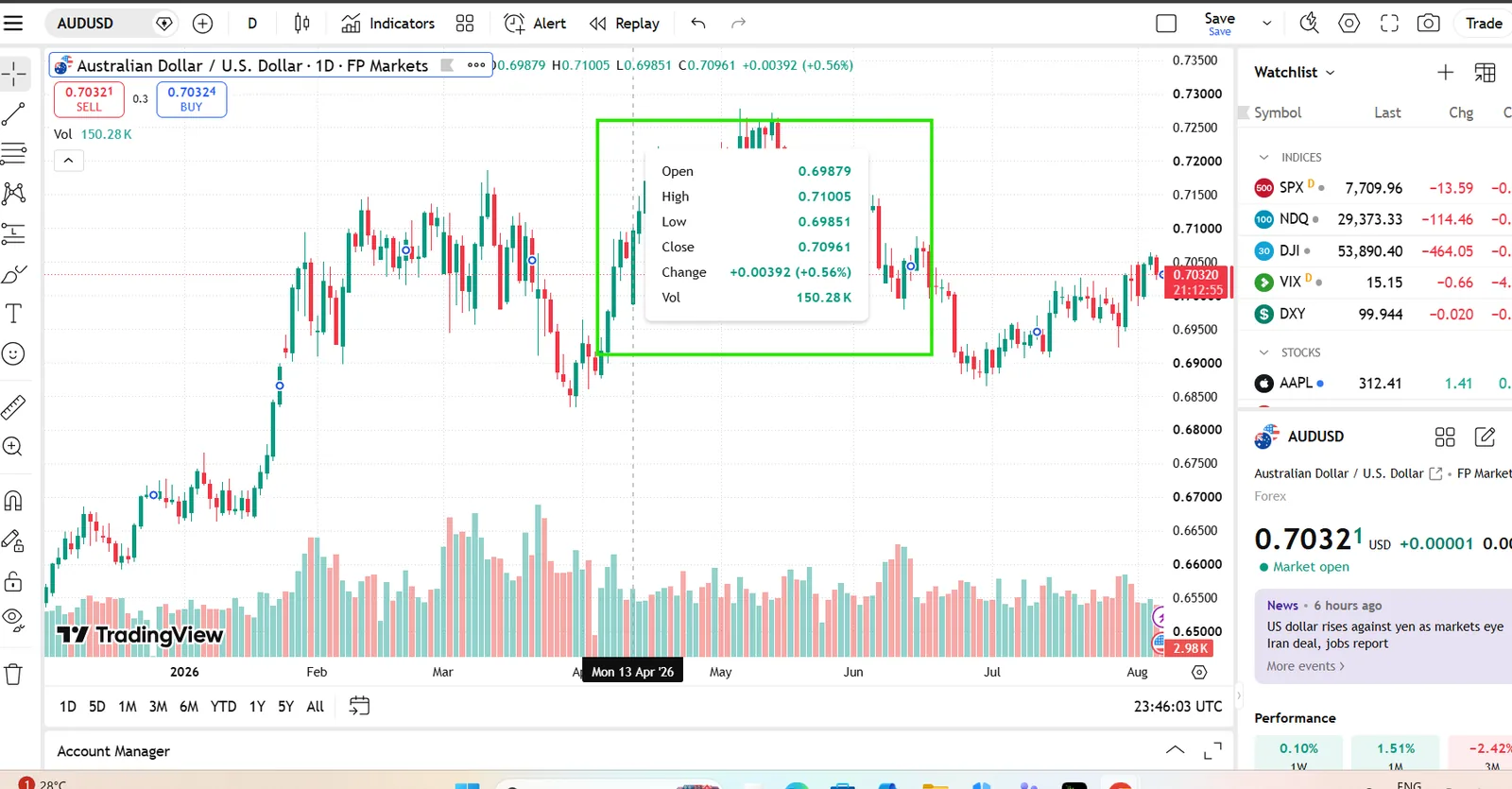
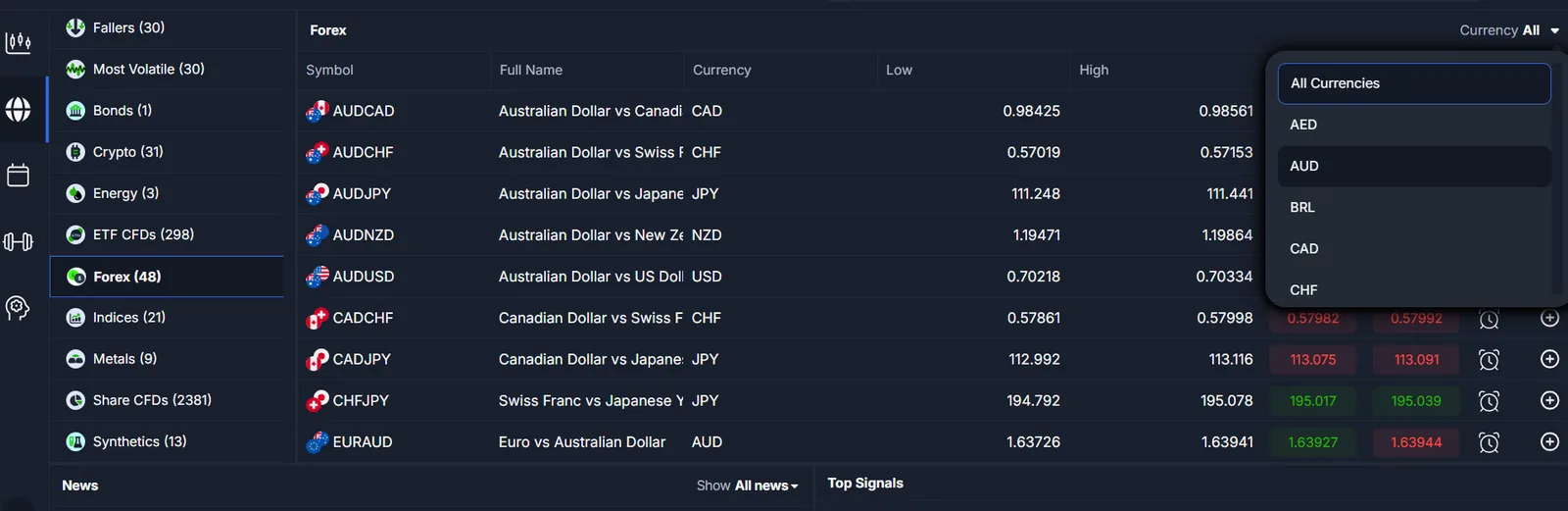
2. FP Markets: best route to ASX share CFDs through IRESS

Average spread
EUR/USD = 0.1GBP/USD = 0.2 AUD/USD = 0.1
Trading platforms
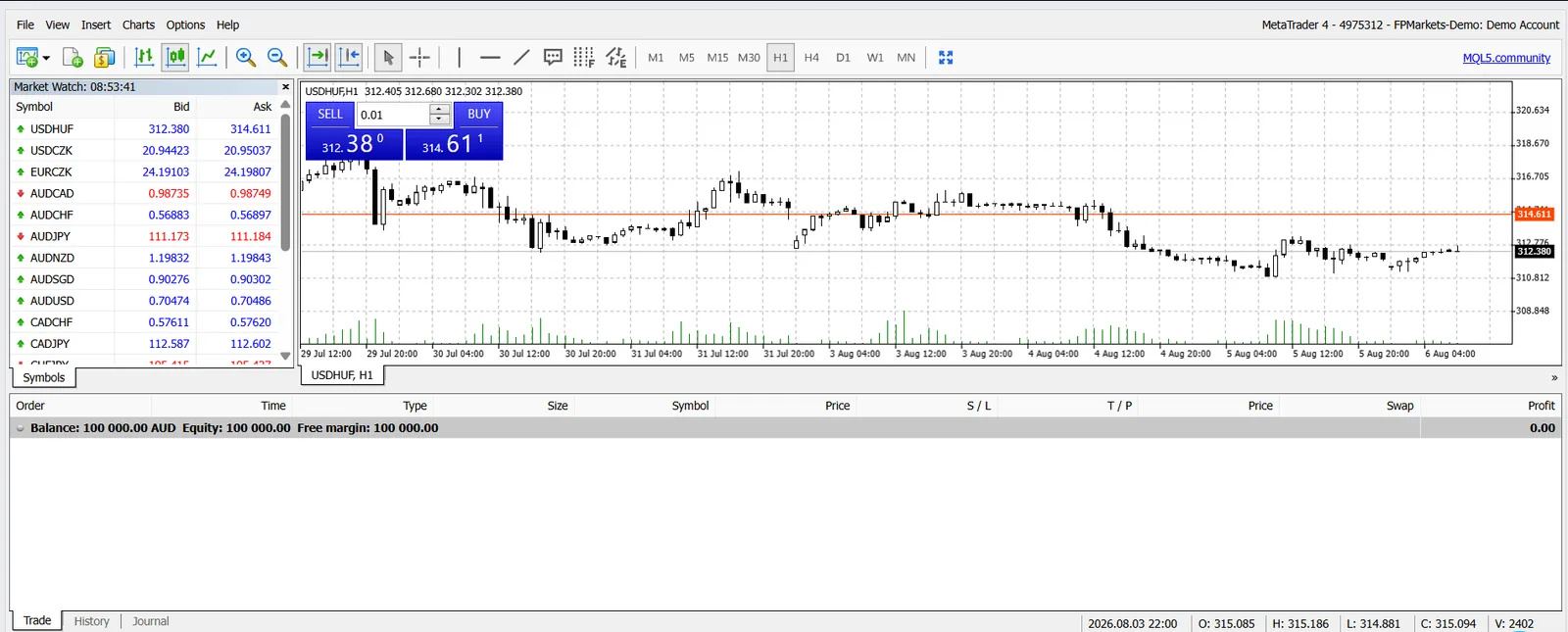
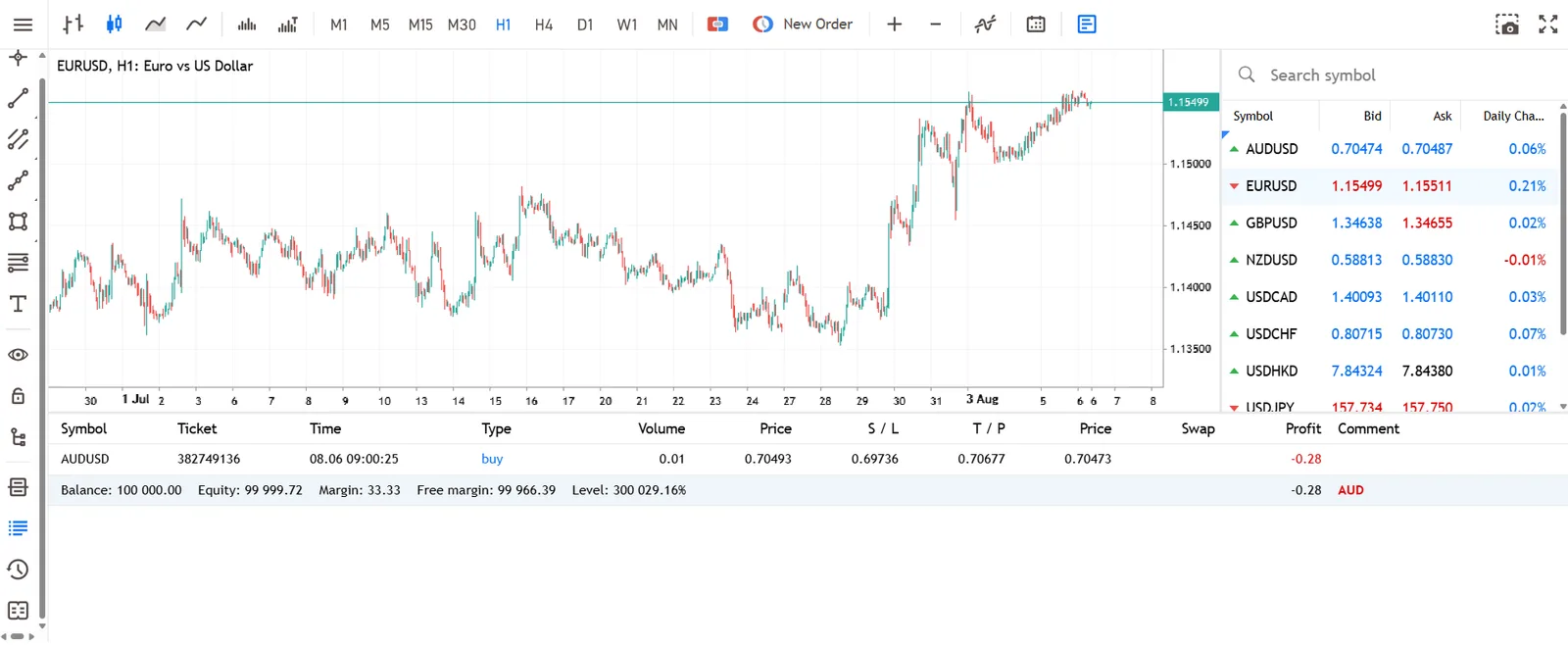
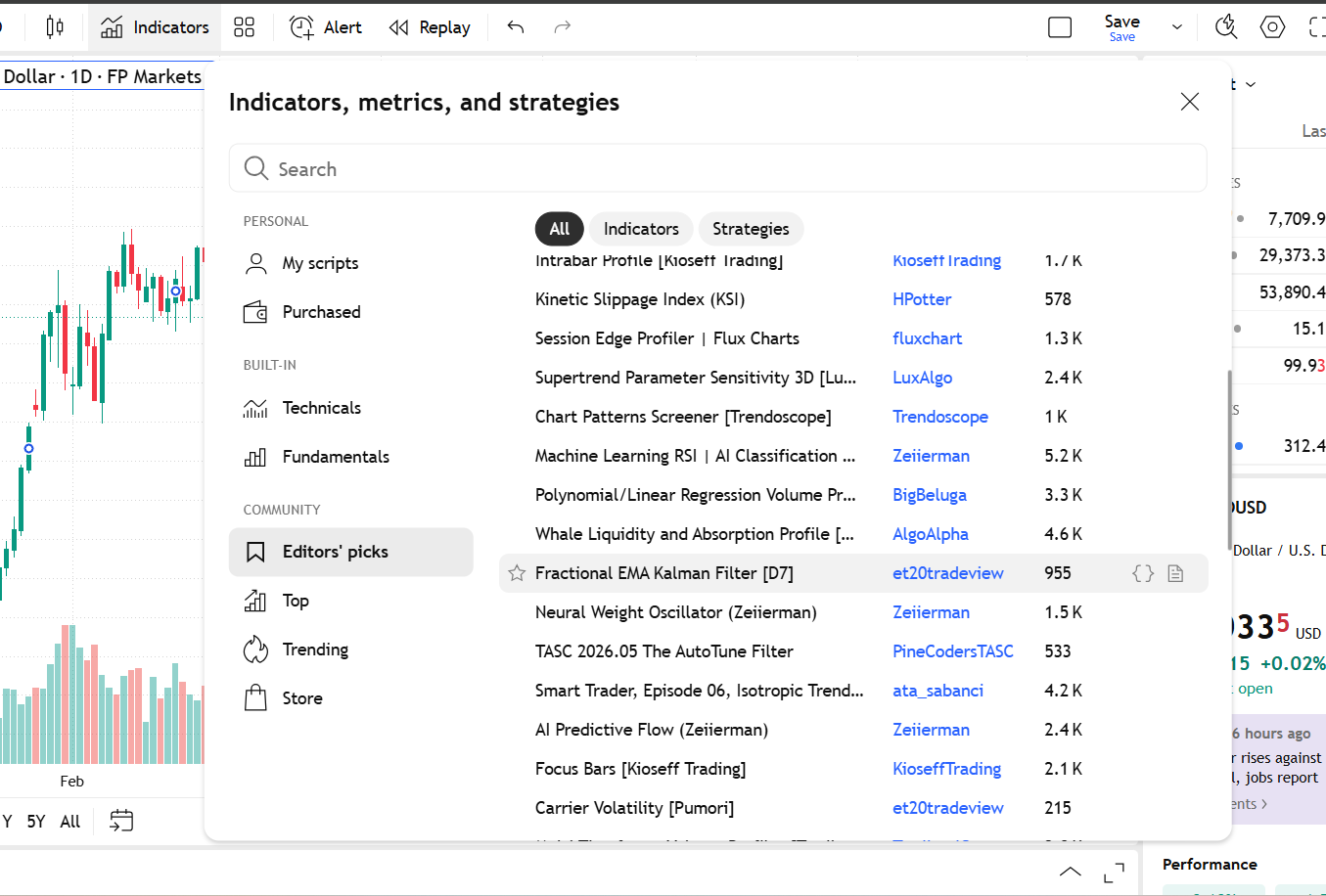
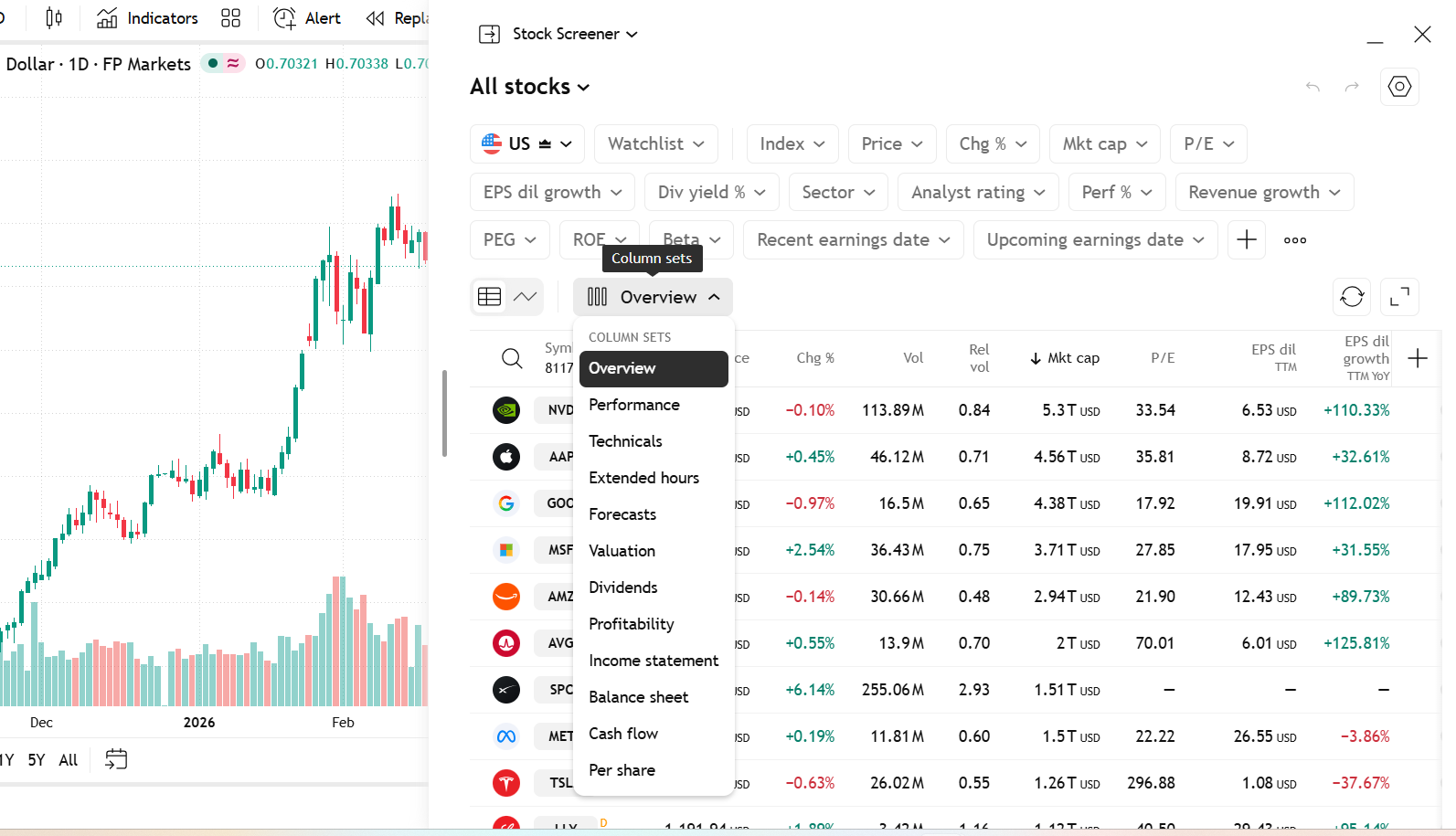
MT4, MT5, cTrader, TradingView, IRESS
Minimum deposit
A$100
Regulation
ASIC AFSL 286354
◎ Standout: Raw account with EUR/USD spreads from 0.0 pips and AUD 7 round-turn per lot
Why higher here? CFD Fit weights product range and platform quality above forex spread cost, which lifts FP Markets above its #6 sitewide position. See the ranking method ↓
Why we recommend FP Markets
The reason I keep FP Markets in the runner-up spot is its direct market access to ASX-listed equities through IRESS alongside more than 10,000 share CFDs, an Australian equity setup no other broker here can match. CFD traders get the Raw account, and Noam's live capture shows EUR/USD around 0.10 to 0.15 pips plus A$3.50 per side commission, across MT4, MT5, cTrader, TradingView and IRESS Trader. The minimum deposit is A$100 for CFD accounts and there is no inactivity fee. First Prudential Markets has held AFSL 286354 since 2005, and it is one of only two brokers in this list running five trading platforms.
Pros & cons
- ASIC AFSL 286354 since 2005; founded and headquartered in Sydney
- Raw account with EUR/USD spreads from 0.0 pips and AUD 7 round-turn per lot
- IRESS account offers DMA access to ASX equities and international shares (AU-unique among RAW brokers)
- Standard (no commission) spreads less competitive than the Raw account; choose Raw if you trade actively
- IRESS account requires a separate application and higher minimum balance
- Education library is solid but lighter than CMC's or IG's
Broker's Detail
FP Markets was founded in Sydney in 2005 and holds AFSL 286354, which makes it one of the longest-running Australian-headquartered RAW-style brokers we cover. The group also holds CySEC (Cyprus), FSCA (South Africa), FSC (Mauritius) and CMA (Kenya) licences.
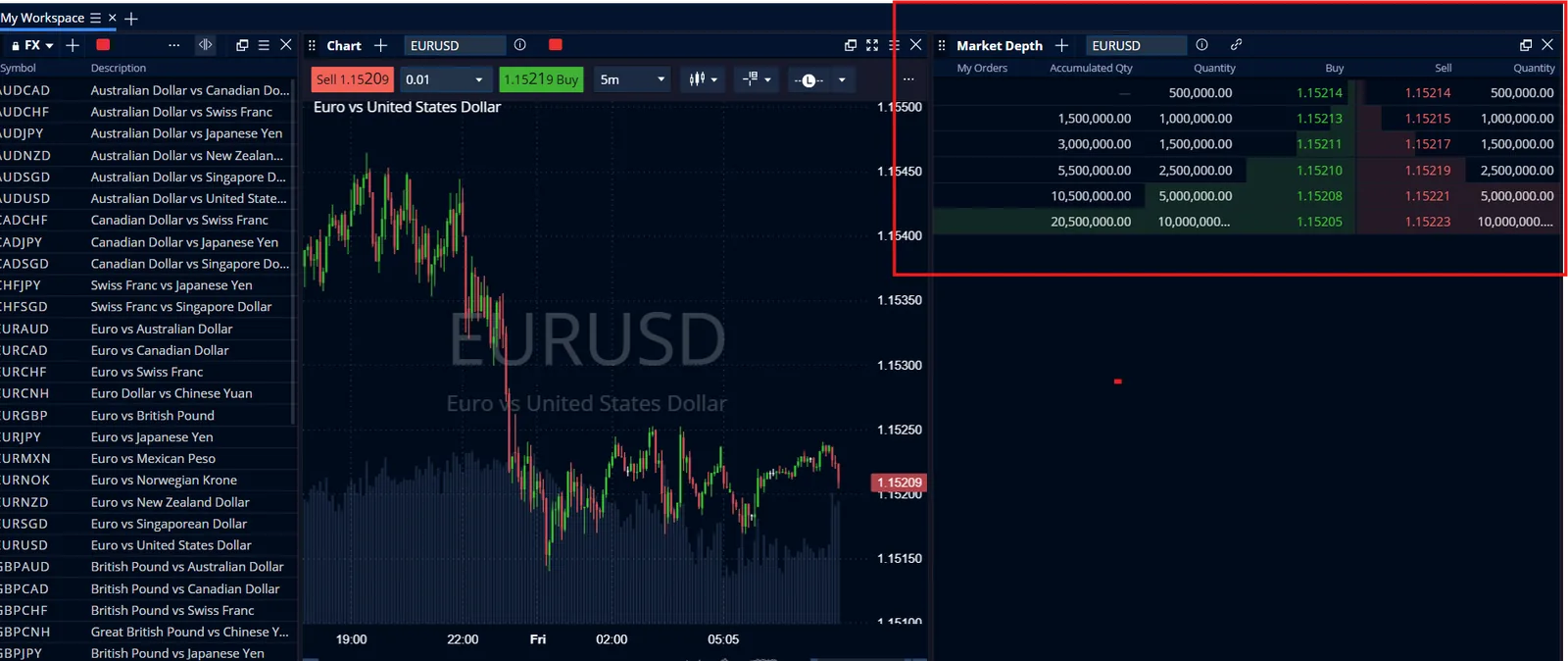
The Raw account pairs EUR/USD spreads from 0.0 pips with AUD 7 round-turn commission per standard lot, a pricing structure that favours active traders who want tight raw spreads and accept a clear per-trade cost. The Standard account is commission-free with wider spreads, which suits a lower-frequency approach. What sets FP Markets apart on this list is the IRESS account, and in my view that is the real reason to choose it, it provides DMA access to ASX equities and international shares that you simply will not find elsewhere in this ranking.
The Raw and Standard accounts require a $100 minimum deposit; the IRESS account needs a separate application and a higher balance. Fee-free funding is available via PayID, BPAY, card and PayPal. Retail leverage follows the ASIC retail caps, and AFCA dispute coverage plus negative balance protection are standard.
FP Markets spread table (averaged over our September 2026 test cycle):
| Pair | Raw avg spread (pips) | + commission equivalent | Total cost |
|---|---|---|---|
| EUR/USD | 0.30 | 0.50 | 0.80 |
| AUD/USD | 0.57 | 0.50 | 1.07 |
| GBP/USD | 0.58 | 0.50 | 1.08 |
| USD/JPY | 0.82 | 0.78 | 1.60 |
| EUR/GBP | 0.27 | 0.37 | 0.64 |
| EUR/JPY | 1.04 | 0.78 | 1.82 |
Broker Screenshots
3. Pepperstone: best for forex-led CFD traders

Average spread
EUR/USD = 0.1GBP/USD = 0.2 AUD/USD = 0.1
Trading platforms
MT4, MT5, cTrader, TradingView, Pepperstone Trading App
Minimum deposit
A$0
Regulation
ASIC AFSL 414530
◎ Standout: Razor RAW account with EUR/USD spreads from 0.0 pips and AUD 7 round-turn per lot
Why we recommend Pepperstone
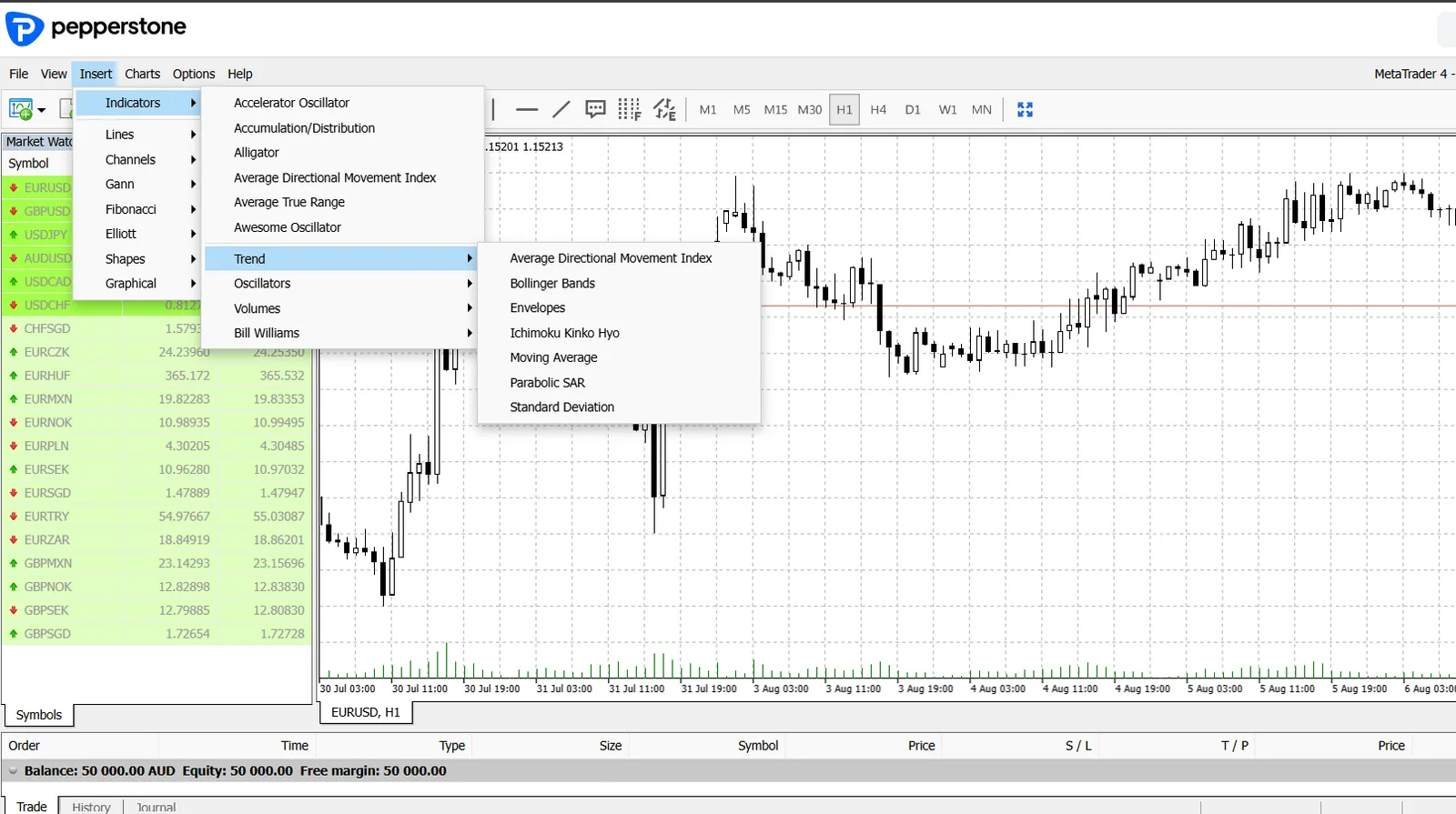
My top-rated broker overall is Pepperstone, and I want to be clear about why it sits third here: our CFD Fit score weights product range more heavily than cost, and its share CFD book of roughly 1,200 names is narrower than what CMC or IG offer. For pricing and platform choice, though, it is genuinely hard to beat: Razor commission of A$3.50 per side, 90+ forex pairs, 25+ indices, and MT4, MT5, cTrader, TradingView plus its own web platform all on a single login. There is no minimum deposit or inactivity fee, and Pepperstone has held AFSL 414530 since 2013.
Pros & cons
- ASIC AFSL 414530 since 2013; founded in Melbourne in 2010 with continuing Australian operations
- Razor RAW account with EUR/USD spreads from 0.0 pips and AUD 7 round-turn per lot
- Five trading platform options (MT4, MT5, cTrader, TradingView, Pepperstone Platform)
- Share CFD range narrower than CMC, IG, IBKR (around 1,200 vs 10,000+ at CMC)
- No native ASX share investing (CFD only)
- Standard account spreads less competitive than the Razor account; choose Razor if you trade actively
Broker's Detail
Founded in Melbourne in 2010, Pepperstone has grown into one of Australia's largest forex brokers and has held ASIC AFSL 414530 since 2013. You are also protected by Tier-1 licences with the FCA (UK), BaFin (Germany), CySEC (Cyprus), CMA (Kenya) and DFSA (Dubai).
Two main account types are offered. The Razor (RAW) account pairs EUR/USD spreads from 0.0 pips with AUD 7 round-turn commission per standard lot, and this is the one I recommend for anyone who trades frequently. The Standard account is commission-free with EUR/USD from roughly 1.1 pips, which can work if you trade less often and want a simpler cost structure. The five supported platforms are MT4, MT5, cTrader, TradingView and the Pepperstone Trading Platform, with TradingView available on the Razor account only, not on Standard.
Funding is fee-free via PayID, BPAY, card and PayPal, and AUD-denominated accounts are available so you avoid a forced conversion. Retail leverage follows the ASIC retail caps, with negative balance protection and AFCA dispute coverage standard. Customer support runs 24/7 by live chat, which matters if you trade outside standard business hours.
Pepperstone spread table (averaged over our May to June 2026 test cycle):
| Pair | Razor avg spread (pips) | + commission equivalent | Total cost |
|---|---|---|---|
| EUR/USD | 0.10 | 0.45 | 0.55 |
| AUD/USD | 0.10 | 0.45 | 0.55 |
| GBP/USD | 0.20 | 0.45 | 0.65 |
| USD/JPY | 0.10 | 0.45 | 0.55 |
| EUR/GBP | 0.30 | 0.45 | 0.75 |
Broker Screenshots
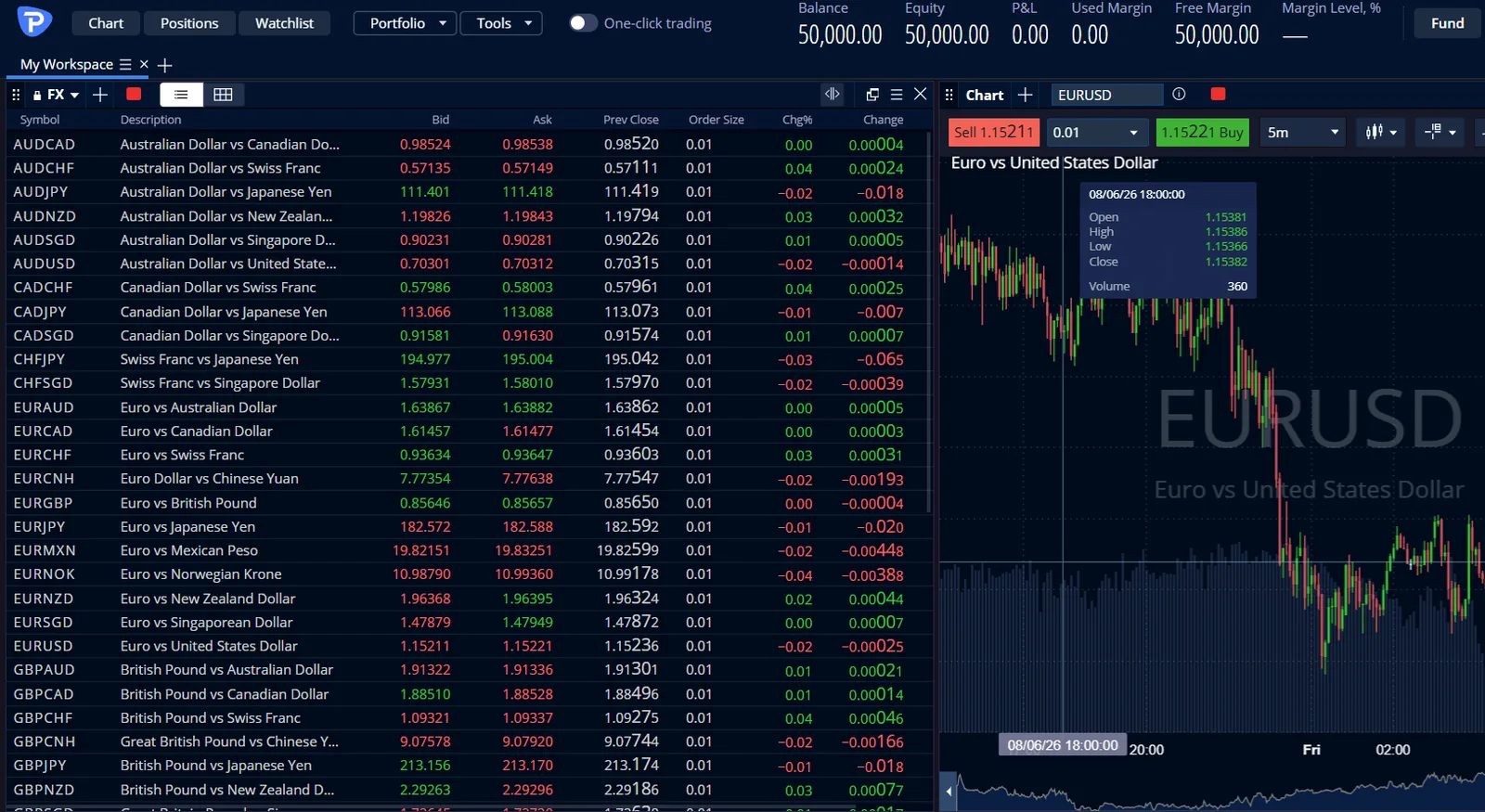
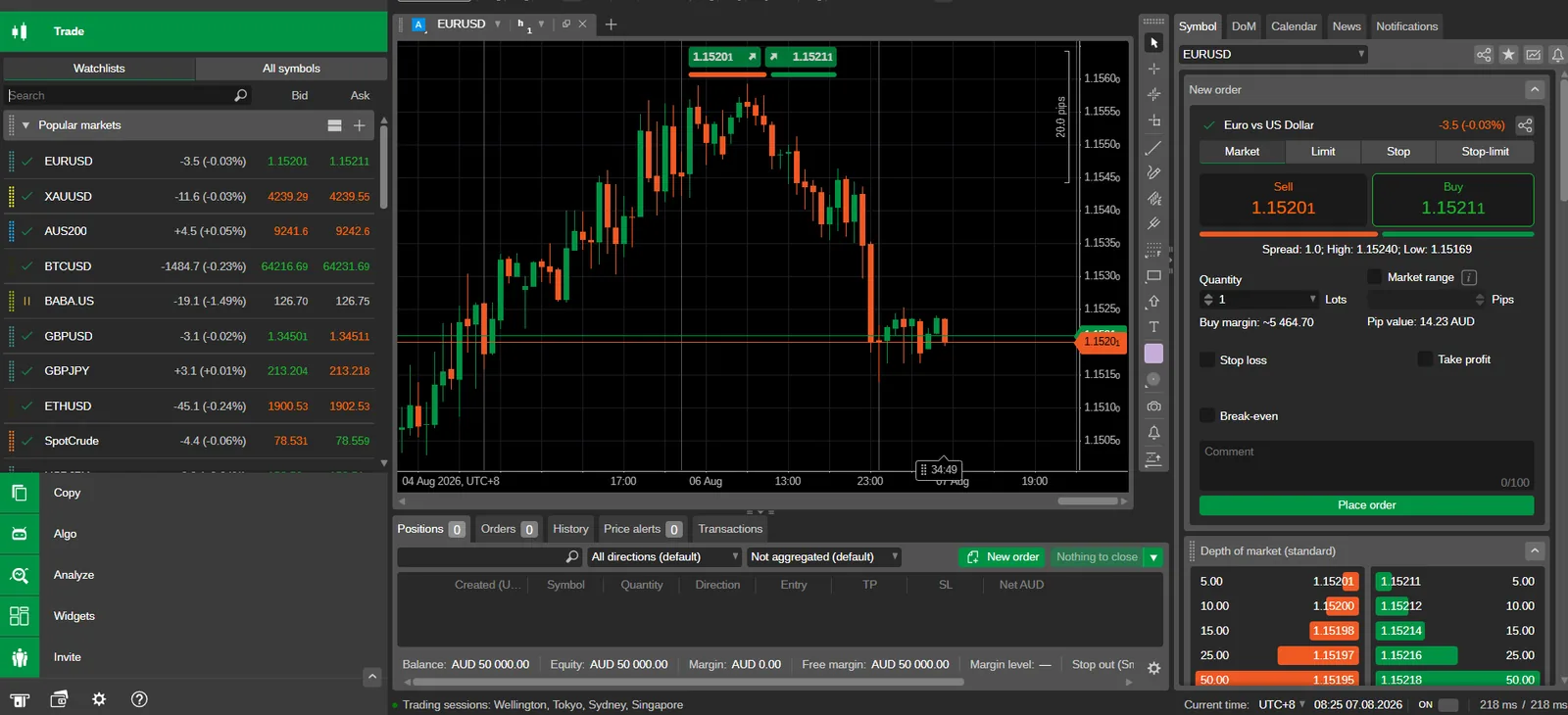
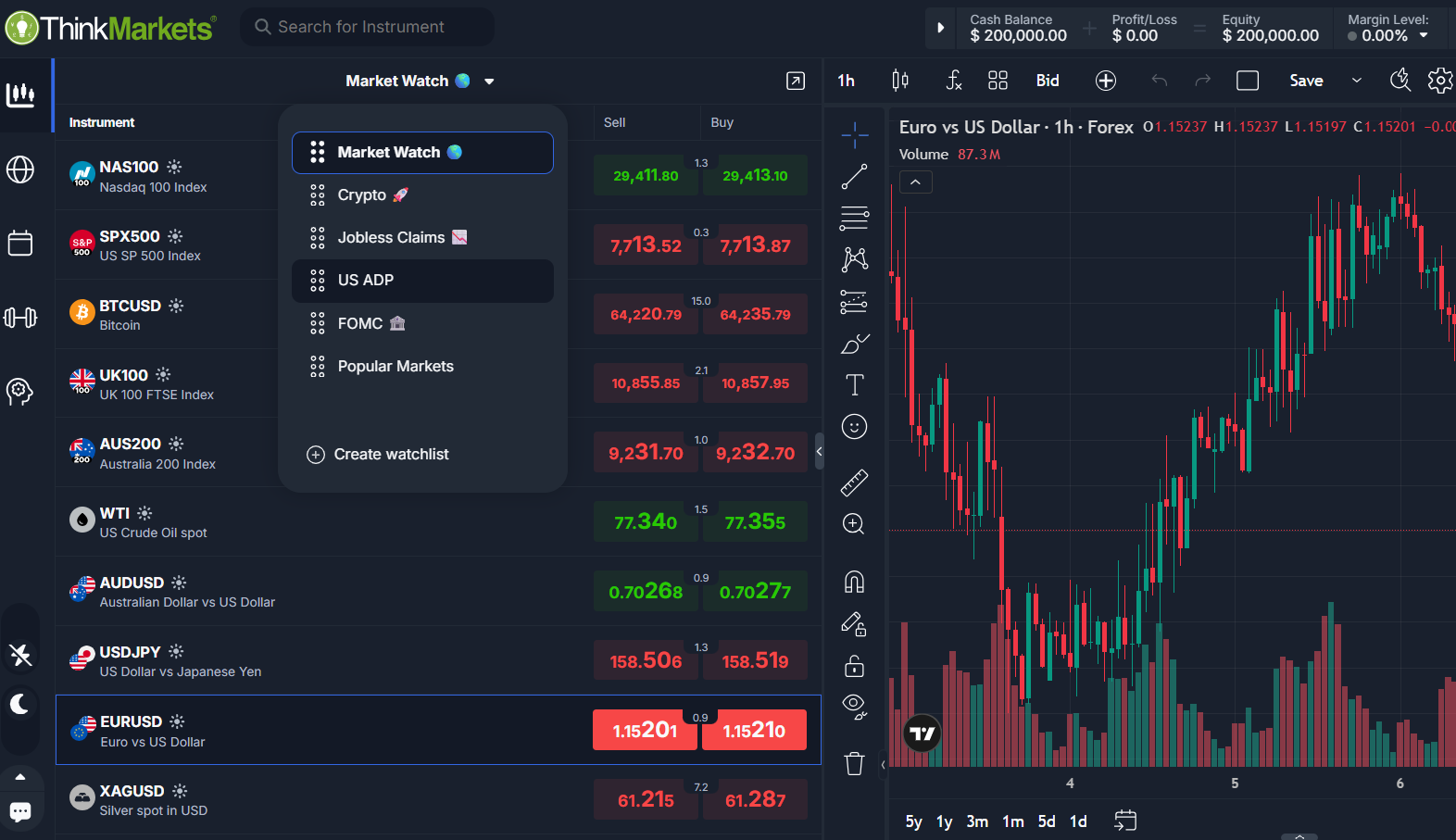
4. ThinkMarkets: deep CFD range across one Melbourne-founded account

Average spread
EUR/USD = 0.4 (Std) / 0.11 (ThinkZero)GBP/USD = 0.6 AUD/USD = 0.5
Trading platforms
ThinkTrader, MT4, TradingView
Minimum deposit
A$0
Regulation
ASIC AFSL 424700
◎ Standout: 4,000+ tradeable instruments across MT4, ThinkTrader and TradingView
Why higher here? CFD Fit rewards ThinkMarkets' broad multi-platform CFD range, while its site-wide score reflects standard-account spreads that trail the raw brokers. See the ranking method ↓
Why we recommend ThinkMarkets
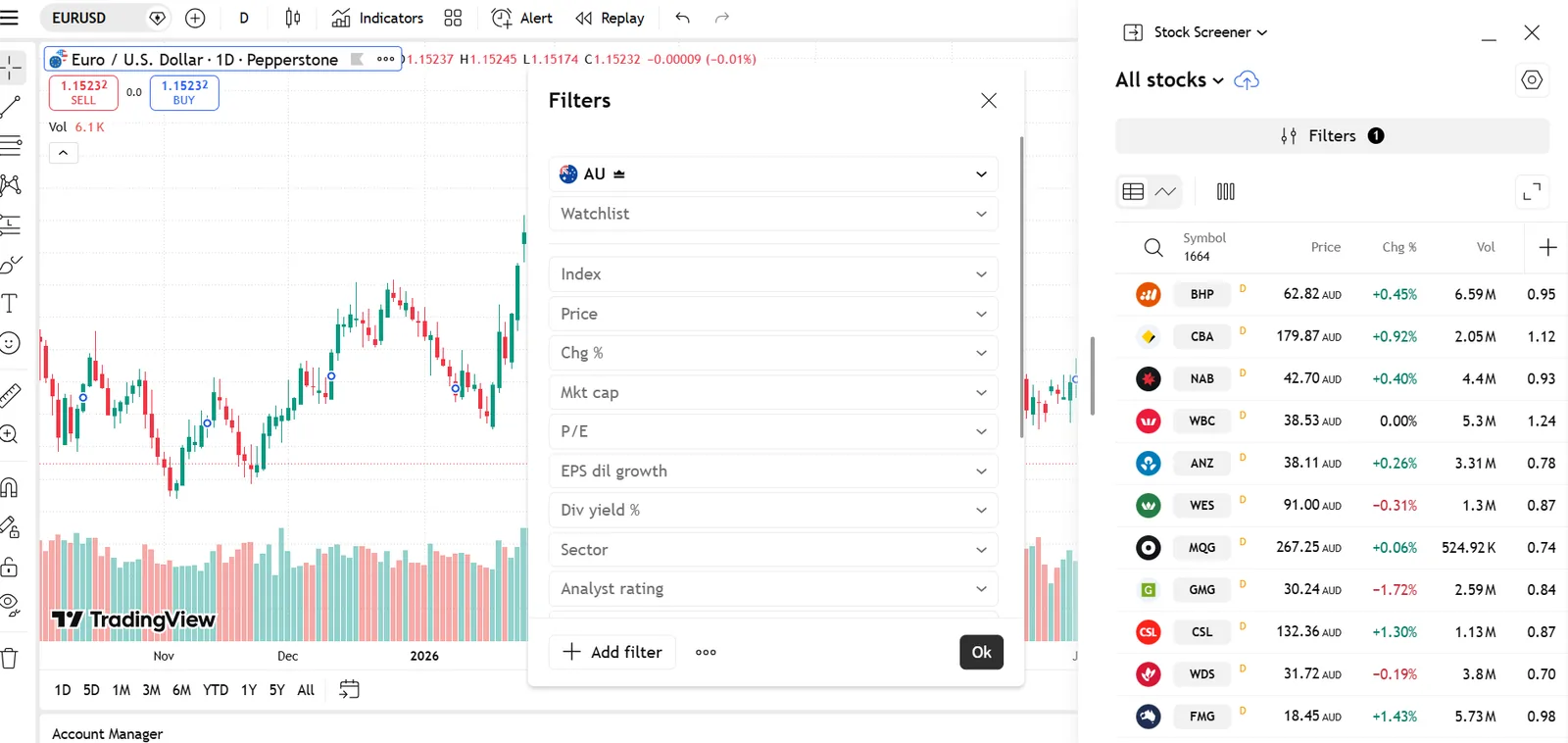
When a trader's priority is exchange-listed share CFDs, ThinkMarkets is the name I keep bringing up. It brings a deep multi-asset book to the mid-table, 4,000+ instruments including 3,500+ share CFDs across the ASX, NYSE, NASDAQ, LSE and EU exchanges, and that breadth is what holds it in the conversation against larger rivals. The Melbourne-based broker pairs its ThinkTrader web and mobile platform, which adds TradingView on the same account, with MT4 for expert advisor users on the Standard and ThinkZero accounts. ThinkZero prices raw spreads with A$3.50 per side commission on AUD accounts and carries a hard A$500 minimum, a higher bar than most peers. ThinkMarkets has been ASIC-regulated under AFSL 424700 since 2012.
Pros & cons
- ASIC AFSL 424700 since 2012; founded and headquartered in Melbourne
- 4,000+ tradeable instruments across MT4, ThinkTrader and TradingView
- ThinkTrader proprietary mobile app is one of the better AU trading apps
- ThinkZero requires a A$500 minimum deposit (vs $0 at Pepperstone and Fusion)
- Standard account at 0.4 pips beaten on raw cost by Pepperstone, IC Markets and Fusion
- USD 10 monthly inactivity fee after 12 months dormant
Broker's Detail
Founded in Melbourne in 2010 (AFSL 424700, TF Global Markets (Aust) Pty Ltd), ThinkMarkets holds Tier-1 licences alongside ASIC: FCA (UK), CySEC (Cyprus), FSCA (South Africa), DFSA (Dubai), JFSA (Japan). That's a regulatory stack rarely seen outside the biggest listed brokers. That's a regulatory stack I rarely see outside the biggest listed brokers.
The Standard account is commission-free with EUR/USD from 0.4 pips, a spread level that holds its own even against some raw accounts on this list. The ThinkZero RAW account pairs EUR/USD spreads from 0.0 pips with AUD 7.00 round-turn commission, which puts it in line with the Australian RAW pricing benchmark. Platforms supported are the ThinkTrader proprietary platform, MT4 and TradingView.
The minimum deposit is $0, with AU funding via PayID, BPAY and card. Retail leverage follows the ASIC retail caps, and AFCA dispute coverage plus negative balance protection are standard. Customer support runs 24/5 by live chat, email and phone, giving you a proper escalation path if chat does not resolve your query.
Broker Screenshots
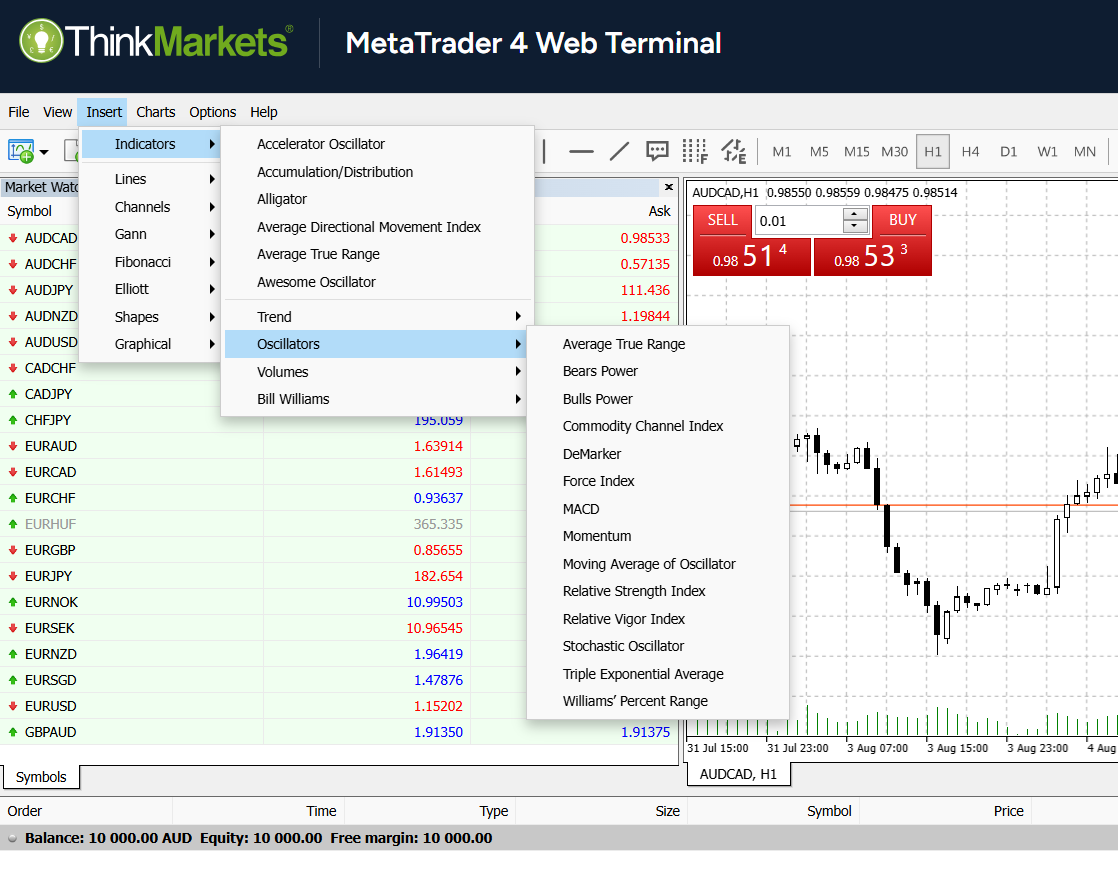
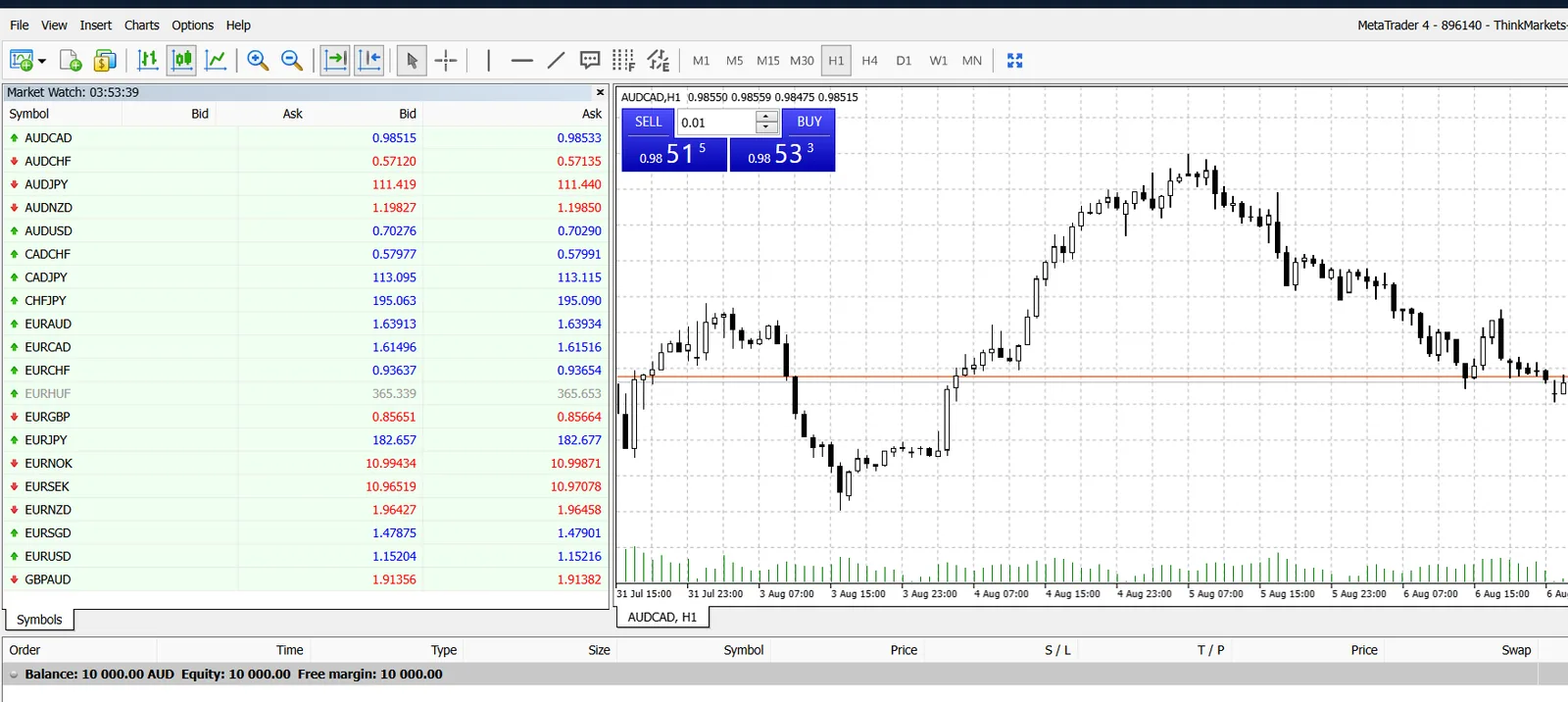
5. CMC Markets: long-running platform leader with strong charting

Average spread
EUR/USD = 0.7GBP/USD = 0.9 AUD/USD = 0.6
Trading platforms
Next Generation, MT4, CMC Stockbroking, TradingView
Minimum deposit
A$0
Regulation
ASIC AFSL 238054
◎ Standout: Next Generation platform is the strongest proprietary CFD platform in Australia
Why higher here? CFD Fit credits CMC's 12,000+ instrument range and Next Generation platform, where the site-wide score weights its wider standard spreads more heavily. See the ranking method ↓
Why we recommend CMC Markets
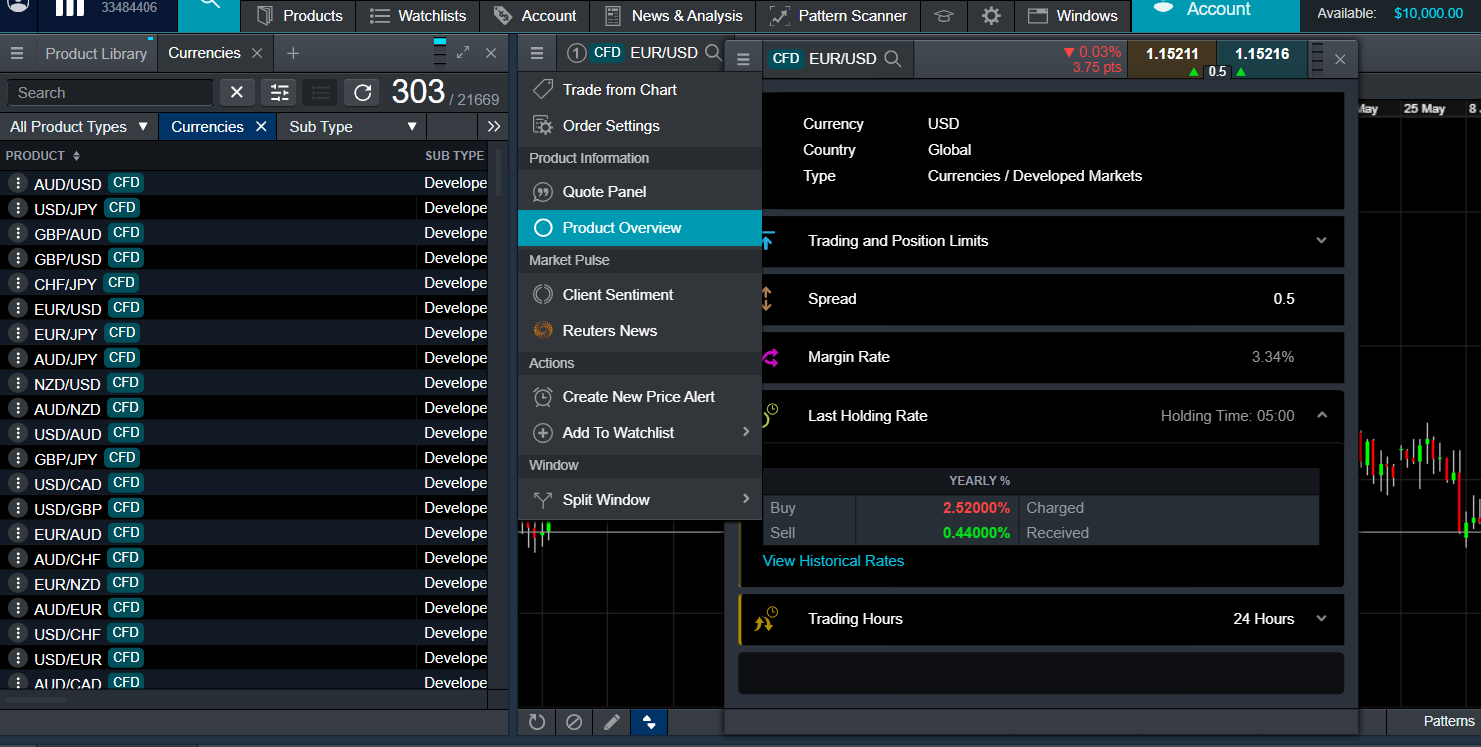
Nothing else here matches the scale I see at CMC Markets: over 12,000 CFD instruments, including 330+ forex pairs, 10,000+ share CFDs, 100+ commodities and one of the few bond CFD lineups in this group, and all of it sits on the Next Generation platform with pattern recognition scanning and client sentiment data built in. The Standard account is spread only with no commission and no minimum deposit, and the separate CMC Invest service adds direct ASX share dealing under its own licence. I like the fact that Morningstar and Reuters research feeds are integrated rather than bolted on. CMC Markets Asia Pacific has held AFSL 238054 since 2004.
Pros & cons
- ASIC AFSL 238054 since 2004, plus FCA, BaFin, MAS, CIRO regulation globally, top-tier trust profile
- Next Generation platform is the strongest proprietary CFD platform in Australia
- 12,000+ CFD instruments plus integrated CMC Stockbroking for ASX equities
- Standard account spreads on EUR/USD and AUD/USD wider than top-tier RAW brokers
- Share CFD overnight financing rates above average for the AU market
- Customer support hours 24/5 only (closed weekends)
Broker's Detail
Founded in London in 1989 and operating in Australia since 2002, CMC Markets is one of the longest-tenured CFD brokers in the AU market. The Australian entity holds AFSL 238054, and the group is LSE-listed with additional FCA (UK), BaFin (Germany), MAS (Singapore) and CIRO (Canada) licences.
Standard account spreads start from 0.5 pips on EUR/USD with no commission; if you trade higher volume and want tighter pricing, FX Active pairs tighter spreads with a commission. CMC also runs a separate stockbroking service for direct ASX share investing, which is useful if you want CFD exposure and outright share ownership under one roof. The Next Generation platform pairs with MT4, though the AU entity does not offer MT5 or cTrader.
There is a $0 minimum deposit and fee-free AU funding via bank transfer, PayID and PayPal, so you can start small and scale up. Retail leverage follows the ASIC retail caps, with negative balance protection and AFCA dispute coverage standard. Customer support runs 24/5 by live chat, email and phone.
CMC Markets spread table (CMC Markets column: indicative standard-account pricing, not from our measured capture):
| Pair | CMC Standard (typical pips) | Avg of 8 measured standard accounts (September 2026) |
|---|---|---|
| EUR/USD | 0.5 | 0.83 |
| AUD/USD | 0.6 | 0.87 |
| GBP/USD | 0.9 | 1.20 |
| USD/JPY | 0.7 | 1.14 |
| EUR/GBP | 0.7 | 1.44 |
| EUR/JPY | 1.2 | 2.07 |
| AUD/JPY | 1.2 | 2.09 |
Broker Screenshots
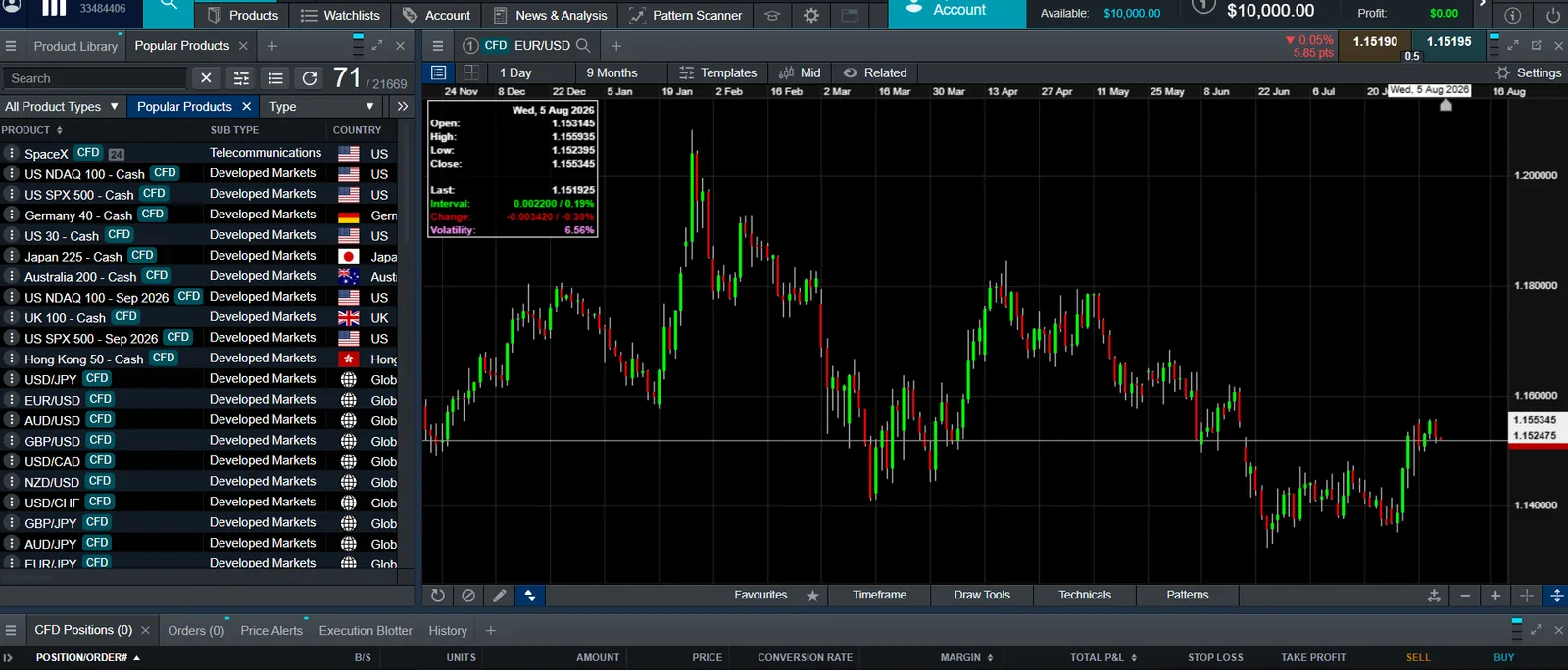
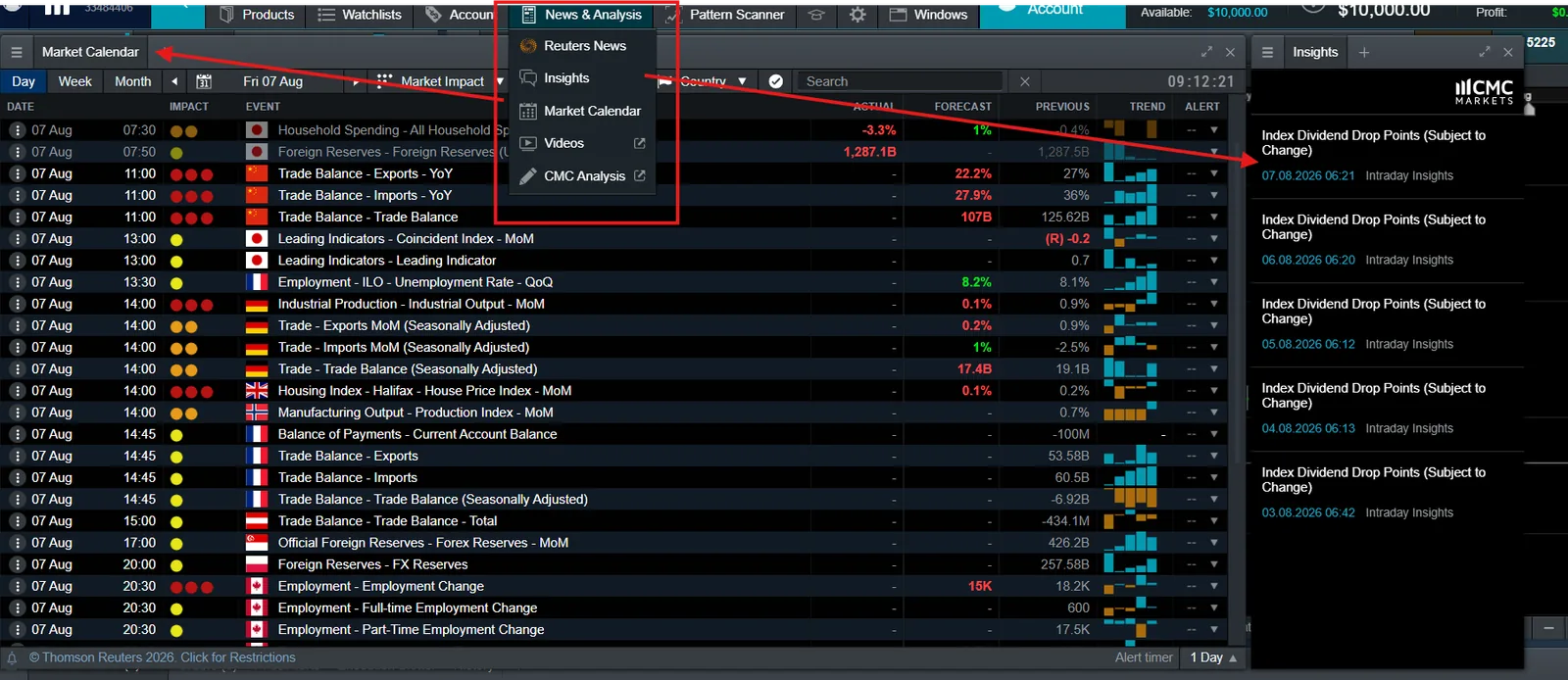
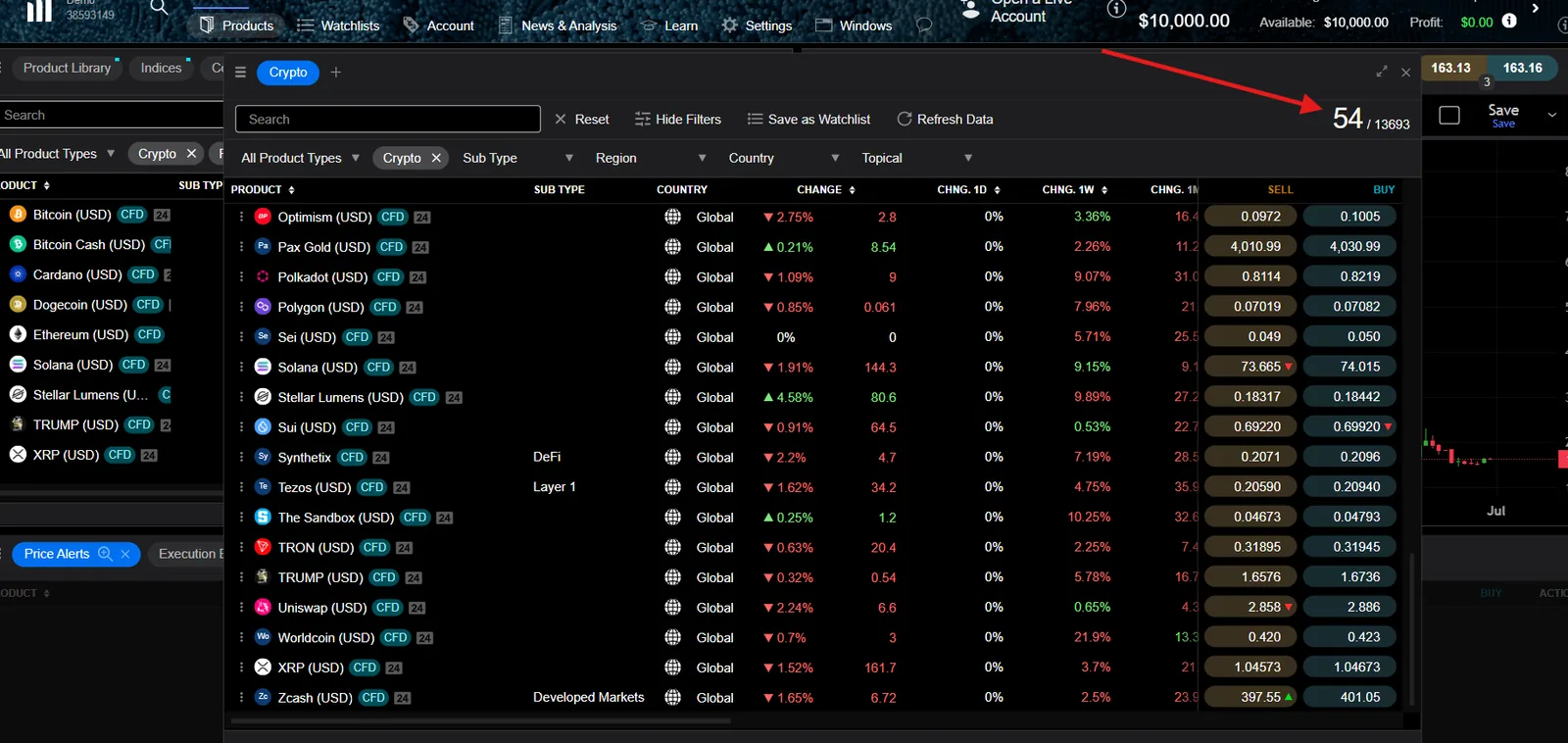
6. IG Markets: widest CFD product range in Australia

Average spread
EUR/USD = 0.6GBP/USD = 0.9 AUD/USD = 0.8
Trading platforms
MT4, IG Web Platform, IG Mobile App, TradingView
Minimum deposit
A$100
Regulation
ASIC AFSL 515106
◎ Standout: 17,000+ tradeable markets including 13,000+ share CFDs, the broadest range of any ASIC-regulated broker
Why higher here? CFD Fit weights product range and platform quality above forex spread cost, which lifts IG Markets above its #14 sitewide position. See the ranking method ↓
Why we recommend IG Markets
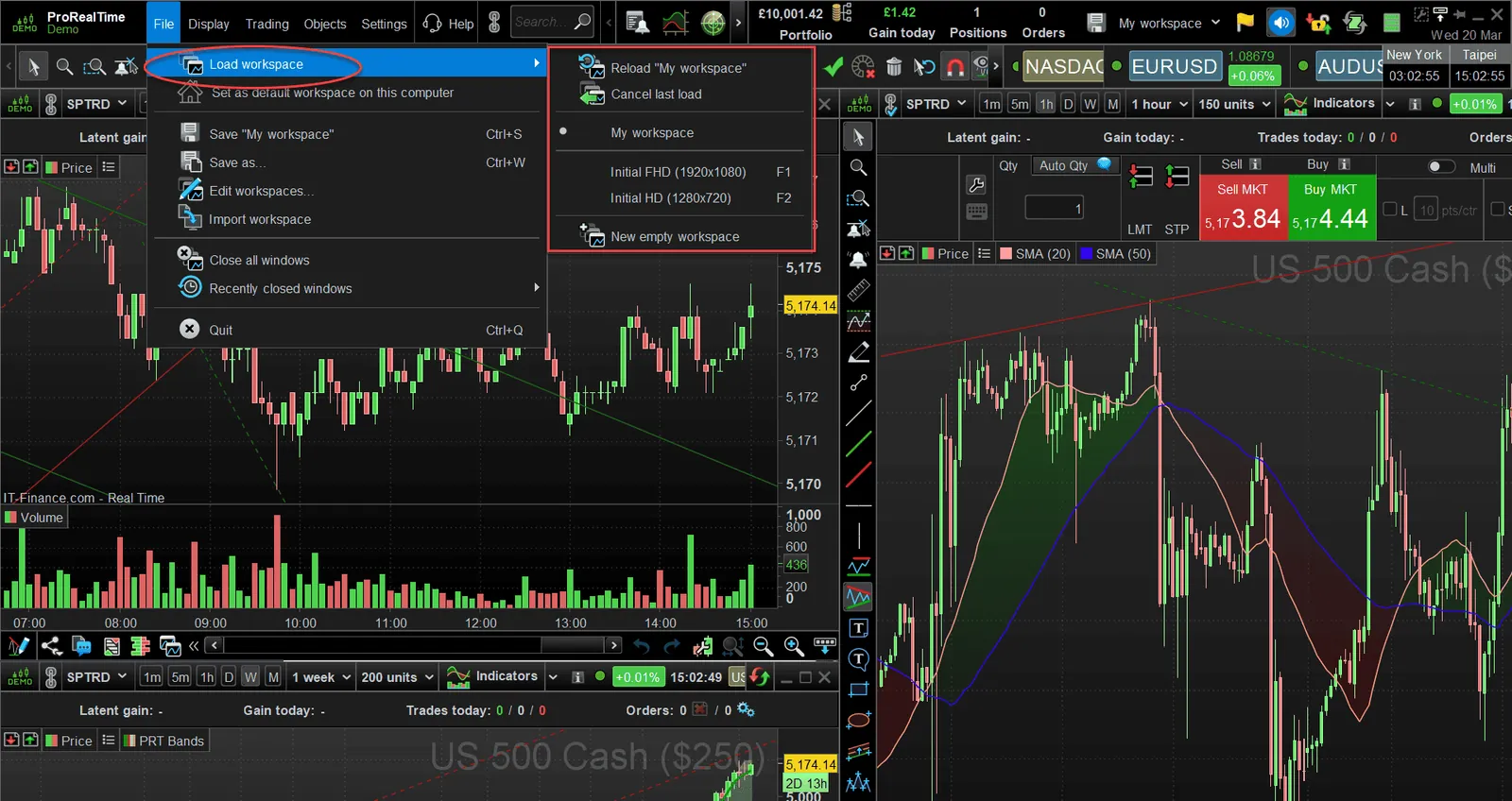
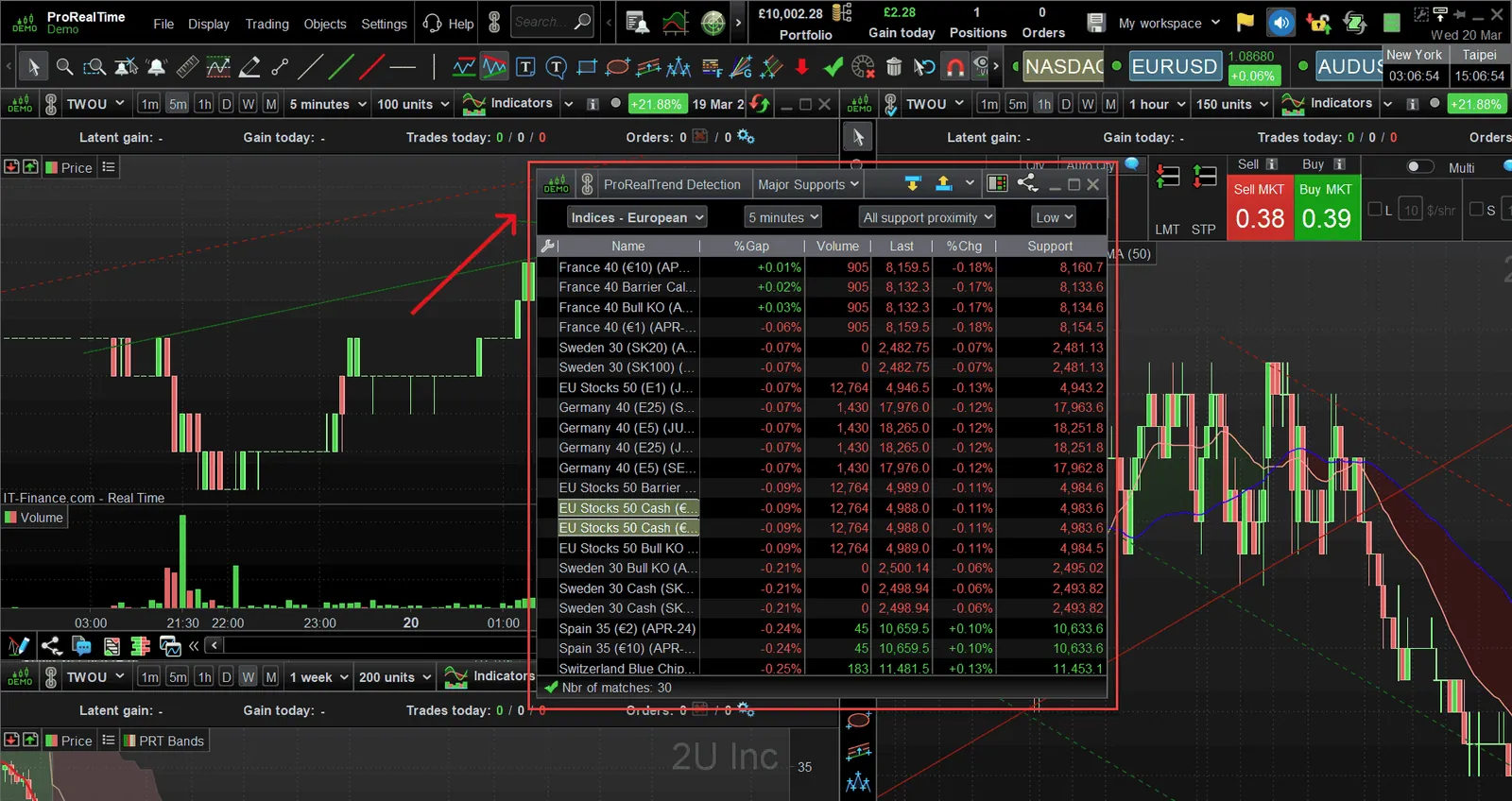
If a trader tells me they want every market in one place, IG Markets is the range heavyweight I point to. You get 17,000+ markets spanning 80+ forex pairs, 30+ indices, 13,000+ share CFDs, 35+ commodities and bond CFDs, plus Knock-Out and Barrier options that no other broker here offers to retail clients. Trading runs on the IG web platform or MT4, and ProRealTime charting is free for clients trading four or more times a month. The minimum deposit is A$100 by card, or A$10 by BPAY, and IG has operated in Australia since 2002, with IG Australia Pty Ltd holding AFSL 515106.
Pros & cons
- ASIC AFSL 515106 (IG Australia Pty Ltd), current since 2 June 2020, plus FCA, MAS, CIRO regulation globally; LSE-listed parent with FTSE 250 status
- 17,000+ tradeable markets including 13,000+ share CFDs, the broadest range of any ASIC-regulated broker
- A$100 minimum deposit by card (A$10 by BPAY); fee-free PayID, BPAY, card and PayPal funding for AU clients
- No MT5 and no cTrader on the AU entity
- No native TradingView trading integration
- Share CFD overnight financing rates above the AU market average
Broker's Detail
IG is one of the oldest brokers in the industry, founded in 1974 and listed on the London Stock Exchange as a FTSE 250 constituent. IG has operated in Australia since 2002; new Australian CFD accounts are issued by IG Australia Pty Ltd under AFSL 515106. The group also holds FCA (UK), MAS (Singapore), CIRO (Canada) and 8 additional Tier-1 licences, a regulatory footprint that few brokers anywhere can match.
The headline draw is product breadth: 17,000+ tradeable markets including 13,000+ share CFDs, the broadest range of any ASIC-regulated broker we cover. Forex coverage spans 90+ pairs, which covers every major, minor and exotic you are likely to need. Spreads start from 0.6 pips on EUR/USD with no commission on the standard account; if you prefer a commission structure, Forex Direct adds a volume-tiered commission billed in US dollars per US$1 million of notional.
A $0 minimum deposit and fee-free AU funding via PayID, BPAY, card and PayPal make the account accessible. Platforms include MT4, the IG Web Platform and the IG Mobile App. Retail leverage follows the ASIC retail caps, and negative balance protection plus AFCA dispute coverage are standard.
IG Markets spread table (averaged over our September 2026 test cycle):
| Pair | IG MT4 CFD (measured avg pips) | Avg of 8 measured standard accounts |
|---|---|---|
| EUR/USD | 0.72 | 0.83 |
| AUD/USD | 0.73 | 0.87 |
| GBP/USD | 1.09 | 1.20 |
| USD/JPY | 1.16 | 1.14 |
| EUR/GBP | 1.09 | 1.44 |
| EUR/JPY | 2.11 | 2.07 |
| AUD/JPY | 2.24 | 2.09 |
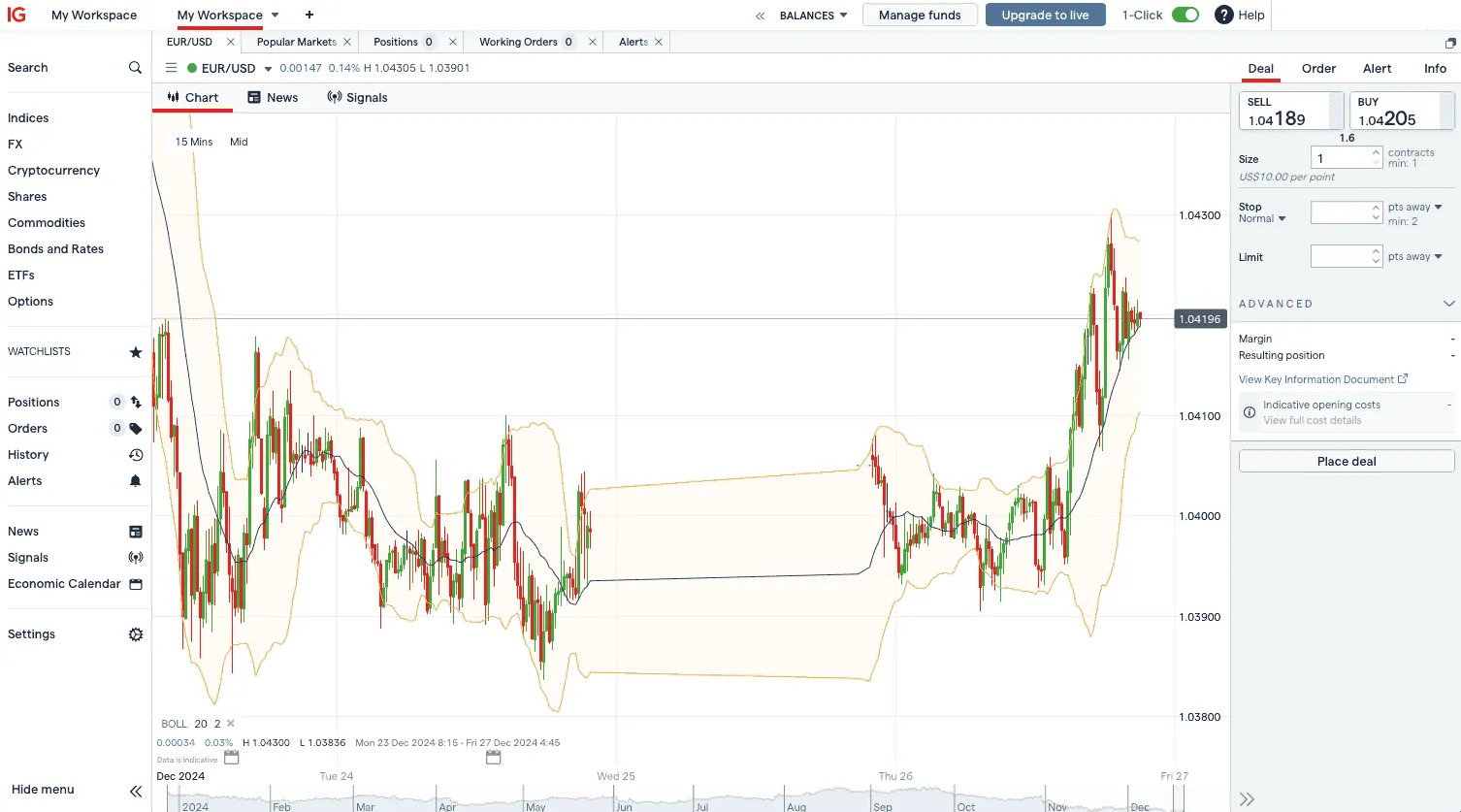
Broker Screenshots
7. IC Markets: tightest typical raw spreads

Average spread
EUR/USD = 0.0GBP/USD = 0.2 AUD/USD = 0.1
Trading platforms
MT4, MT5, cTrader, TradingView
Minimum deposit
A$200
Regulation
ASIC AFSL 335692
◎ Standout: Raw Spread account with EUR/USD spreads from 0.0 pips and AUD 9.00 round-turn per lot
Why lower here? CFD Fit weights product range and platform quality above forex spread cost rather than the all-round strengths behind IC Markets' #4 sitewide position. See the ranking method ↓
Why we recommend IC Markets
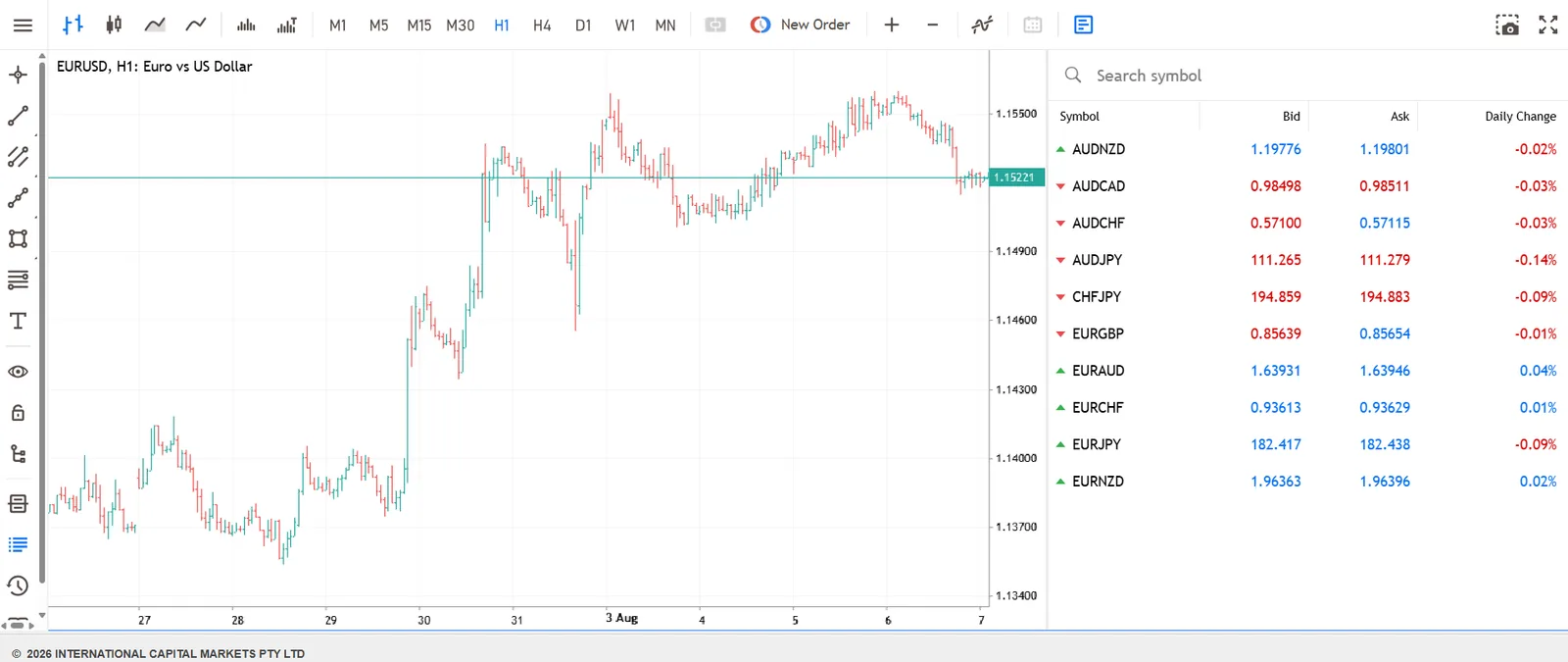
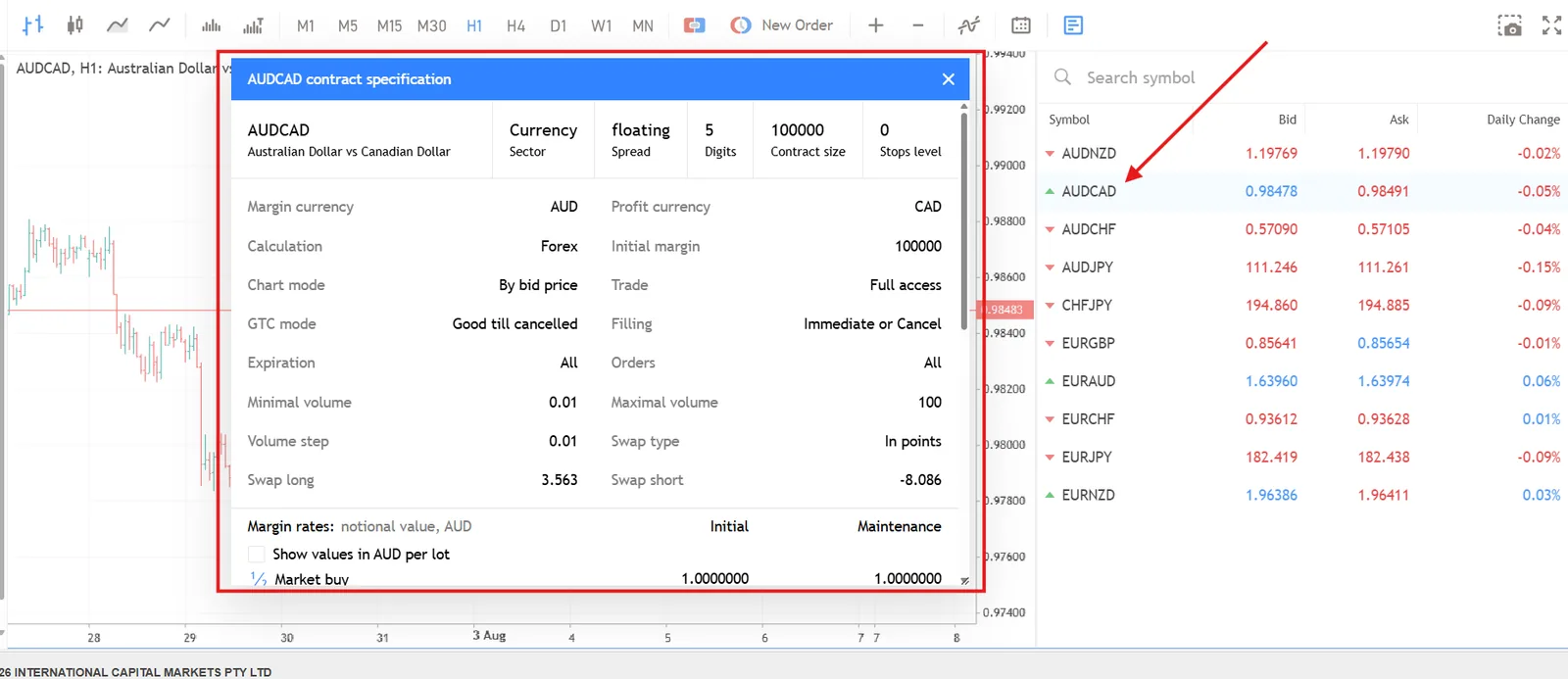
For execution-first traders, IC Markets is the execution pick of the ten, and if low-latency fills matter more to your strategy than product range, this is where I would send you. The Raw Spread account averaged 0.11 pips on EUR/USD in our September 2026 capture with A$4.50 per side commission, and CFD coverage takes in 25+ indices, roughly 2,000 share CFDs on MT5, commodities and 18+ crypto CFDs; ETF CFDs join as a seventh class on 25 September 2026 under the broker's updated PDS. cTrader is its recommended platform alongside MT4 and MT5, and execution consistently places among the fastest we track, with free VPS for qualifying active traders. The minimum deposit is US$200, and International Capital Markets has held AFSL 335692 since 2009.
Pros & cons
- ASIC AFSL 335692 since 2009; founded in Sydney
- Raw Spread account with EUR/USD spreads from 0.0 pips and AUD 9.00 round-turn per lot
- True ECN/cTrader connectivity with deep liquidity from 25+ Tier-1 banks and dark pools
- $200 minimum deposit (vs $0 at Pepperstone, CMC, IG, Fusion)
- No native TradingView integration on the AU entity
- Share CFD range narrower than CMC, IG, IBKR
Broker's Detail
Founded in Sydney in 2007, IC Markets is one of Australia's longest-running ECN brokers and has held AFSL 335692 since 2009. The Raw Spread account delivers EUR/USD spreads from 0.0 pips with AUD 9 round-turn commission, while the cTrader RAW account bills USD 3.00 per USD 100,000 traded per side, converted to your account currency. The Standard account is commission-free with spreads from 1.0 pips, but in my view the Raw and cTrader RAW accounts are the real reason to choose IC Markets.
Liquidity comes from 25+ Tier-1 banks and dark pools, and the result is true ECN execution that suits scalpers and EA traders who need their orders filled at the price they see. Platforms supported are MT4, MT5 and cTrader. Over 2,250 tradeable instruments span forex, indices, commodities, bonds, shares and crypto CFDs, and the PDS dated 25 September 2026 adds ETF CFDs to that range.
The minimum deposit is $200, which is higher than the $0 brokers in this list, so you need a little more capital to get started. AUD funding via PayID, BPAY and card is fee-free. Retail leverage follows the ASIC retail caps, with AFCA dispute coverage and negative balance protection.
IC Markets spread table (averaged over our September 2026 test cycle):
| Pair | Raw Spread avg (pips) | + commission equivalent | Total cost |
|---|---|---|---|
| EUR/USD | 0.11 | 0.64 | 0.75 |
| AUD/USD | 0.09 | 0.64 | 0.73 |
| GBP/USD | 0.24 | 0.64 | 0.88 |
| USD/JPY | 0.15 | 1.01 | 1.16 |
| AUD/JPY | 0.41 | 1.01 | 1.42 |
Broker Screenshots
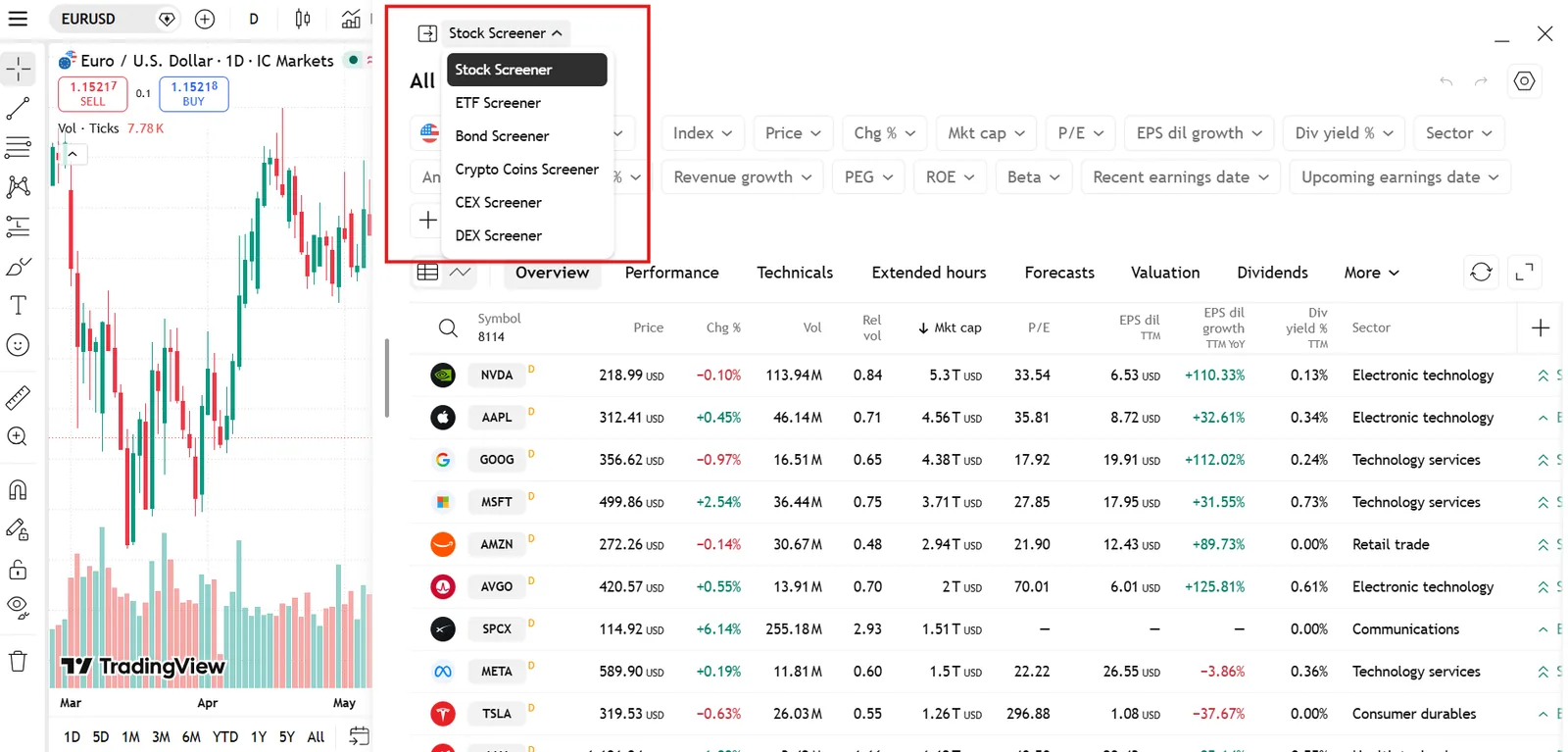
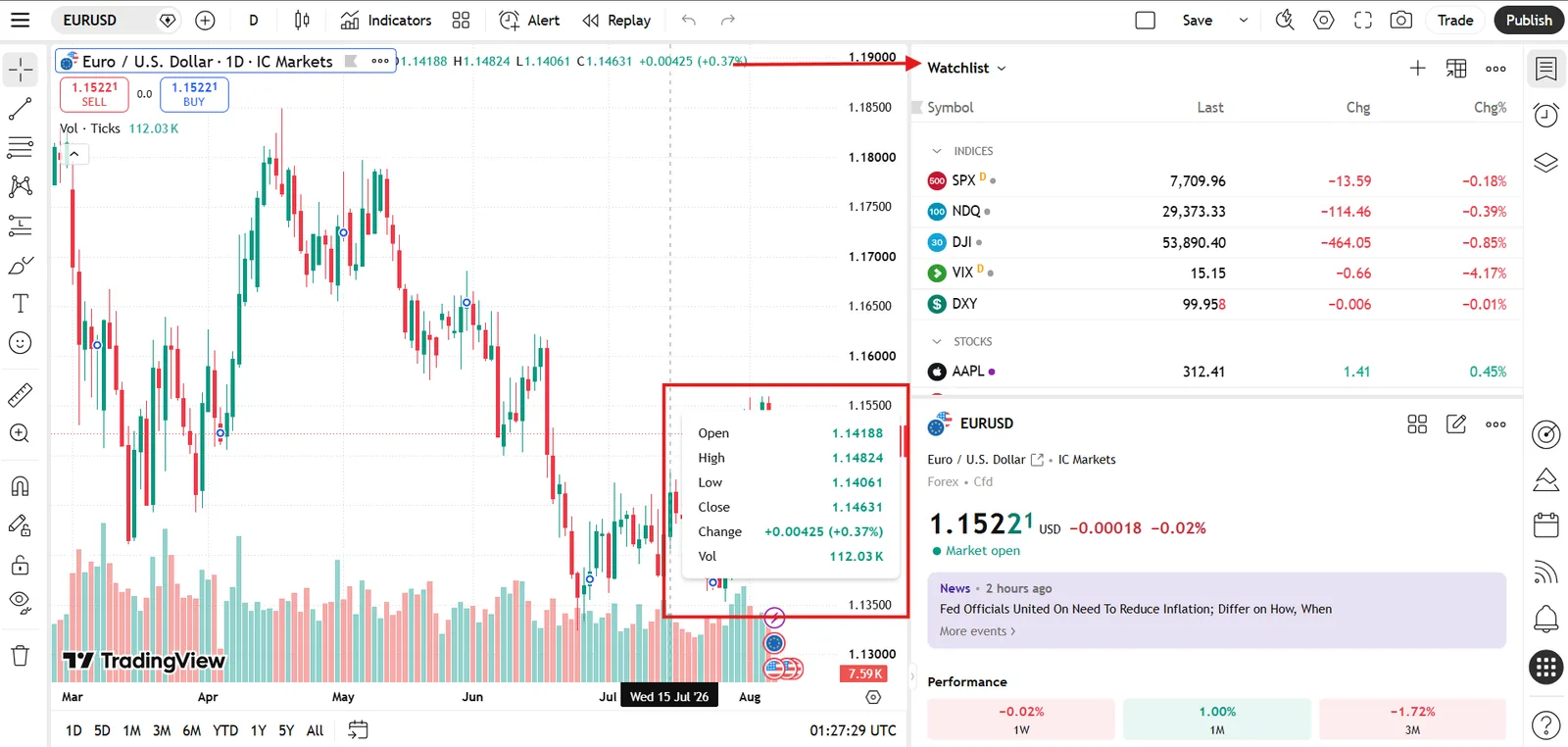
8. Plus500: cleanest platform for new CFD traders

Average spread
EUR/USD = 0.8GBP/USD = 1.0 AUD/USD = 0.9
Trading platforms
Plus500 WebTrader, app
Minimum deposit
A$100
Regulation
ASIC AFSL 417727
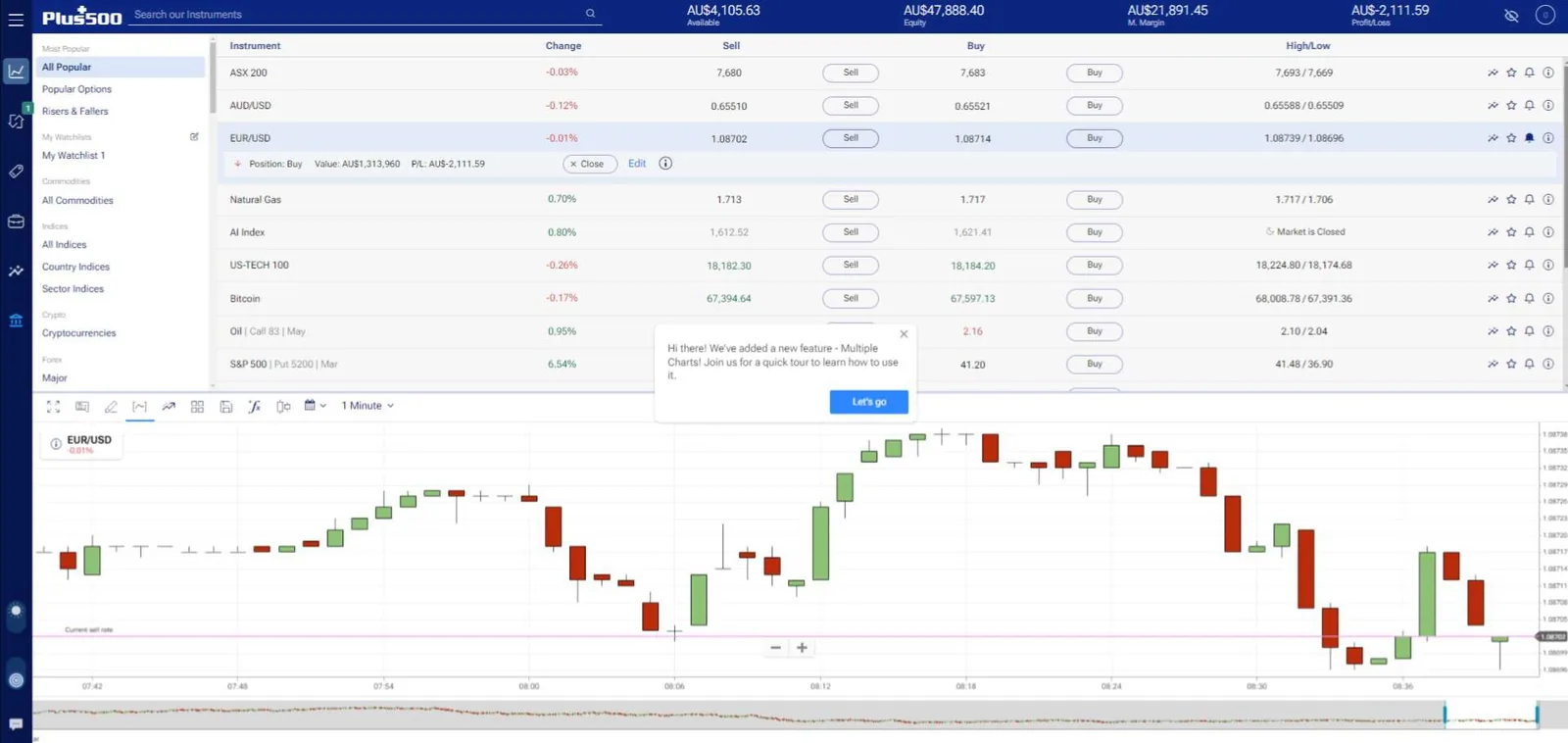
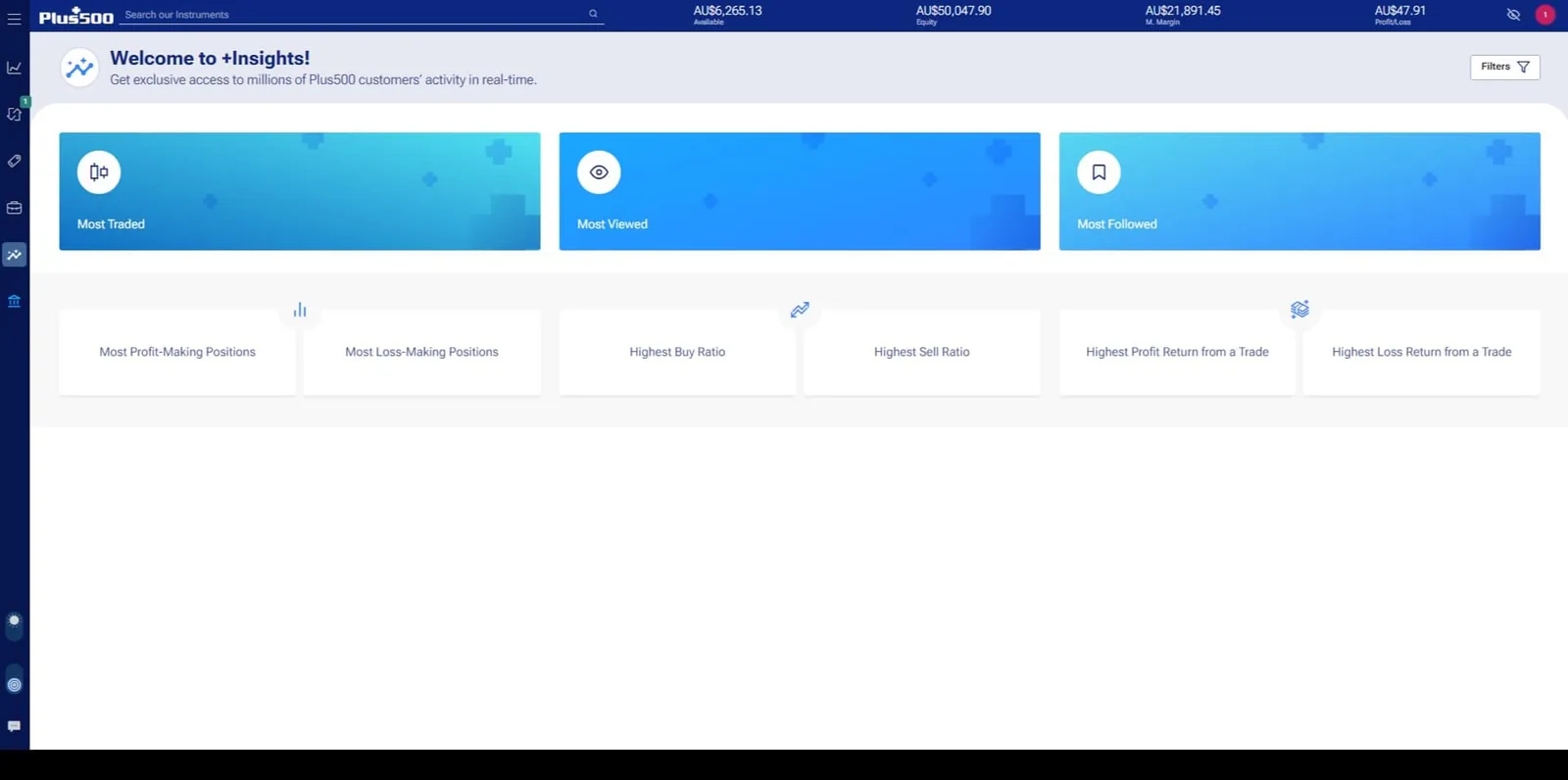
◎ Standout: WebTrader platform is the cleanest beginner CFD interface in our coverage
Why higher here? CFD Fit weights product range and platform quality above forex spread cost, which lifts Plus500 above its #16 sitewide position. See the ranking method ↓
Why we recommend Plus500
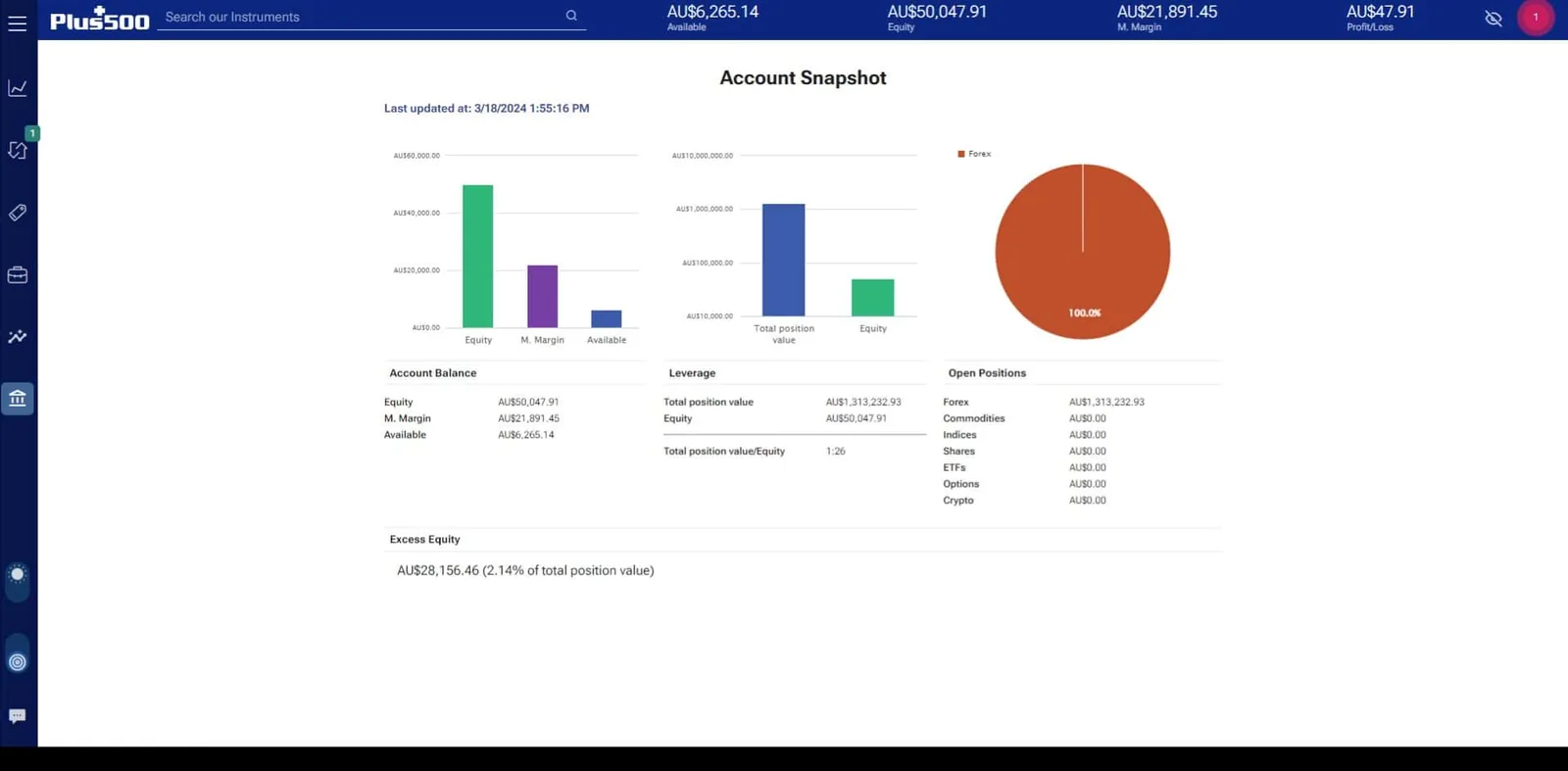
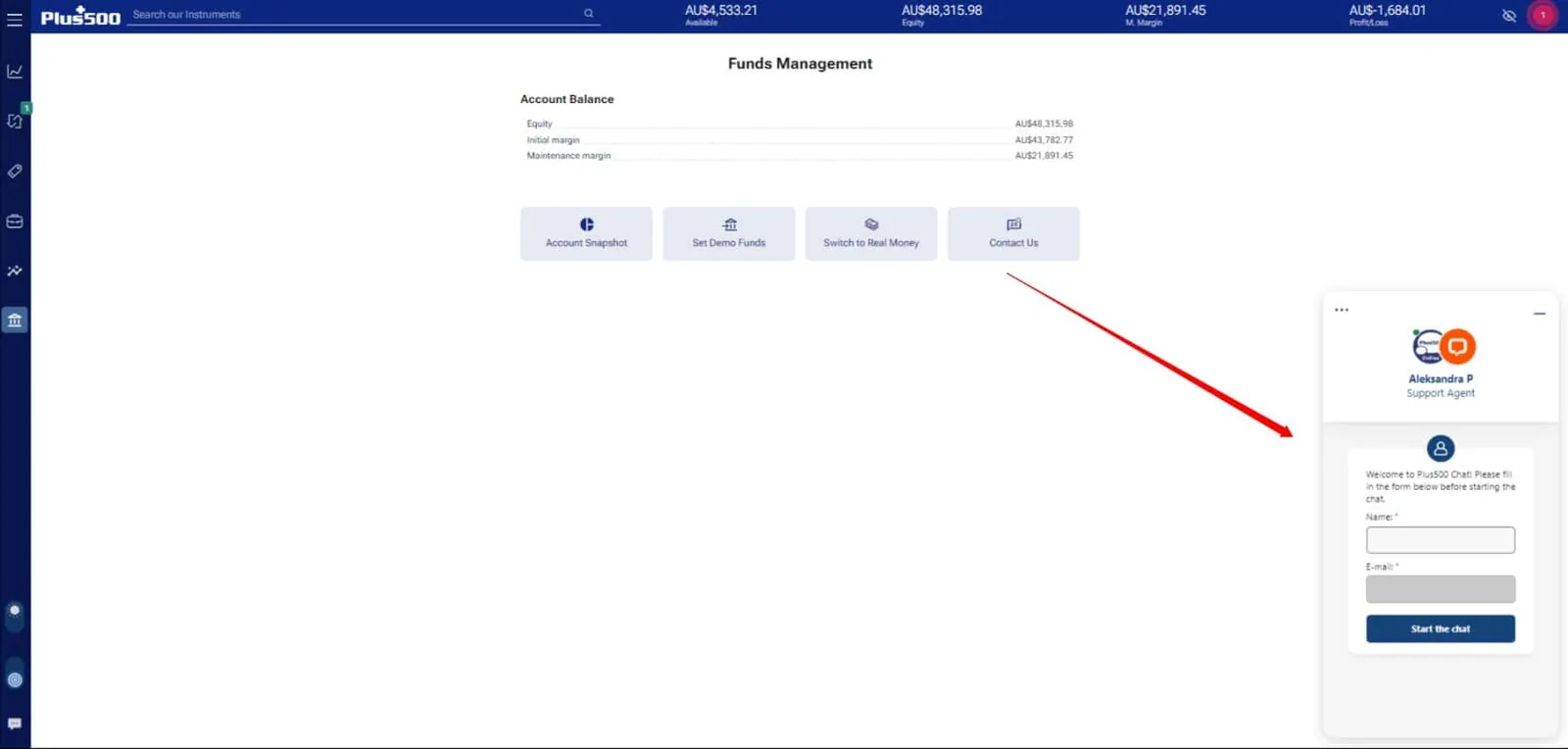
I recommend Plus500 for the trader who wants CFD trading kept simple, and that simplicity is exactly what sells it for a certain kind of trader. You get one spread-only account, one proprietary WebTrader platform across browser, Windows and mobile, and 2,800+ instruments including around 70 forex pairs, 30+ indices and roughly 2,000 share CFDs. Guaranteed stop-loss orders, priced through a wider spread set when the position opens, make it a strong risk-management fit for newer CFD traders. The minimum deposit is A$100. Plus500AU has held AFSL 417727 since 2012, and the parent is a FTSE 250 company.
Pros & cons
- ASIC AFSL 417727 since 2012; FTSE 250-listed parent (LSE:PLUS) for a strong trust profile
- WebTrader platform is the cleanest beginner CFD interface in our coverage
- Guaranteed Stop Loss Orders (GSLO) available, priced through a wider spread set when the position opens
- No MT4, MT5, cTrader or TradingView, proprietary platform only
- Forex pair count narrower than Pepperstone, IC Markets, OANDA
- Inactivity fee of USD 10/month kicks in after just 3 months (most AU brokers wait 6 to 12 months)
Broker's Detail
London Stock Exchange-listed (FTSE 250) and ASIC-regulated under AFSL 417727 since 2012, Plus500 operates a markup-pricing model on a proprietary platform with no MT4/MT5/cTrader. That platform lock-in is the trade-off for the clean experience already described. That platform lock-in is the trade-off for the clean experience I mentioned. If you can live without third-party platforms, the trade-off is a clean, controlled environment that is hard to misconfigure.
Spreads are baked into the price with no separate commission, so what you see on the ticket is what you pay. EUR/USD runs 0.6 to 1.0 pips typical. The platform is deliberately simple: a single account type, a clean trade ticket and 2,800+ CFD instruments. Guaranteed stop-loss orders are available for a small premium, and that feature alone can give newer traders more confidence in volatile markets.
You need a $100 minimum deposit, and funding in AUD carries no fee from Plus500 via card, Google Pay, PayPal, BPAY and bank transfer. Retail leverage follows the ASIC retail caps, and AFCA dispute coverage plus negative balance protection are standard.
Plus500 spread table (Plus500 column: advertised typical ranges, not from our measured capture):
| Pair | Plus500 typical (pips) | Avg of 8 measured standard accounts (September 2026) |
|---|---|---|
| EUR/USD | 0.6 to 1.0 | 0.83 |
| AUD/USD | 0.7 to 1.2 | 0.87 |
| GBP/USD | 1.0 to 1.5 | 1.20 |
| USD/JPY | 0.8 to 1.2 | 1.14 |
| EUR/GBP | 1.2 to 1.8 | 1.44 |
Broker Screenshots
9. eToro: best for social and copy trading

Average spread
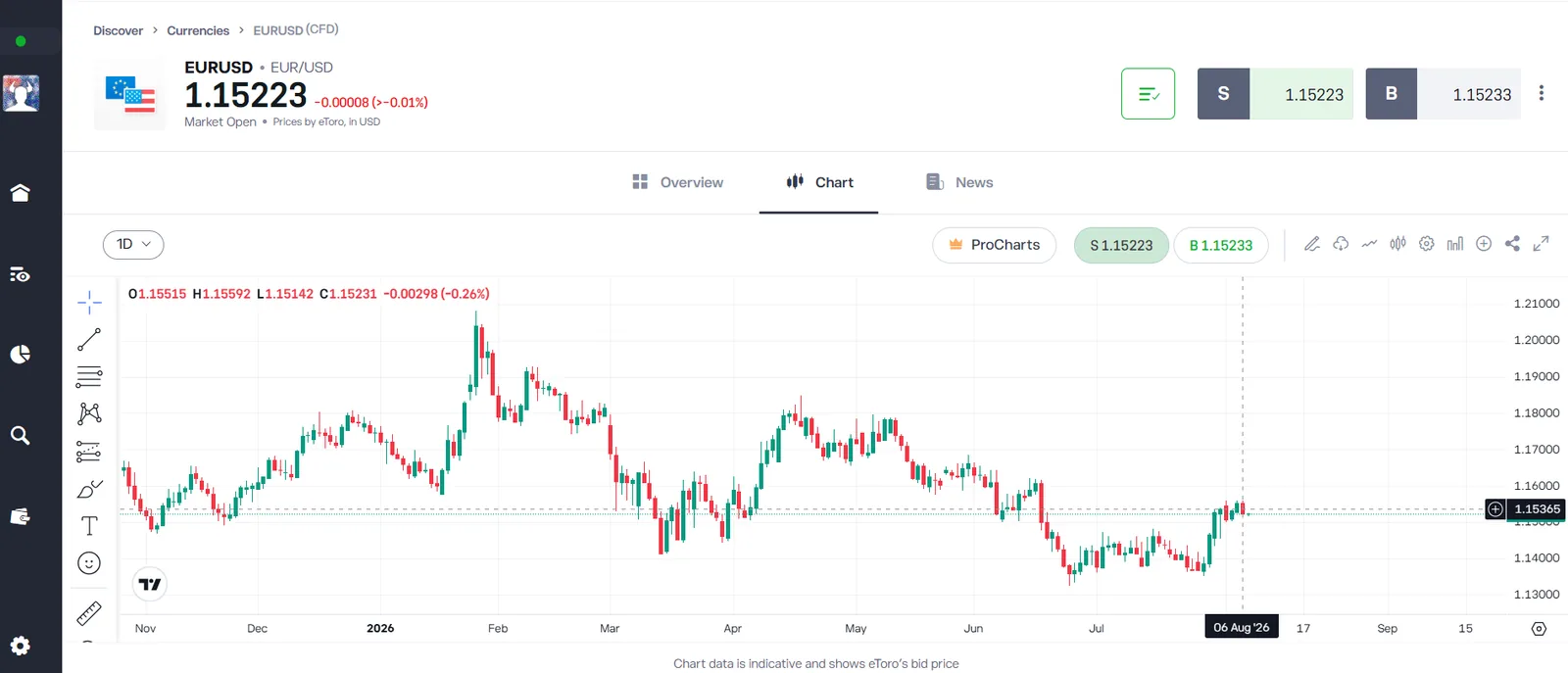
EUR/USD = 1.0GBP/USD = 2.0 AUD/USD = 1.0
Trading platforms
eToro Web, eToro App
Minimum deposit
US$50
Regulation
ASIC AFSL 491139
◎ Standout: CopyTrader and Smart Portfolios, the most developed social trading product in the industry
Why higher here? eToro is the only broker here with a proprietary in-house copy product, which CFD Fit credits under platform quality; its overall score is pulled down by forex pricing, where it is not competitive. See the ranking method ↓
Why we recommend eToro
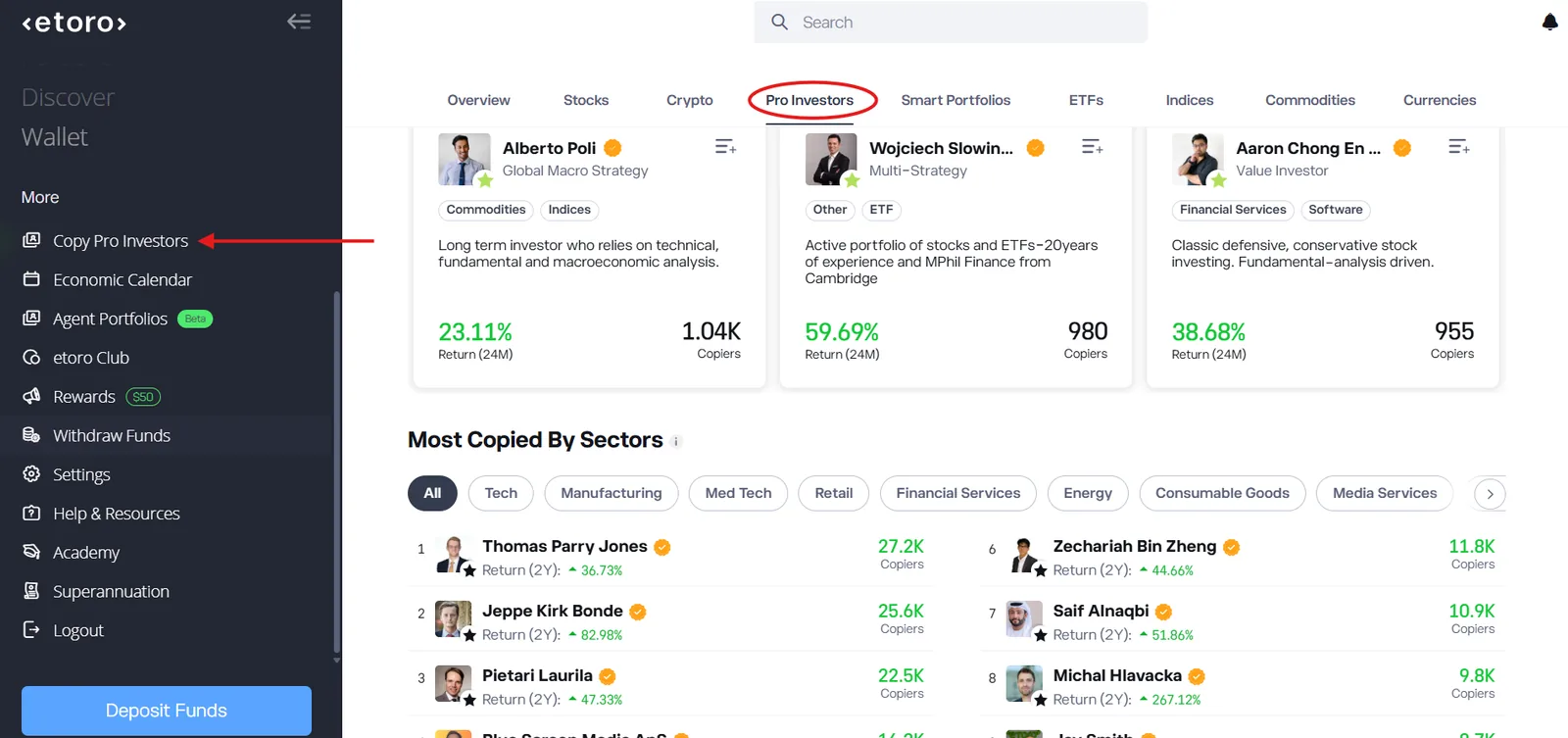
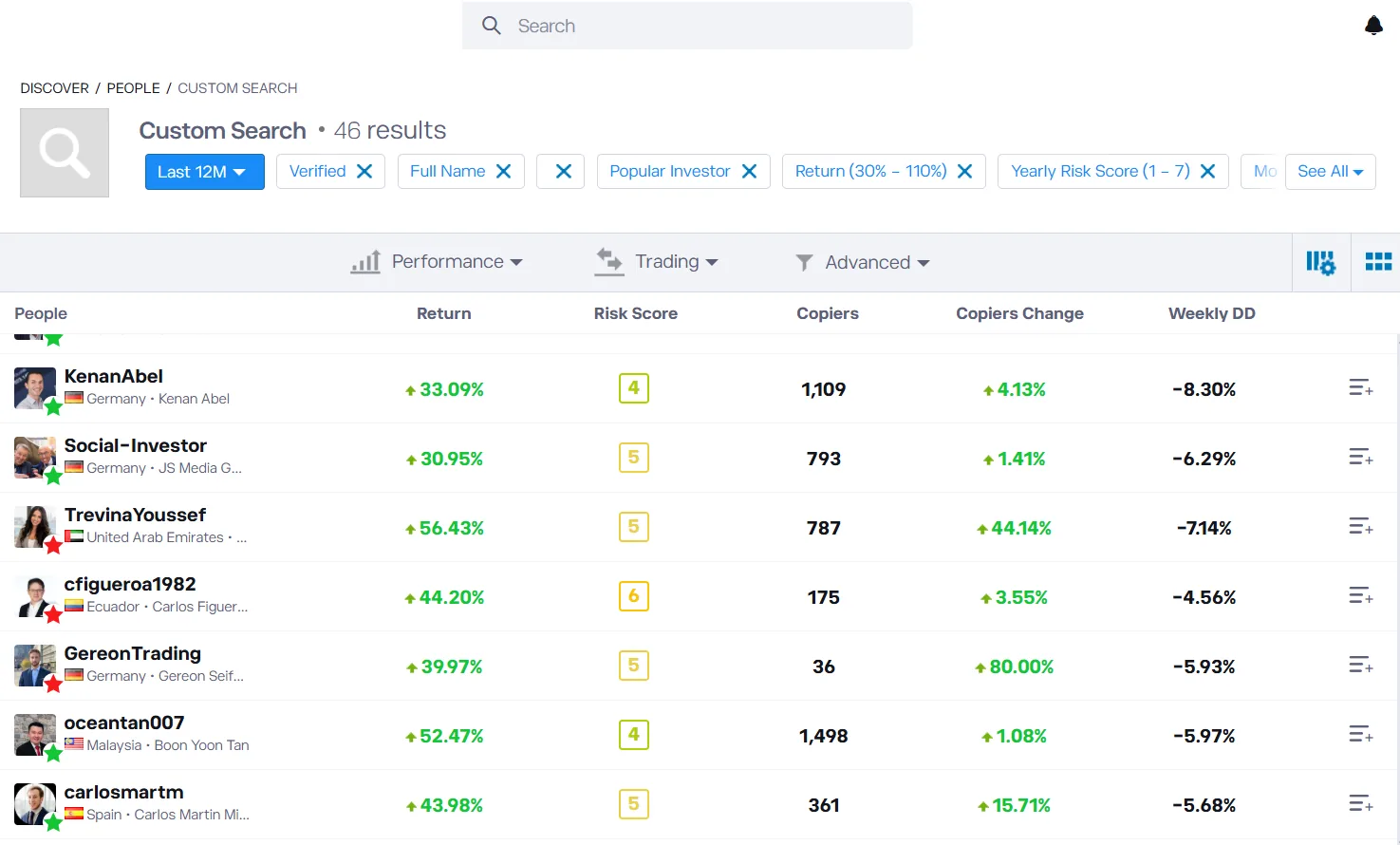
The catch with eToro is the USD default account: without the eligible AUD account, it adds a conversion cost on every AUD deposit and withdrawal. I rate its CopyTrader system the most developed copy product we cover, and it pairs that social angle on CFDs with a mix of CFDs and real shares across roughly 3,000 instruments. Retail pricing is spread only, and real US, UK, EU and ASX shares trade at a flat US$2 per order. The minimum deposit is US$50, and eToro AUS Capital has held AFSL 491139 since 2017.
Pros & cons
- ASIC AFSL 491139 since 2017; Tier-1 regulation also via FCA (UK) and CySEC (Cyprus)
- CopyTrader and Smart Portfolios, the most developed social trading product in the industry
- Real share investing across US, AU, UK and EU exchanges at a flat USD 2 per trade, ETFs 0%
- Trading account is USD-based; the AUD local currency account holds AUD, but conversion fees apply when funding non-AUD trades
- No MT4, no MT5, no cTrader, no TradingView trading
- Forex spreads (EUR/USD from 1.0 pip) wider than RAW brokers like Pepperstone or IC Markets
Broker's Detail
Founded in Tel Aviv in 2007 and operating in Australia since 2018 under AFSL 491139, eToro has become the world's largest social trading platform with 30M+ registered users globally. The group also holds FCA (UK), CySEC (Cyprus) and FinCEN (US) regulation.
eToro's proprietary platform supports both forex/CFD trading and direct share investing at a flat USD 2 per trade (ETFs at 0%) across US, AU, UK and EU exchanges, a setup that works well for copy trading and outright share ownership in one place. CopyTrader lets you automatically replicate other traders' positions, while Smart Portfolios bundle thematic baskets for a more hands-off approach. There is no MT4, MT5, cTrader or TradingView trading, so you commit to eToro's ecosystem.
The trading account is USD-based, and an AUD local currency account lets Australians deposit, hold and withdraw AUD; conversion fees from 0.75% apply when switching to USD, and that is a cost you need to factor into your return calculations. The $50 USD minimum deposit keeps the barrier low, and funding runs via card, PayPal, bank transfer and select e-wallets. Retail leverage follows the ASIC retail caps, with AFCA dispute coverage standard.
eToro spread table (eToro column: indicative standard-account pricing, not from our measured capture):
| Pair | eToro typical spread (pips) | Avg of 8 measured standard accounts (September 2026) | Lowest measured RAW account incl. commission (September 2026) |
|---|---|---|---|
| EUR/USD | 1.0 | 0.83 | 0.33 |
| AUD/USD | 1.0 | 0.87 | 0.33 |
| GBP/USD | 2.0 | 1.20 | 0.34 |
| USD/JPY | 1.0 | 1.14 | 0.58 |
| EUR/GBP | 1.5 | 1.44 | 0.33 |
Broker Screenshots
10. Interactive Brokers: direct market access for global CFDs

Average spread
EUR/USD = 0.2GBP/USD = 0.4 AUD/USD = 0.3
Trading platforms
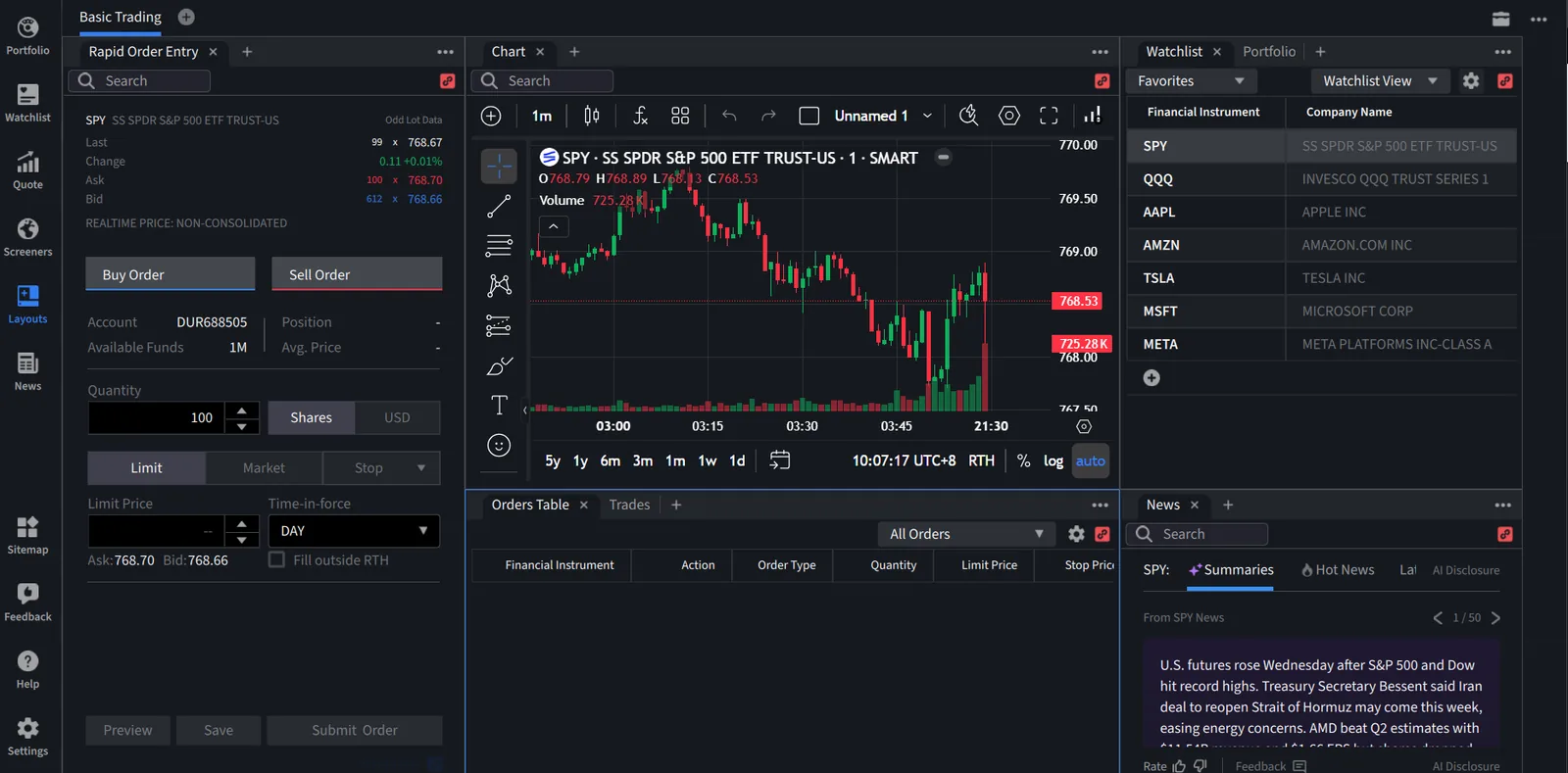
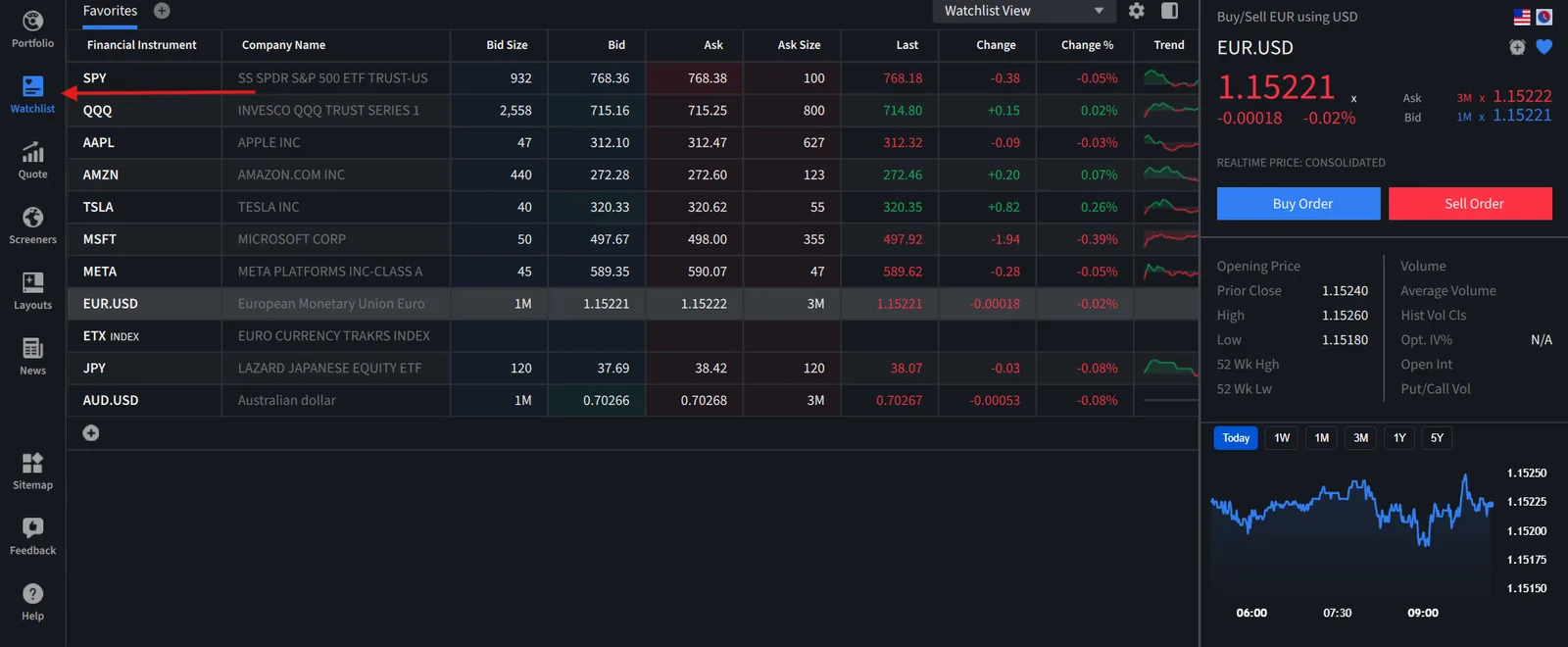
TWS, IBKR Mobile, GlobalTrader, WebTrader, native TradingView
Minimum deposit
A$0
Regulation
ASIC AFSL 453554
◎ Standout: Cheapest ASX share brokerage on this site, from AUD 6 minimum per trade; US shares from USD 0.005 per share with a USD 1 minimum
Why lower here? CFD Fit centres on multi-asset CFD breadth and platform accessibility, where Interactive Brokers' steep TWS learning curve counts against it; its overall score reflects its market-leading execution and pricing. See the ranking method ↓
Why we recommend Interactive Brokers
Interactive Brokers is the clear choice for traders who want CFDs beside a full investing stack, and it rounds out the ten for me. Index, single-stock and forex CFDs sit alongside direct access to 150+ markets in 33 countries, real bonds and listed options, all in true multi-currency accounts that hold AUD without forced conversion. Pricing is commission-based rather than spread markup, and ASX stockbroking starts from about A$6 per trade, the cheapest on our site for active share traders. There is no minimum deposit, and Interactive Brokers Australia has held AFSL 453554 since 2016.
Pros & cons
- ASIC AFSL 453554 (Interactive Brokers Australia Pty Ltd), with a NASDAQ-listed parent regulated globally by SEC, FINRA, CFTC, FCA, MAS, CIRO, JFSA and HKSFC
- Cheapest ASX share brokerage on this site, from AUD 6 minimum per trade; US shares from USD 0.005 per share with a USD 1 minimum
- True multi-currency accounts. Hold AUD, USD, EUR, GBP and 20+ others natively without forced conversion at deposit or withdrawal
- TWS desktop has a famously steep learning curve. The interface is dense and looks dated next to Pepperstone or CMC's Next Generation
- No MT4, no MT5, no cTrader, no TradingView. Not a fit for traders running existing forex EAs
- IBKR Pro commission structure rewards experienced traders
Broker's Detail
Founded in 1978 and NASDAQ-listed (IBKR), Interactive Brokers operates the Australian entity under AFSL 453554. The group holds licences across every major financial market and is one of the very few brokers offering direct exchange access alongside CFDs, which matters if you want CFD positions and your physical portfolio on the same screen.
IBKR's pricing model is volume-tiered with very low headline commissions. Spreads on forex pairs start from 0.2 pips with a typical commission of USD 2.50 per AUD 100,000. The platform stack is built around Trader Workstation (TWS), which is feature-dense and built for professionals, plus the lighter IBKR Mobile, GlobalTrader and WebTrader for when you are away from your desk.
You can open an account with a $0 minimum deposit and fund it fee-free via PayID, BPAY, card and wire. Retail leverage follows the ASIC retail caps, and AFCA dispute coverage plus negative balance protection are standard. Inactivity fees apply on small accounts, so this broker suits active traders better than buy-and-hold investors.
Broker Screenshots
Other brokers we rated
The ten above are the brokers I rank for CFD trading specifically. Several that score well overall are absent from this list, and the reason is almost always product range, not pricing or trust.
| Broker | Overall 2026 score | Why it is not on the CFD list |
|---|---|---|
| OANDA | 92 | Second overall on this site, but a forex specialist: under 150 instruments, a narrower product range than CMC, IG or Interactive Brokers. |
| Fusion Markets | 91 | Third overall on the strength of its A$2.25 commission, but its share CFD range trails CMC, IG and Interactive Brokers. |
| MultiBank Group | 81 | Multi-regulator trust and ECN pricing, carried in our gold table, but MT4 only on the Australian entity and no proprietary CFD platform. |
| Eightcap | 78 | Owns the crypto CFD category here with the widest crypto range on the ASIC market, but its wider CFD range does not reach the ten. |
| GO Markets | 78 | A long-standing AFSL with cTrader and TradingView on raw pricing, but a narrower CFD range than the platform leaders. |
| Vantage | 66 | Four platforms and a RAW account, and it carries entries on our commodity and gold pages, but it leads no CFD category. |
| TMGM | 65 | Edge account pricing with IRESS share access, listed in our gold and commodity tables without leading either. |
All 28 tested brokers with full scores sit on the forex broker reviews hub.
How to choose the right CFD broker
Five checks separate a safe CFD trading account from an expensive mistake. I recommend working through them in order, then going deeper on the one that matters most for your trading style. For the numbers behind each check, our forex calculators cover margin, pip value and profit and loss on any CFD position, and the broker cost calculator totals spread, commission and financing into one figure per lot.

Check the AFSL
ASIC register, AFCA membership.

Match the platform
Third-party software or proprietary.

Price the full cost
Spread + commission + financing.

Test on a demo
Virtual funds, real execution.

Confirm risk controls
Stops, close-out, risk warning.
Compare brokers by the factor that decides it
Each shortlist below re-ranks the market for one decision factor, tested the same way as this page. These answer the "but what if only X matters?" questions. I use these to answer the "but what if I only care about X?" questions.
Start with the overall ranking
Our tested, ASIC-only ranking of the best forex brokers in Australia is the baseline every shortlist below re-ranks. Pure forex traders should start there and then check the factor that matters most to them. If you're a pure forex trader, start there and then check the factor that matters most to you.
The platform decides it
Rankings change once the trading software is fixed. Pick yours first, then compare.
Cost decides it
Account types price the same trade differently. These shortlists rank by total cost.
You're starting out
Simpler platforms, stronger education, and demo accounts with no time pressure.

Your strategy decides it
Execution speed, copy functionality and EA support separate these shortlists.
I find that if product range is the deciding factor, the gap between the ten platforms is wide enough to settle the choice on its own:
How we tested and scored the 10 CFD brokers
We opened or maintain a live account with all ten brokers on this list. I base the rankings you see below on five weighted inputs:
- Trust and regulation: I look at AFSL standing, parent strength, ASIC enforcement record over the last 36 months, and AFCA membership because those are the things that protect you before a trade goes wrong.
- Total cost of trading: I add up typical EUR/USD and AUD/USD spread plus commission, plus overnight financing on a sample share CFD held five nights, because this is the cost you actually feel.
- Product range: total CFDs across forex, indices, commodities, shares, crypto, ETFs and bonds.
- Platform quality: proprietary platform features, MT4/MT5/cTrader/TradingView availability, mobile app stability.
- AU-specific features: What matters to you as an Australian trader: PayID and BPAY funding, ASX-listed share CFD depth, AUD base account, and support hours overlapping Sydney trading.
Watch: how we test Australia's CFD platforms. Live accounts at all ten brokers, with spread capture on the ones that run MetaTrader.
Before you rely on any score, I would read more in our methodology. Every broker on this list holds an Australian Financial Services Licence, verifiable on ASIC’s professional registers, and is a current AFCA member. We don’t list offshore-only brokers. The displayed score on each broker card is a CFD Fit Score out of 100 that reweights the five inputs above for the CFD context. Each card also shows the broker’s Overall 2026 Score, the site-wide rating used on our broker reviews page, so you can see both together.
Compare CFD brokers by asset class
- Share & stock CFDsASX and global equities at 5:1 retail leverage
- Crypto CFDsCapped at 2:1 retail leverage in Australia, the strictest tier in the PIO. Eightcap leads on range, IC Markets and Pepperstone on cost.
- Gold (XAU) CFDs20:1 PIO tier alongside major indices
- Index CFDsMajor indices at 20:1, minors at 10:1
- Commodity CFDsSilver, oil and softs at 10:1
- Treasuries (bond) CFDsA niche but useful product for rate traders. CMC Markets and IG Markets are the only ASIC brokers offering meaningful coverage.
For each page below, we re-rank the market for one asset class and test it the same way as this one. The pick you’ll see is that page’s number one.
| # | Page | Who it is for | Top pick | Read |
|---|---|---|---|---|
| 1 | Commodity CFDs | Traders on metals, energy and softs | CMC Markets | See below |
| 2 | Crypto CFDs | Traders working under the 2:1 retail cap | Eightcap | See below |
| 3 | Gold CFDs | XAU/USD traders comparing spread and commission | Capital.com | See below |
| 4 | Index CFDs | Traders on the ASX 200 and global indices | IG Markets | See below |
| 5 | Share CFDs | Traders who want single-stock exposure | IG Markets | See below |
| 6 | Treasury and bond CFDs | Traders on rates and government bonds | IG Markets | See below |
Commodities
From my perspective, metals, energy and softs price differently from forex, and the platform matters more than the spread once you leave gold. CMC Markets leads on range with 100+ commodity CFDs, which gives you more ways to express a commodity view. Compare the field in our commodity CFD brokers guide.
Crypto
As a retail client, you are capped at 2:1 on crypto CFDs by ASIC, the tightest tier in the Product Intervention Order, so range and weekend access decide this one rather than leverage. I’d point you to Eightcap because it carries the widest crypto CFD range on the ASIC market. See the crypto CFD brokers guide.
Gold
Gold sits at 20:1 for retail clients and splits cleanly between no-commission spread pricing and raw plus commission. I would choose Capital.com for no-commission XAU/USD. The full field is in our gold CFD brokers guide.
Indices
Index CFDs are where I think proprietary platforms earn their keep, and the ASX 200 is priced very differently across brokers, so it is worth comparing before trading. IG Markets leads on range. Compare them in our index CFD brokers guide.
Shares
You are capped at 5:1 on share CFDs, and the broker’s equity coverage matters more than its forex pricing. I’d put IG Markets first on range, and FP Markets is the one route I would take to DMA-priced ASX share CFDs through IRESS. See the share CFD brokers guide.
Treasuries
If you trade bond and rates CFDs, you already know this is the thinnest corner of the AU market and only a handful of brokers carry a real lineup. I would start with IG Markets, which leads. The comparison is in our treasury and bond CFD brokers guide.
For a deeper view across the AU market, our overall leading Australian forex brokers ranking is the page you should open when comparisons need the wider ASIC-only field, and it gives everything in one place. If the main concern is the total market, keep this link close.
What is a CFD?
A Contract for Difference (CFD) is a derivative. The trader agrees with a broker to exchange the difference in price of an underlying asset between when the contract opens and when it closes. There is no ownership of the asset itself. The trader is paid (or pays) the difference.
Three things follow from that.
You can go long or short with equal ease. CFDs were one of the first retail-accessible products that let an Australian trader profit from a falling ASX 200, oil price or NVIDIA share price. The mechanism is the same in either direction, which is why I still think they matter for short-term traders.
Margin is the next piece. Because the asset is not being bought, a fraction of the contract value is put up. ASIC's Product Intervention Order sets the cap on how much leverage a retail client can be offered (full table below). The flip side is that your losses are leveraged in the same way as your gains.
Overnight financing is the third cost you need to understand. You pay financing on positions held overnight. Long positions on share CFDs typically incur a daily financing charge equal to a benchmark rate plus a broker margin. Short positions sometimes earn a credit. Forex CFDs use a different swap mechanism based on the interest rate differential between the two currencies in the pair.
CFDs are a leveraged product, and I want you to sit with this: ASIC found 72% of retail CFD clients lost money in its 2019 review (REP 626), which is part of why the PIO leverage caps were introduced. In the 2024 financial year ASIC put the figure at 68%, more than $458 million including $73 million in fees (REP 828, published 20 January 2026). ASIC does not require Australian brokers to publish an issuer-specific loss percentage, so there is no per-broker figure for me to compare here. The wider context (daily volume, retail success rates, demographic data) is in our forex trading statistics page.
I'd put it this way: CFDs suit short-term directional trading; direct ownership suits long-term holding, and my routing advice follows that line. If you want to trade a view over days, the CFD column is the fit. If your horizon is years, direct ownership is the direction, and our CFDs vs stocks comparison covers the ownership, tax and cost differences in detail.
Market maker vs DMA CFD pricing
With a market-maker CFD, the CFD broker itself prices the contract, takes the other side of the trade and hedges its exposure. A DMA (direct market access) CFD routes the order into the underlying market, so the contract mirrors the exchange order book of the underlying asset. On this list, Interactive Brokers provides DMA share CFDs and FP Markets offers DMA-style share CFD execution through IRESS; most other platforms quote market-maker pricing on shares. I prefer DMA when you want the order book, but check the cost difference first.
ASIC retail leverage caps
Australian retail traders face ASIC leverage caps across every CFD asset class under the Product Intervention Order (Instrument 2020/986), in force since 29 March 2021 and extended by ASIC in 2022 for a further five years, to 23 May 2027. Our ASIC regulation guide sets out how each cap works. The tiers by asset class are shown below.
PIO leverage tiers at a glance
ASIC Product Intervention Order retail caps by asset class
Wholesale clients can request higher leverage at the broker’s discretion, typically up to 500:1, subject to passing the Corporations Act wholesale tests (broadly: net assets above A$2.5 million, or gross income above A$250k for two consecutive years, certified by a qualified accountant). This isn’t a retail product. I would say nine in ten readers of this site won’t qualify and shouldn’t try to.
You get negative balance protection by law on a retail account, and margin close-out triggers at 50% of the initial margin. Bonuses and inducements to retail clients are banned. These rules apply to every ASIC-regulated CFD broker without exception. I’ll add that ASIC did not impose a per-broker loss-rate disclosure; it declined issuer-specific risk warnings when it made the order.
If you want to see how each cap translates into margin requirements and risk per trade, see our guide to leverage in forex trading. The forex margin calculator turns any of these caps into the exact margin for your chosen position size.
How CFD costs work in Australia
There are three cost lines on every CFD trade, and I want you to know all three before you risk a dollar. They are the reason a balance can move against a trader on a winning trade when the costs are ignored. My view is that knowing them prevents the 'why am I down on a winning trade' surprise, and that should be the starting point before opening a first trade.
Spread. This is the difference between the bid and ask. For forex it’s expressed in pips, points for indices, and dollars or cents for shares and commodities. On a Standard / no-commission account, the spread is the entire cost. With a RAW or Razor or Raw Spread account, the spread is tighter and a separate commission is charged, so you need to compare both sides.
Commission. You pay this per side or per round-turn on RAW-style accounts. I use AUD 7 round-turn per standard 100k lot as the typical AU benchmark on forex (Pepperstone Razor, FP Markets Raw); IC Markets Raw Spread sits above it at AUD 9.00. Share CFD commissions are charged separately, typically as a percentage of trade value with a minimum dollar floor. ASX share CFD commissions sit between AUD 6 and AUD 11 per side at most brokers on this list. Fusion Markets undercuts the AUD 7 benchmark at AUD 4.50 round-turn; see the Fusion Markets review.
Overnight financing. You pay this on positions held past the daily rollover (5pm New York time). Share CFDs carry a daily charge based on a benchmark rate (usually the local cash rate or interbank rate) plus a broker margin (typically 2.5% to 3.5%). For forex CFDs, the cost is a swap reflecting the interest rate differential between the two currencies in the pair, which can be a credit or a debit depending on direction.
Let me walk you through a worked example. You buy 1,000 BHP CFDs at AUD 45. The position value is AUD 45,000. Your margin (5:1 leverage cap on shares) is AUD 9,000. Daily overnight financing at, say, RBA cash rate plus 3% = around 7% annualised. Held five nights, that's roughly AUD 43 in financing on top of any spread cost. Hold the same position three months and financing alone is around AUD 780. Long-term holders are usually better served by direct share investing than by a CFD.
CFD risks specific to Australian retail clients
CFDs are a high-risk product. The ASIC PIO exists because retail loss rates were unacceptable under prior leverage limits. Even with the new caps, ASIC recorded 68% of retail CFD investors losing money in the 2024 financial year (REP 828, published 20 January 2026). I urge you to take the risk seriously. Moneysmart lists CFDs under its investment warnings.
Leveraged loss. A major forex position at the maximum retail leverage can lose its full margin from a 3.3% adverse move. I want you to remember that stops slip on fast markets. Position-size for the margin you can afford to lose, not the notional that is desired to control.
Gap risk. I would not assume a plain stop protects you through a gap. Markets gap over weekends and in volatile markets around scheduled events. Stop-losses are not guaranteed unless you specifically use a Guaranteed Stop-Loss Order (GSLO) and accept the premium. CMC, IG, Plus500 and easyMarkets offer GSLOs in some form. Most other brokers don’t.
Broker insolvency. ASIC requires segregated client money at an Approved Australian Bank. That protects you against misuse but doesn’t fully insulate you from a counterparty failure scenario, particularly on unrealised CFD profits which sit on the broker’s balance sheet. AFCA can resolve disputes but doesn’t insure deposits. The Compensation Scheme of Last Resort (CSLR) covers unpaid AFCA determinations from April 2024 in personal advice, securities dealing and credit only, so it does not cover forex or derivatives trading, trading losses or general broker insolvency.
Concentration risk. When you run multiple positions on correlated instruments (e.g. long EUR/USD plus short USD/JPY plus long gold), you can expose yourself to a single underlying USD-direction risk that’s larger than each position implies on its own. I see this catch traders out often.
The mitigation playbook is well-known, and I still want you to follow it. Trade smaller. Use stops. Avoid leverage at the cap. Read the PDS and the target market determination before opening an account.
Negative balance protection and demo accounts
Negative balance protection is mandatory for Australian retail CFD accounts under the ASIC Product Intervention Order, which runs until 2027, so you cannot lose more than the funds held in the trading account. My advice is to open a demo before you fund a live account. Virtual funds let you test a CFD trading platform, its trading tools and order execution at zero risk, and most brokers on this list provide one.
Tax treatment for Australian CFD traders
Under Taxation Ruling TR 2005/15, the ATO generally treats profits from CFD and forex trading as assessable income rather than capital gains. I would not assume capital gains treatment for personal CFD positions, and I want you to plan around that from your first trade. The view is that CFDs are a trading activity rather than an investment, given the leverage and short-term nature of most CFD positions. My reading is that losses are typically deductible against other assessable income, which can change the net result if proper records are kept. I'd treat that as a real planning point, and you should raise it with your accountant before you commit.
There are edge cases, and I don’t want you to assume your situation is simple. A genuine business of trading is treated differently from a hobbyist account. Holding CFDs on dividend-paying shares creates dividend-equivalent income on which the broker withholds at the contract level. Foreign-currency CFDs may produce small foreign income tax implications. None of this is straightforward.
We are not licensed to provide tax advice, so speak to a registered tax agent about your circumstances. I’d read the ATO Community thread on CFD tax treatment once a year before tax time; it walks through the common retail scenarios.
FAQs
What is the best CFD trading platform in Australia in 2026?
Are CFDs legal in Australia?
What is the maximum CFD leverage in Australia?
Do I pay tax on CFD profits in Australia?
Are CFD profits covered by AFCA?
What is the difference between CFD trading and share investing?
Which CFD broker is safest in Australia?
Is CFD trading profitable?
What is the best app for CFD trading?
Does CommSec offer CFD trading?
Can you live off CFD trading?
Is CFD trading gambling?
Why are CFDs banned in some countries?
About the author

Justin co-founded CompareForexBrokers in 2014 and has traded forex since 1998. Based in Melbourne, he has tested every ASIC-regulated broker on this site personally and has written for Forbes, Kiplinger, Finance Magnates, the Australian Financial Review and The Age. He holds a Bachelor of Commerce (Honours) and a Master of Marketing from Monash University. Justin is the co-founder and CEO of CompareForexBrokers.