
Quick verdict: the best forex demo accounts in Australia right now
I rate Pepperstone's demo as the best in Australia for active traders: 30 days, an AUD 50,000 virtual balance and the full platform stack from MT4 to TradingView, renewable. For raw-spread testing I would send you to IC Markets, and for multi-asset practice CMC Markets is my pick. Our team opened and timed a demo at every ASIC broker we rank here except Focus Markets.
- Pepperstone: 30-day demo, AUD 50,000, full platform stack.
- IC Markets: renewable 30-day demo for raw-spread testing.
- CMC Markets: unlimited demo with 12,000+ instruments.
- Plus500: unlimited demo, no card or ID needed.
- eToro: unlimited USD 100,000 demo with CopyTrader.
- OANDA: unlimited demo with MarketPulse research.
- FP Markets: 30-day renewable demo with share CFDs.
- IG Markets: unlimited demo with ProRealTime charting.
- Capital.com: unlimited demo with the Investmate app.
- Blueberry Markets: MetaTrader demo with 24/7 support.
- Focus Markets: 30-day MT5 demo, the only place its pricing appears.
Expiry and virtual balance change the practice value more than anything else, and they vary broker to broker, so check both before you open a demo.
Use a demo to test platform feel, position sizing and order types. It’s the wrong place to estimate your real-world P&L, and we’ll explain why further down.
Demo account comparison table
| # | Broker | Demo length | Virtual funds | Platforms | Instruments | Visit broker | More details |
|---|---|---|---|---|---|---|---|
| 1 | #1 Top demo account Pepperstone Pepperstone | 30 daysrenewable | AUD 50,000customisable |  MT4 MT4 MT5 MT5 cTrader cTrader TradingView+1 more platforms, listed in this broker's detailsMT4, MT5, cTrader, TradingView, proprietary TradingView+1 more platforms, listed in this broker's detailsMT4, MT5, cTrader, TradingView, proprietary | 90+ forex pairs, 1,200+ shares, indices, commodities, crypto | Visit Pepperstone | |
| |||||||
| 2 |  IC Markets IC Markets | 30 daysrenewable | Customisable (default AUD 50,000) | MT4MT5cTrader | 60+ forex pairs, 2,000+ CFDs | Visit IC Markets | |
| |||||||
| 3 |  CMC Markets CMC Markets | Unlimited | Customisable (default AUD 10,000) | Next GenerationMT4 | 12,000+ instruments | Visit CMC Markets | |
| |||||||
| 4 |  Plus500 Plus500 | Unlimited | AUD 40,000 | Plus500 WebTrader (proprietary) | 2,800+ CFDs | Visit Plus500 | |
| |||||||
| 5 |  eToro eToro | Unlimited | USD 100,000 | eToro app and web (proprietary) | Six asset classes, 3,000+ stocks | Visit eToro | |
| |||||||
| 6 |  easyMarkets easyMarkets | Unlimited | AUD 10,000 | easyMarkets web/appMT4MT5TradingView | 270+ instruments | Visit easyMarkets | |
| |||||||
| 7 |  FP Markets30-day renewable demo with share CFDs FP Markets30-day renewable demo with share CFDs | 30 daysrenewable | Customisable | MT4MT5cTraderTradingView | 10,000+ CFDs | Visit FP Markets | |
| |||||||
| 8 |  Eightcap Eightcap | 30 daysrenewable | Customisable | MT4MT5TradingView | 800+ instruments | Visit Eightcap | |
| |||||||
| 9 |  OANDAunlimited demo with MarketPulse research OANDAunlimited demo with MarketPulse research | Unlimited | AUD 100,000 | OANDA TradeMT4MT5TradingView | 70+ forex pairs, indices, metals | Visit OANDA | |
| |||||||
| 10 |  Fusion Markets Fusion Markets | 30 daysrenewable | Customisable | MT4MT5cTraderTradingView | 250+ instruments | Visit Fusion Markets | |
| |||||||
| 11 |  IG Marketsunlimited demo with ProRealTime charting IG Marketsunlimited demo with ProRealTime charting | Unlimited | Not stated | IG web platformMT4ProRealTime | 17,000+ markets13,000+ share CFDs | Visit IG Markets | |
| |||||||
| 12 |  Capital.comunlimited demo with the Investmate app Capital.comunlimited demo with the Investmate app | Unlimited | Not stated | Capital.com WebTraderMT4MT5TradingView | 4,500+ instruments | Visit Capital.com | |
| |||||||
| 13 |  Blueberry MarketsMetaTrader demo with 24/7 support Blueberry MarketsMetaTrader demo with 24/7 support | Not stated | Not stated | MT4MT5Blueberry X app | 50+ forex pairs, indices, share CFDs, crypto, commodities | Visit Blueberry Markets | |
| |||||||
| 14 |  Focus Markets30-day MT5 demo, the only place its pricing appears Focus Markets30-day MT5 demo, the only place its pricing appears | 30 days | Not stated | MT5 | 800+ CFDs | Visit Focus Markets | |
| |||||||
Demo lengths and default balances verified against each broker’s signup flow in the week of publish. Plus500 and eToro virtual balances reset on request. The Focus Markets row comes from the broker’s own published figures, not a timed signup.
One row is there for a reason the others are not: Focus Markets publishes no spread for any individual pair, on either of its accounts, on any Australian page or in any of its legal documents. Its 30-day MT5 demo is the only place to find that pricing. Everywhere else on this page the demo is practice before funding an account; here it doubles as the price list.
Watch: Best forex demo accounts.
Risk warning: CFDs are leveraged products and carry a high risk of loss. Most retail CFD accounts lose money. Review the broker's PDS and TMD before trading.
1. Pepperstone: best demo for active forex traders
I'd put Pepperstone's demo first for active forex traders: a 30-day renewable account that runs across all five of its platforms, MT4, MT5, cTrader, TradingView and the Pepperstone web platform, with an AUD 50,000 virtual balance. It mirrors live Razor conditions closely, which makes it a fair test of raw pricing before you fund. Pepperstone holds ASIC AFSL 414530.
Average spread
EUR/USD = 0.1
GBP/USD = 0.2
AUD/USD = 0.1
Trading platforms
MT4, MT5, cTrader, TradingView, Pepperstone Trading App
Minimum deposit
A$0
Regulation
ASIC AFSL 414530
Pros & Cons
- ASIC AFSL 414530 since 2013; founded in Melbourne in 2010 with continuing Australian operations
- Razor RAW account with EUR/USD spreads from 0.0 pips and AUD 7 round-turn per lot
- Five trading platform options (MT4, MT5, cTrader, TradingView, Pepperstone Platform)
- Share CFD range narrower than CMC, IG, IBKR (around 1,200 vs 10,000+ at CMC)
- No native ASX share investing (CFD only)
- Standard account spreads less competitive than the Razor account; choose Razor if you trade actively
Broker's Detail
Pepperstone has grown since its 2010 Melbourne founding into one of Australia's largest forex brokers, holding ASIC AFSL 414530 since 2013. It also holds Tier-1 licences with the FCA (UK), BaFin (Germany), CySEC (Cyprus), CMA (Kenya) and DFSA (Dubai).
I recommend the Razor (RAW) account: EUR/USD spreads from 0.0 pips with AUD 7 round-turn commission per standard lot. The Standard account is commission-free with EUR/USD from roughly 1.1 pips, but it's only for beginners. Across the five supported platforms, MT4, MT5, cTrader and the Pepperstone Trading Platform work on both accounts, while TradingView is available on the Razor account only, not on Standard.
Funding is fee-free via PayID, BPAY, card and PayPal. AUD-denominated accounts available. Retail leverage follows ASIC's standard retail caps, with negative balance protection and AFCA dispute coverage standard. Customer support runs 24/7 by live chat.
Pepperstone spread table (averaged over our May to June 2026 test cycle):
| Pair | Razor avg spread (pips) | + commission equivalent | Total cost |
|---|---|---|---|
| EUR/USD | 0.10 | 0.45 | 0.55 |
| AUD/USD | 0.10 | 0.45 | 0.55 |
| GBP/USD | 0.20 | 0.45 | 0.65 |
| USD/JPY | 0.10 | 0.45 | 0.55 |
| EUR/GBP | 0.30 | 0.45 | 0.75 |
Broker Screenshots
2. IC Markets: best for raw-spread testing
I'd use IC Markets for raw-spread testing. Its 30-day renewable demo mirrors the Raw Spread feed, showing the tight spreads and fast fills the live account is known for. It runs on MT4, MT5 and cTrader, and placed second in our demo comparison. IC Markets holds ASIC AFSL 335692.
Average spread
EUR/USD = 0.0
GBP/USD = 0.2
AUD/USD = 0.1
Trading platforms
MT4, MT5, cTrader, TradingView
Minimum deposit
A$200
Regulation
ASIC AFSL 335692
Pros & Cons
- ASIC AFSL 335692 since 2009; founded in Sydney
- Raw Spread account with EUR/USD spreads from 0.0 pips and AUD 9 round-turn per lot
- True ECN/cTrader connectivity with deep liquidity from 25+ Tier-1 banks and dark pools
- $200 minimum deposit (vs $0 at Pepperstone, CMC, IG, Fusion)
- No native TradingView integration on the AU entity
- Share CFD range narrower than CMC, IG, IBKR
Broker's Detail
IC Markets, founded in Sydney in 2007, is one of Australia's longest-running ECN brokers and has held AFSL 335692 since 2009. The Raw Spread account delivers EUR/USD spreads from 0.0 pips with AUD 9 round-turn commission (A$4.50 per side), while the cTrader RAW account bills USD 3.00 per USD 100,000 traded per side, converted to the account currency. The Standard account is commission-free with spreads from 1.0 pips.
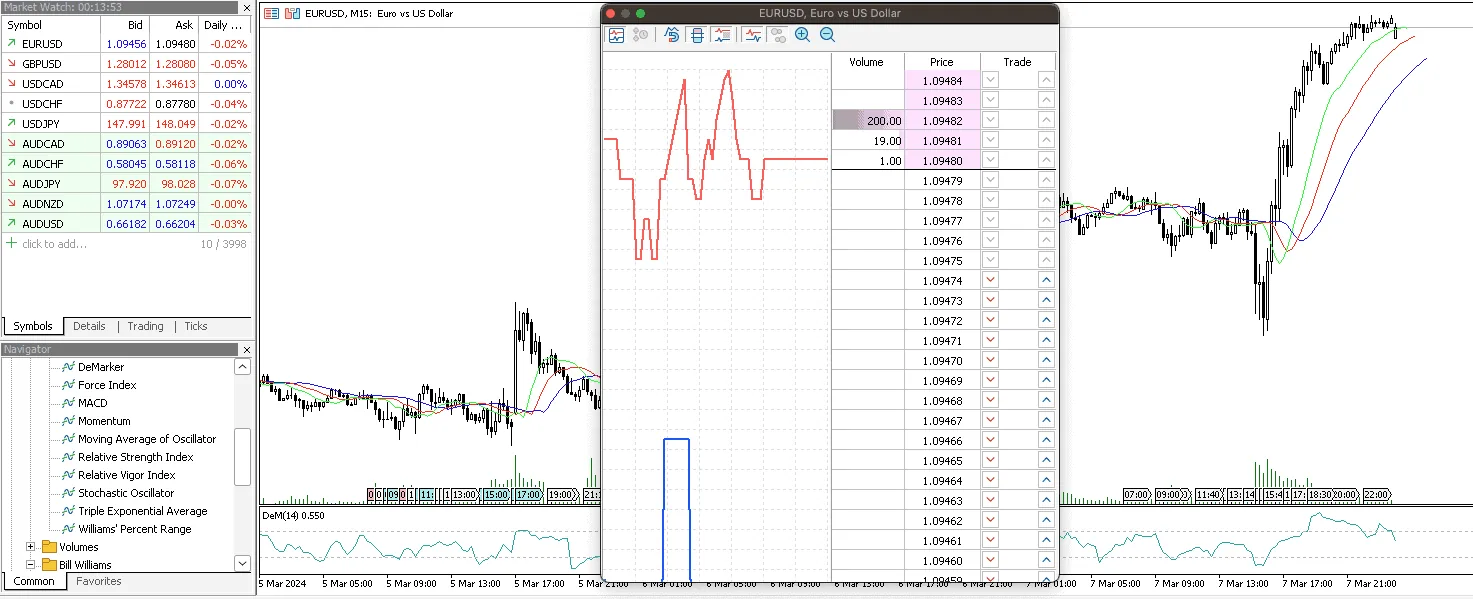
Liquidity is sourced from 25+ Tier-1 banks and dark pools, delivering true ECN execution that suits scalpers and EA traders. MT4, MT5 and cTrader are available. Over 2,250 tradeable instruments span forex, indices, commodities, bonds, shares and crypto CFDs.
Minimum deposit is $200, higher than the $0 brokers in this list. Funding is fee-free via PayID, BPAY and card. Retail leverage follows ASIC's standard retail caps, with AFCA dispute coverage and negative balance protection.
IC Markets spread table (averaged over our September 2026 test cycle):
| Pair | Raw Spread avg (pips) | + commission equivalent | Total cost |
|---|---|---|---|
| EUR/USD | 0.11 | 0.64 | 0.75 |
| AUD/USD | 0.09 | 0.64 | 0.73 |
| GBP/USD | 0.24 | 0.64 | 0.88 |
| USD/JPY | 0.15 | 1.01 | 1.16 |
| AUD/JPY | 0.41 | 1.01 | 1.42 |
Broker Screenshots
3. CMC Markets: best multi-asset demo
I'd point multi-asset traders to CMC Markets. Its unlimited demo on the Next Generation platform gives access to the full range of more than 12,000 instruments across forex, indices, commodities, shares and treasuries. It placed third in our demo comparison and does not expire. CMC has held ASIC AFSL 238054 since 2004.
Average spread
EUR/USD = 0.7
GBP/USD = 0.9
AUD/USD = 0.6
Trading platforms
Next Generation, MT4, CMC Stockbroking, TradingView
Minimum deposit
A$0
Regulation
ASIC AFSL 238054
Why higher here? Demo Fit weights how well the practice account rehearses real trading. CMC's demo never expires and covers the full 12,000-instrument range with platform parity to the live build, which lifts it above its #21 sitewide position. See the ranking method ↓
Pros & Cons
- ASIC AFSL 238054 since 2004, plus FCA, BaFin, MAS, CIRO regulation globally, top-tier trust profile
- Next Generation platform is the strongest proprietary CFD platform in Australia
- 12,000+ CFD instruments plus integrated CMC Stockbroking for ASX equities
- Standard account spreads on EUR/USD and AUD/USD wider than top-tier RAW brokers
- Share CFD overnight financing rates above average for the AU market
- Customer support hours 24/5 only (closed weekends)
Broker's Detail
Founded in London in 1989 and operating in Australia since 2002, CMC Markets is one of the longest-tenured CFD brokers in the AU market. The AU entity holds AFSL 238054. The group is LSE-listed and also holds FCA (UK), BaFin (Germany), MAS (Singapore) and CIRO (Canada) licences.
Standard account spreads start from 0.5 pips on EUR/USD with no commission; FX Active pairs tighter spreads with a commission. CMC also runs a separate stockbroking service for direct ASX share investing. The Next Generation platform is paired with MT4 (no MT5 or cTrader on the AU entity).
$0 minimum deposit and fee-free AU funding via bank transfer, PayID and PayPal. Retail leverage follows ASIC's standard retail caps. Negative balance protection and AFCA dispute coverage standard. Customer support runs 24/5 by live chat, email and phone.
CMC Markets spread table (CMC Markets column: indicative standard-account pricing, not from our measured capture):
| Pair | CMC Standard (typical pips) | Avg of 8 measured standard accounts (September 2026) |
|---|---|---|
| EUR/USD | 0.5 | 0.83 |
| AUD/USD | 0.6 | 0.87 |
| GBP/USD | 0.9 | 1.20 |
| USD/JPY | 0.7 | 1.14 |
| EUR/GBP | 0.7 | 1.44 |
| EUR/JPY | 1.2 | 2.07 |
| AUD/JPY | 1.2 | 2.09 |
4. Plus500: best demo for absolute beginners
I'd recommend Plus500 for absolute beginners. It's an unlimited practice account that can be opened with just an email, no card or ID needed to start, on the same clean WebTrader interface as the live product. It placed fourth in our demo comparison. Plus500AU holds ASIC AFSL 417727.
Average spread
EUR/USD = 0.8
GBP/USD = 1.0
AUD/USD = 0.9
Trading platforms
Plus500 WebTrader, app
Minimum deposit
A$100
Regulation
ASIC AFSL 417727
Why higher here? Demo Fit weights demo length, practice conditions and platform access, which lifts Plus500 above its #16 sitewide position. See the ranking method ↓
Pros & Cons
- ASIC AFSL 417727 since 2012; FTSE 250-listed parent (LSE:PLUS) for a strong trust profile
- WebTrader platform is the cleanest beginner CFD interface in our coverage
- Guaranteed Stop Loss Orders (GSLO) available, priced through a wider spread set when the position opens
- No MT4, MT5, cTrader or TradingView, proprietary platform only
- Forex pair count narrower than Pepperstone, IC Markets, OANDA
- Inactivity fee of USD 10/month kicks in after just 3 months (most AU brokers wait 6 to 12 months)
Broker's Detail
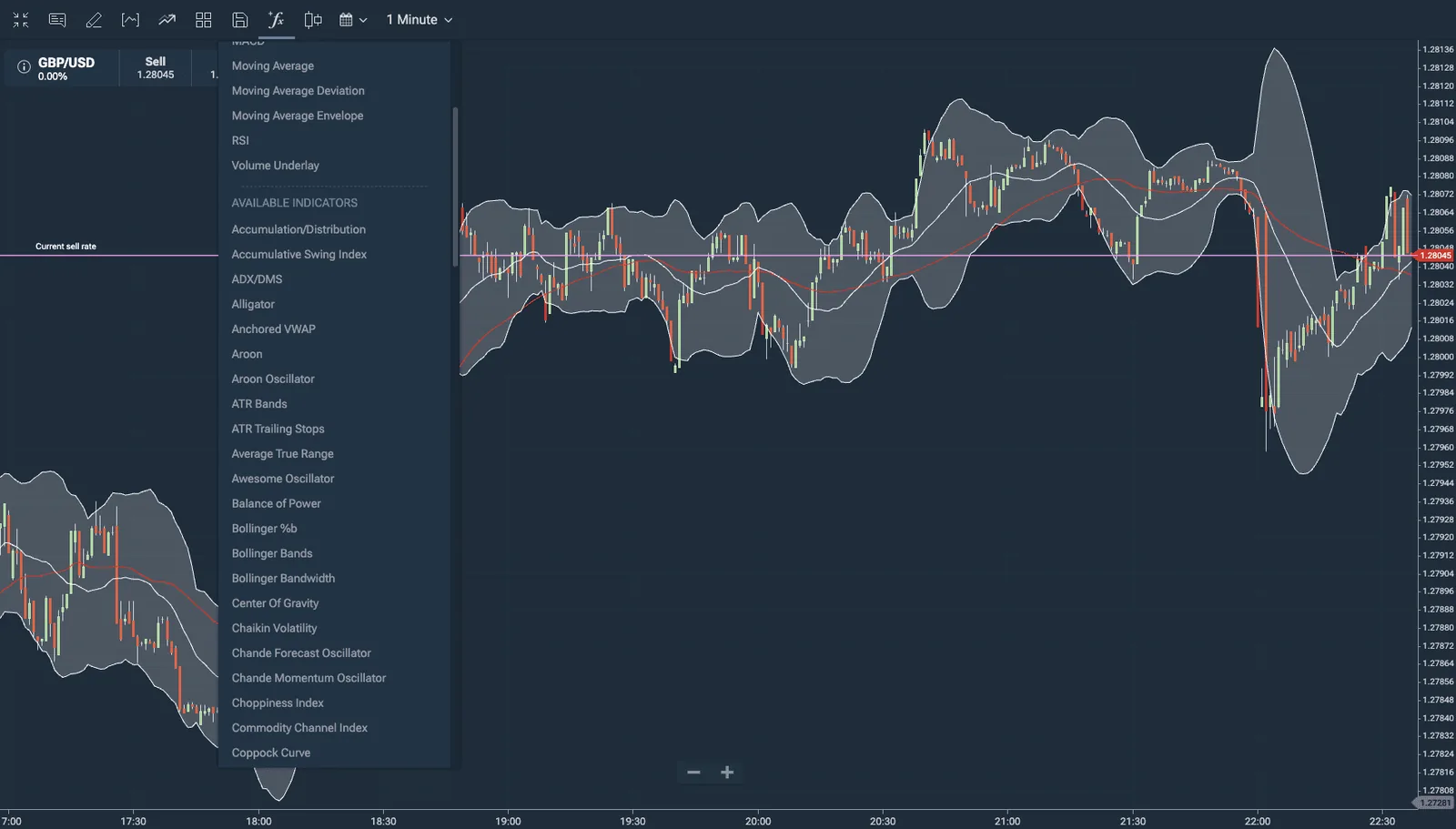
Plus500 is London Stock Exchange-listed (FTSE 250) and ASIC-regulated under AFSL 417727 since 2012. It runs a markup-pricing model on a proprietary platform with no MT4/MT5/cTrader.
I'd point a complete beginner toward Plus500's demo because the spreads are baked into the price (no commission). EUR/USD runs 0.6 to 1.0 pips typical. The platform is deliberately simple: a single account type, a clean trade ticket and 2,800+ CFD instruments. Guaranteed stop-loss orders are available for a small premium.
The minimum deposit sits at $100. You can fund with no fee from Plus500 via card, Google Pay, PayPal, BPAY and bank transfer. Retail leverage follows ASIC's standard retail caps. AFCA dispute coverage and negative balance protection standard.
Plus500 spread table (Plus500 column: advertised typical ranges, not from our measured capture):
| Pair | Plus500 typical (pips) | Avg of 8 measured standard accounts (September 2026) |
|---|---|---|
| EUR/USD | 0.6 to 1.0 | 0.83 |
| AUD/USD | 0.7 to 1.2 | 0.87 |
| GBP/USD | 1.0 to 1.5 | 1.20 |
| USD/JPY | 0.8 to 1.2 | 1.14 |
| EUR/GBP | 1.2 to 1.8 | 1.44 |
Broker Screenshots
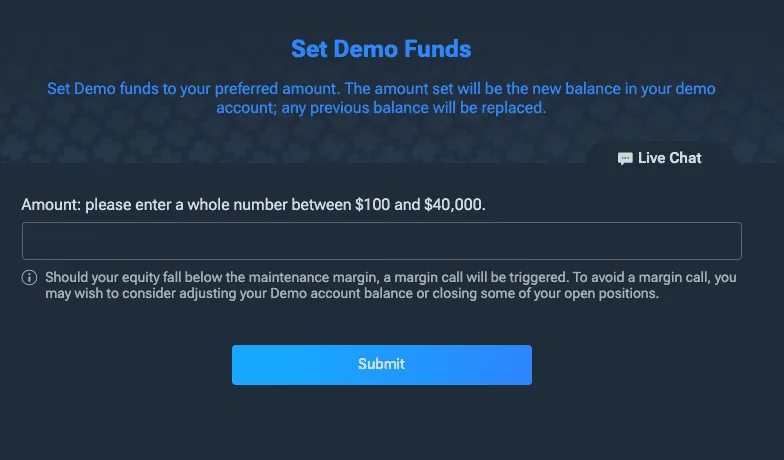
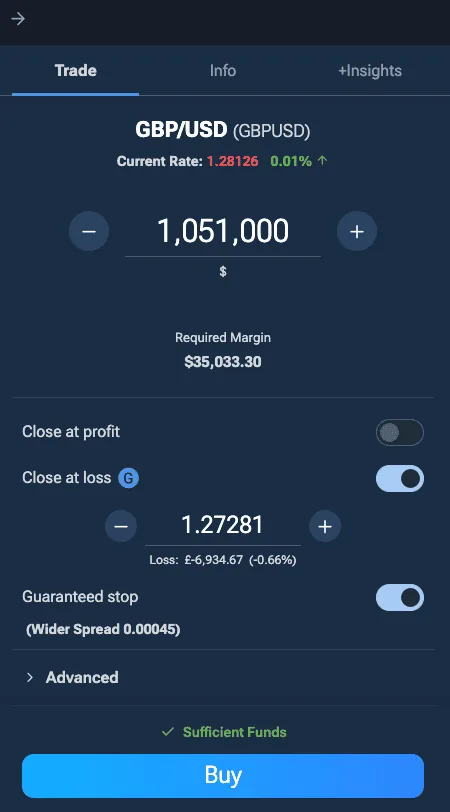
5. eToro: best demo for copy trading
I'd use eToro for copy-trading practice. It's an unlimited demo with a USD 100,000 virtual balance on its own platform, allowing a trial of CopyTrader and Smart Portfolios and the full social feed before committing funds. There is no time limit on the practice balance. eToro holds ASIC AFSL 491139.
Average spread
EUR/USD = 1.0
GBP/USD = 2.0
AUD/USD = 1.0
Trading platforms
eToro Web, eToro App
Minimum deposit
US$50
Regulation
ASIC AFSL 491139
Why higher here? Demo Fit rewards rehearsing what you actually came to do, and this is the only demo here where copy trading itself can be practised. eToro's #29 sitewide score reflects its costs, not its demo. See the ranking method ↓
Pros & Cons
- ASIC AFSL 491139 since 2017; Tier-1 regulation also via FCA (UK) and CySEC (Cyprus)
- CopyTrader and Smart Portfolios, the most developed social trading product in the industry
- Real share investing across US, AU, UK and EU exchanges at a flat USD 2 per trade, ETFs 0%
- Account defaults to USD; an AUD account is available only to eligible AU clients, otherwise every deposit and withdrawal converts, with conversion fees on AUD funding
- No MT4, no MT5, no cTrader, no TradingView trading
- Forex spreads (EUR/USD from 1.0 pip) wider than RAW brokers like Pepperstone or IC Markets
Broker's Detail
Founded in Tel Aviv in 2007 and operating in Australia since 2018 under AFSL 491139, eToro is the world's largest social trading platform with 30M+ registered users globally, and I'd note the group also holds FCA (UK), CySEC (Cyprus) and FinCEN (US) regulation, which is a broad regulatory footprint.
eToro's proprietary platform supports both forex/CFD trading and direct share investing with zero commission across US, AU, UK and EU exchanges. CopyTrader automatically replicates other traders' positions; Smart Portfolios bundle thematic baskets. There's no MT4, MT5, cTrader or TradingView trading.
Account currency is USD only, so AUD funding converts at deposit and withdrawal. $50 USD minimum deposit; funding via card, PayPal, bank transfer and select e-wallets. Retail leverage follows ASIC's standard retail caps. AFCA dispute coverage standard.
eToro spread table (eToro column: indicative standard-account pricing, not from our measured capture):
| Pair | eToro typical spread (pips) | Avg of 8 measured standard accounts (September 2026) | Lowest measured RAW account incl. commission (September 2026) |
|---|---|---|---|
| EUR/USD | 1.0 | 0.83 | 0.33 |
| AUD/USD | 1.0 | 0.87 | 0.33 |
| GBP/USD | 2.0 | 1.20 | 0.34 |
| USD/JPY | 1.0 | 1.14 | 0.58 |
| EUR/GBP | 1.5 | 1.44 | 0.33 |
Broker Screenshots
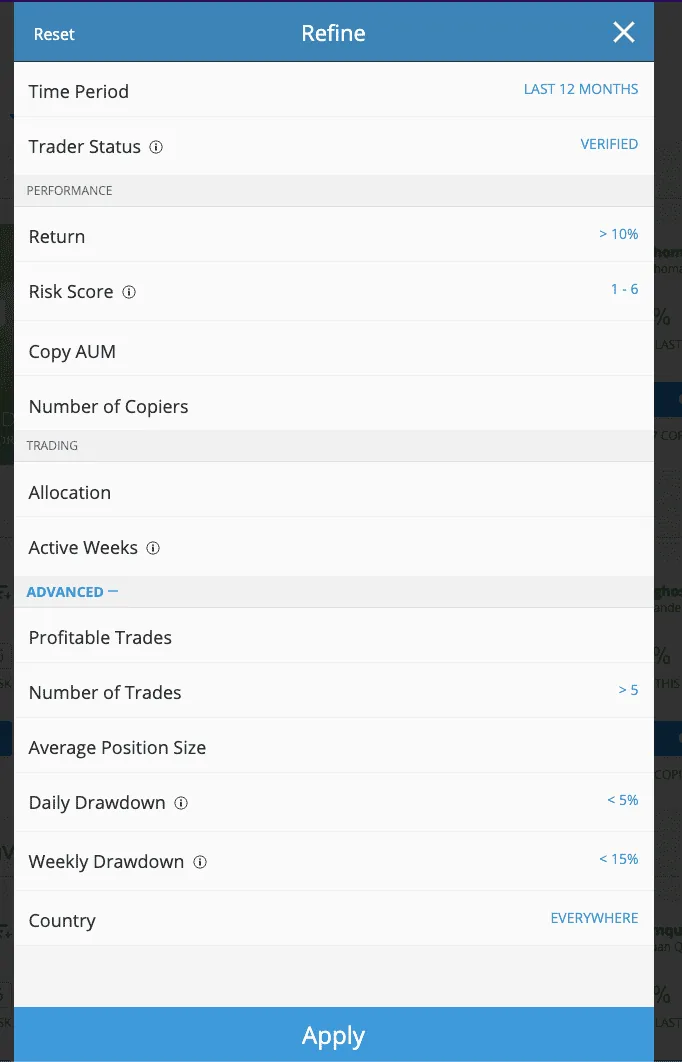
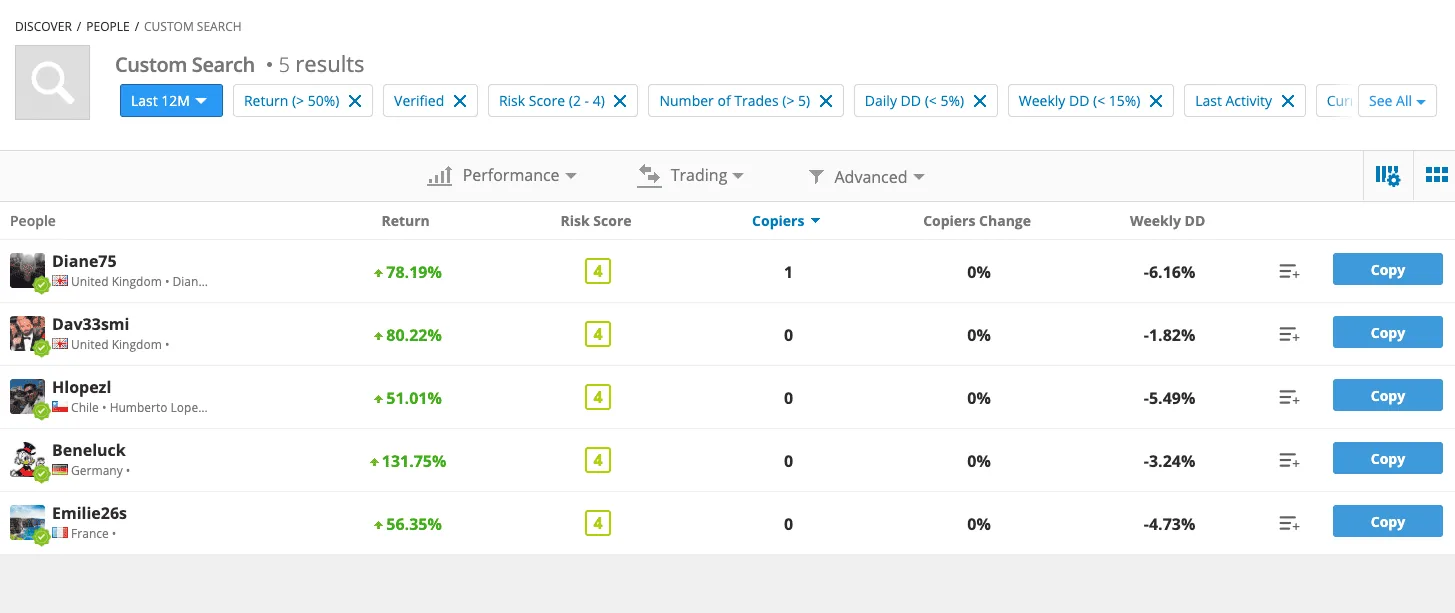
Honourable mentions
More demos worth knowing about, each with a specific use case:
- easyMarkets: unlimited demo with the easyMarkets fixed-spread platform. Right pick if you want to test the broker’s fixed-spread model and guaranteed stop-loss orders in a risk-free environment.
- FP Markets: 30-day demo across MT4, MT5, cTrader and TradingView. Strong for traders who want a Pepperstone-style platform stack with a slightly different commission structure.
- Eightcap: 30-day demo on MT4, MT5 and TradingView. Notable for the integration with TradingView and an underrated execution profile.
- OANDA: unlimited demo with AUD 100,000 in virtual funds. The OANDA fxTrade demo includes the broker’s research suite, which is one of the strongest in the AU market.
- Fusion Markets: 30-day demo on MT4, MT5, cTrader and TradingView. The Fusion Zero account demo is useful if you’re cost-comparing against IC Markets and Pepperstone Razor.
- Mitrade: free demo with no expiry that opens in Demo mode showing A$50,000 at sign-up. Worth a look if you want to test the workflow on a demo that mirrors the live app before funding anything.
- Interactive Brokers: free paper-trading version of Trader Workstation, which takes two to four weeks of paper trading to learn. A sensible pick if you can commit that runway before going live.
What makes a good demo account
At first glance most demos look similar. The differences become obvious once you start using them.
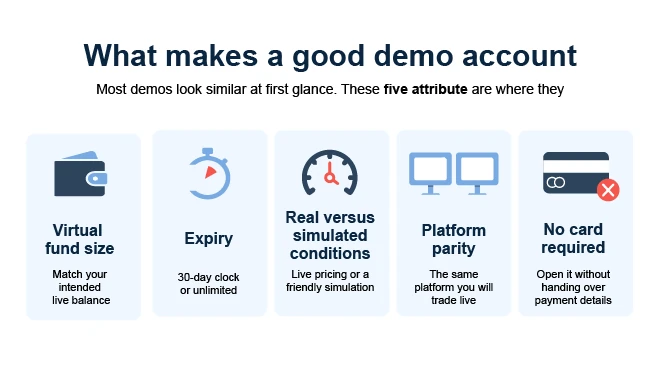
Virtual fund size
A demo balance that’s wildly different from your real account size will teach you the wrong lessons about position sizing. I’d urge: if you plan to fund AUD 2,000 live, ask the broker to set the demo to AUD 2,000 or close to it. Pepperstone, IC Markets, CMC and Fusion Markets all allow customisation. Plus500 and eToro use a fixed default but will reset on request.
A USD 100,000 demo with AUD 1,000 of intended live capital is a recipe for risk habits that won’t transfer. The numbers need to be in the same ballpark.
Expiry
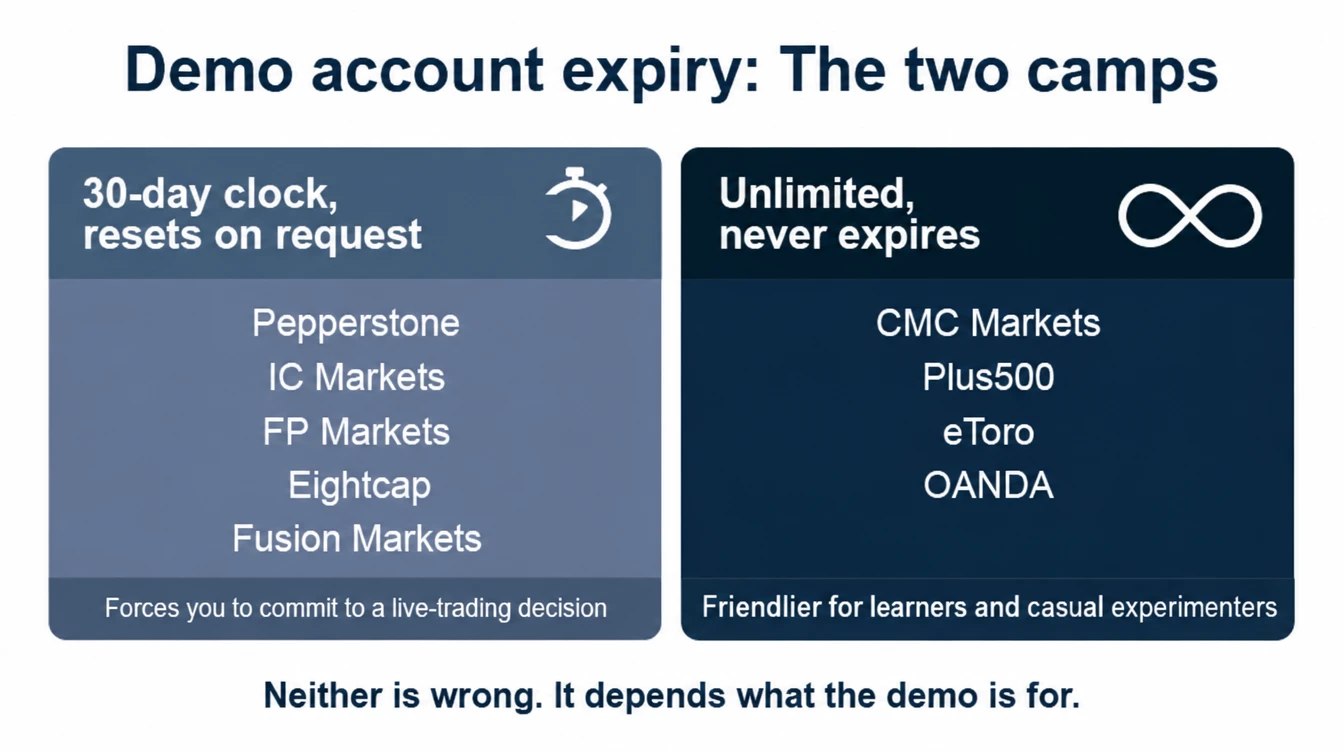
Demo expiries break into two camps. Brokers like Pepperstone, IC Markets, FP Markets, Eightcap and Fusion Markets run a 30-day clock that resets on request. Brokers like CMC, Plus500, eToro and OANDA run unlimited demos that don’t expire.
For slow learners and casual experimenters, the unlimited demos are friendlier. The 30-day clocks force commitment, which isn’t a bad thing if you’re using the demo to make a live-trading decision rather than to play indefinitely.
Real conditions versus simulated conditions
I always look closely at how the broker describes the demo’s price feed. The good demos quote two things explicitly: spreads from the same liquidity providers as the live account, and execution speed measured in real network conditions. The weaker demos run on a synthetic feed that’s smoother and tighter than what you’d see live.
From our 2026 testing, the Pepperstone, IC Markets and CMC demos all matched live spreads within 0.1 pips on EUR/USD across normal market hours. The Plus500 and eToro demos showed slightly tighter spreads than the live accounts during testing, particularly during the Asian session. Worth knowing when comparing platforms on cost.
Platform parity
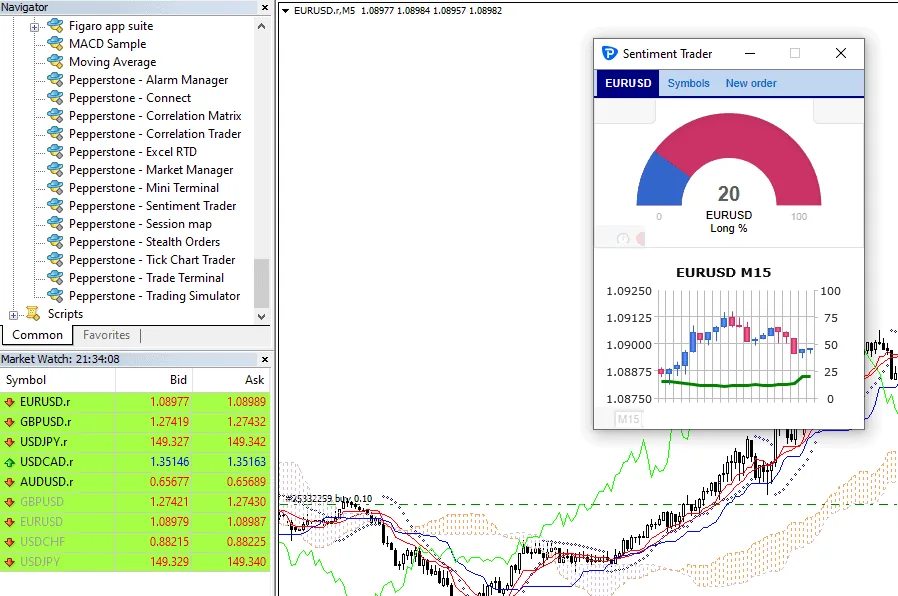
I insist on a demo that runs on exactly the same platform build as the live account. Pepperstone, IC Markets and CMC all hit this bar. Some smaller brokers run the demo on a stripped-down version of their proprietary platform and the difference becomes apparent only when going live, with certain features behaving differently. Test order types, charting tools, watchlists and any platform-specific extras (sentiment data, pattern scanners, news feeds) on the demo before you commit money.
No card required
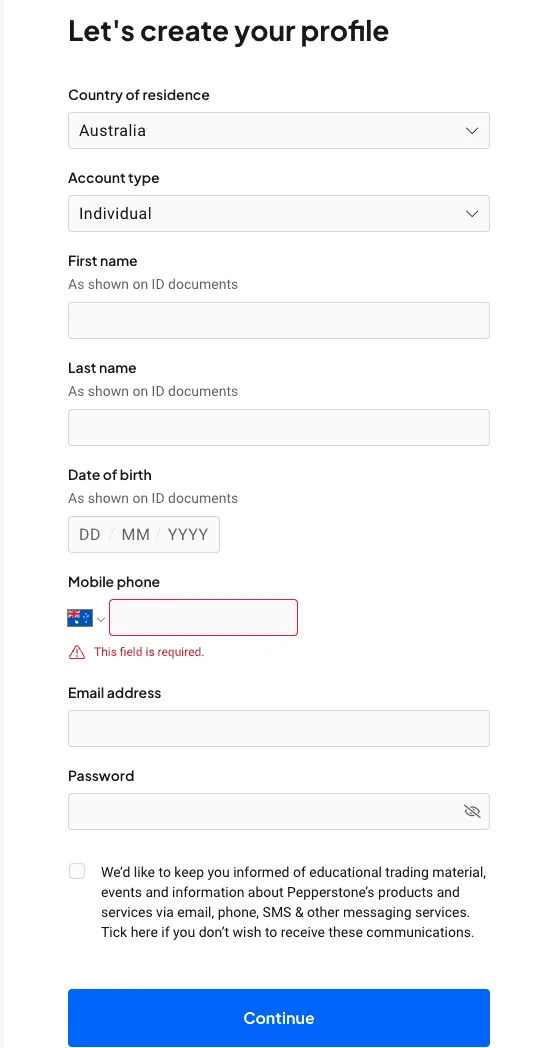
A good demo allows access with just an email and a password. When a broker asks for full ID, proof of address, or even a card on file before you can touch the demo, I see that as a friction signal worth noting.
A demo can be opened with Pepperstone, IC Markets, Plus500, eToro, easyMarkets, OANDA and Fusion Markets using only an email and password; no ID required. CMC asks for fewer details than its live signup but still wants a name and AU phone number. No broker in our shortlist demands a card.
How to use a demo account properly
I treat the demo as a tool, not a toy. Used well, it answers four questions cheaply: platform preference, position sizing understanding, rule-following ability, and whether the strategy is directionally correct on this broker’s data feed. Used badly, it teaches confidence without competence.
Backtest your strategy
I’d run any rules-based strategy through the demo first, because that’s the broker’s actual price data, not TradingView’s free feed. MT4 and MT5 both have built-in strategy testers that let you replay historical data tick-by-tick. cTrader Automate (formerly cAlgo) does the same. Pepperstone, IC Markets, FP Markets and Fusion Markets all provide full historical data through the demo so these tests can be run properly.
At least 200 trades should be seen through the tester before drawing any conclusions. A strategy that wins 7 out of 10 demo trades over a single week is statistically meaningless.
Simulate position sizing
I see position sizing as the single biggest source of blowups for new traders. The demo is where muscle memory for the right lot size on a given account is built.
Match the demo balance to your real intended deposit. Pick a risk-per-trade rule (1% is a reasonable starting point for retail) and stick to it across at least 50 demo trades. Track P&L by trade in a spreadsheet. The point isn’t to make virtual money. It’s to confirm consistent position sizing without thinking about it. I recommend pairing the demo with the position size calculator to set each lot from your risk-per-trade rule. On a practice ticket, calculate pip value and use the profit and loss calculator in AUD before you commit real money.
Practise the platform
The demo is where I’d stress-test the platform itself, because order types, hotkeys, charting layouts, alerts, trailing stops and partial closes all behave differently across MT4, MT5, cTrader, TradingView and proprietary platforms. Place a buy stop, modify it, partial close half, trail the rest, set an alert on a different chart, and verify everything fired as expected.
When you find yourself fighting the platform on the demo, I’d take that as a warning: you’ll fight it harder with real money. Switch platforms or switch brokers.
It’s not a money-printing simulation
The most common mistake I see is traders who run a demo, see fast virtual gains, fund a live account and immediately blow up. The demo doesn’t simulate emotion. There’s no emotional weight when risking virtual dollars, so you take trades you’d never take with real capital and let losers run further than you would live.
A profitable month on demo doesn’t predict a profitable month live. I treat the demo as a platform-and-process test, not a P&L forecast.
Transition to live with caution
I’d start small when going live. Our reader feedback over the last decade lines up on this: open a live account with the smallest deposit the broker accepts, trade the smallest contract size for at least 50 trades, and only scale up after you’ve shown the same discipline with real money that you showed on demo. Pepperstone, IC Markets and CMC all support micro lots (0.01) on AUD-denominated accounts, which means trading real money at risk levels close to demo psychology while adjusting.
Demo account limitations
Brokers don’t always make the limitations obvious. They are real and they matter.
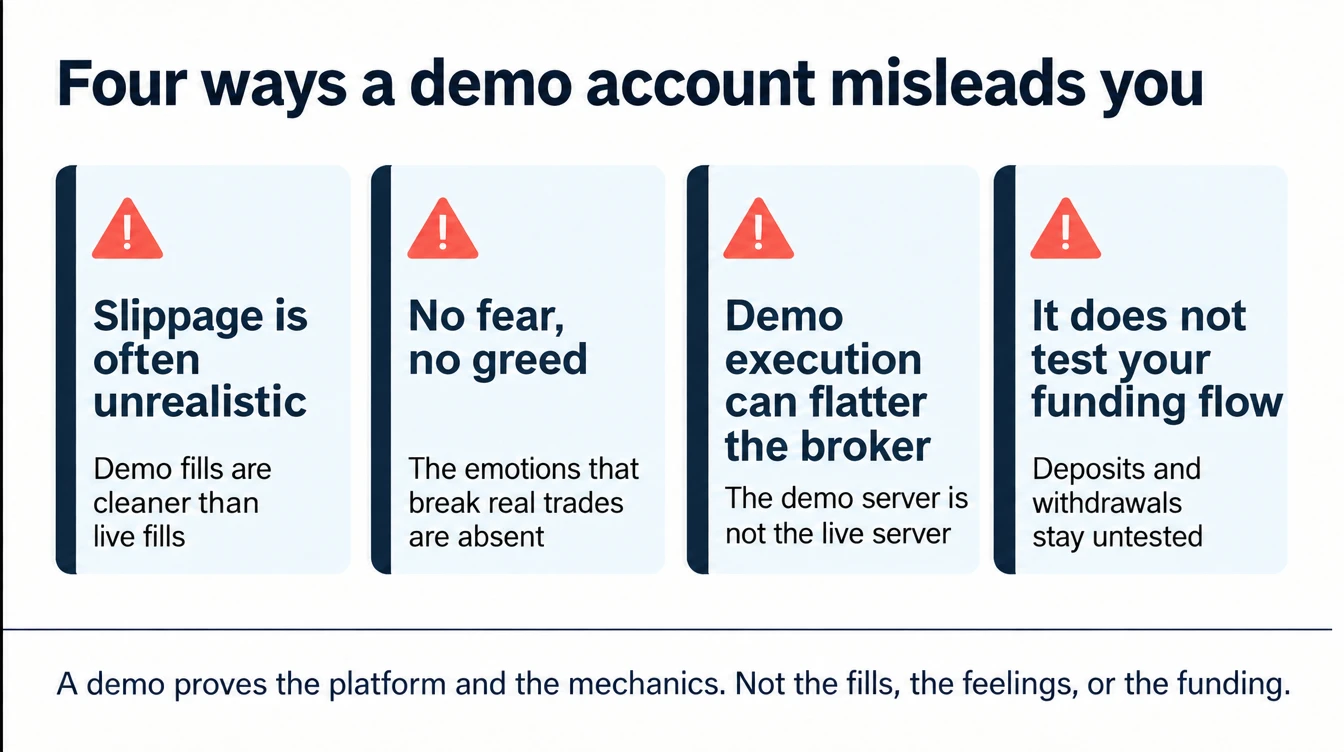
Slippage is often unrealistic
When markets move fast, real orders slip. Limit orders fill below the intended level or not at all, and stop-losses execute at worse prices than the trigger. Demos rarely simulate this fully, and I’d keep that in mind. Most brokers’ demo engines fill orders at the quoted price most of the time, even during high-impact news releases when a real fill would slip several pips.
I’d plan for slippage because a strategy that looks solid on demo can fall apart live the first time it tries to enter or exit during NFP or the RBA cash rate announcement. Run stop-losses with a buffer.
No fear, no greed
The demo cannot teach trading psychology. There’s no real-money flinch when watching a position go AUD 200 against you. There’s no urge to chase a winner because the size doesn’t matter. The behaviour patterns that hurt real traders (moving stops, doubling down, revenge trading after a loss) only show up when there’s real capital at stake.
Some traders do better on demo than live for exactly this reason: the disciplined parts of their trading evaporate when emotion enters. When you find that’s you, I’d suggest starting live with such a small position size that the emotion is dialled down, and scaling up only as discipline is kept.
Demo execution can flatter the broker
I’d watch for brokers that run a demo execution engine that’s faster and more forgiving than their live engine. Pepperstone, IC Markets, CMC and OANDA all run demos that are reasonably honest in our testing. A few smaller brokers don’t. When a broker’s live spreads are noticeably wider than its demo spreads, or its live execution is markedly slower, that’s a warning sign worth paying attention to.
Demo doesn’t test your funding flow
Bank transfers, PayID, BPAY and card deposits all behave differently in real life. AML hold periods, identity verification, and withdrawal processing aren’t part of the demo. You won’t know how a broker actually handles your money until you make a small live deposit and a small test withdrawal. I recommend doing this before funding a meaningful position size.
ASIC rules and demo accounts
Demo accounts sit outside ASIC’s product intervention regime in important ways, and that context should be kept in mind. Brokers don’t need an Australian Financial Services Licence to offer a free demo, because the demo isn’t a financial product. There’s no client money, no real risk, no real return.
The moment a live account is funded, AFSL requirements apply in full. The broker must be authorised by ASIC to issue CFDs to retail clients in Australia, must comply with the Product Intervention Order (which capped retail leverage at 30:1 on major forex pairs from 29 March 2021), must offer negative balance protection, and must close out positions when margin falls to 50% of initial.
Brokers must clearly distinguish demo from live
ASIC’s Regulatory Guide 234 and the broader anti-misleading-conduct rules in the Corporations Act require brokers to make demo and simulated trading results clearly distinguishable from live performance. This shows up in three places on most broker sites:
- A “DEMO” or “PRACTICE” watermark across the platform interface.
- A standard risk warning on any marketing that uses simulated returns: “past performance and simulated results do not guarantee future returns.”
- Separate branding and login flows for the demo and live cabinets, so traders can’t accidentally place live trades thinking they’re on demo.
When a broker’s demo doesn’t make the demo nature visible at all times, I’d call that a compliance red flag. None of the brokers we’ve shortlisted on this page have that problem.
AFCA does not cover demo disputes
The Australian Financial Complaints Authority handles disputes between retail clients and ASIC-regulated brokers. AFCA’s jurisdiction covers live financial services. A dispute about a demo account (the broker terminated the demo before the 30 days expired, for example) is unlikely to be accepted by AFCA because no real money or real financial product is involved. When a broker’s behaviour on the demo bothers you, I’d treat that as a useful signal: it’s how the broker is likely to treat you live.
For live disputes, every broker on this page is an AFCA member. When you can’t resolve a complaint with the broker directly, AFCA’s free dispute resolution scheme is the next step.
Step-by-step: how to open and use a demo properly
- Pick an ASIC-regulated broker that suits your trading style. Start by choosing from the AU shortlist (Pepperstone, IC Markets, CMC Markets, Plus500, eToro and others). Match the broker to whether platform variety, raw-spread testing, multi-asset access, beginner simplicity or copy trading is needed.
- Sign up for the free demo with email and password. Most ASIC-regulated brokers allow starting the demo without ID or a card. Expect to be inside the trader’s cabinet within two minutes.
- Set the virtual balance to match your intended live deposit. Pepperstone, IC Markets, CMC and Fusion Markets allow customisation. Match the demo balance to the AUD amount planned for the live account.
- Backtest your strategy and practise position sizing. Run at least 50 trades on the strategy intended for live use. Use a 1% risk-per-trade rule and stick to it.
- Stress-test the platform and order types. Place a buy stop, modify it, partial close half, trail the rest and set an alert on a different chart. Confirm everything fires as expected.
- Transition to live with the smallest deposit and micro lots. Open the live account with the smallest deposit the broker accepts. Trade micro lots (0.01) for at least 50 trades. Scale up only after you have shown the same discipline with real money that you showed on demo.
Compare brokers by the factor that decides it
I've re-ranked each shortlist below around a single decision factor, using the same test approach we used for this page. You'll see how the brokers stack up for the factor that matters most to you.

The platform decides it
Rankings change once the trading software is fixed. Pick yours first, then compare.

Your strategy decides it
Execution speed, copy functionality and EA support separate these shortlists.

What you trade decides it
CFD shortlists re-ranked for the asset class you trade most.
FAQs
Are demo accounts free?
Do demo accounts expire?
Is the demo data real?
Can you make money on a demo account?
How long should I demo before going live?
Best demo for MT4?
What is the best demo trading app in Australia?
Related pages
About the author

Justin co-founded CompareForexBrokers in 2014 and has traded forex since 1998. Based in Melbourne, he has tested every ASIC-regulated broker on this site personally and has written for Forbes, Kiplinger, Finance Magnates, the Australian Financial Review and The Age. He holds a Bachelor of Commerce (Honours) and a Master of Marketing from Monash University. Justin is the co-founder and CEO of CompareForexBrokers.